

China-Serbia 'Small Yet Smart' Cooperation Model
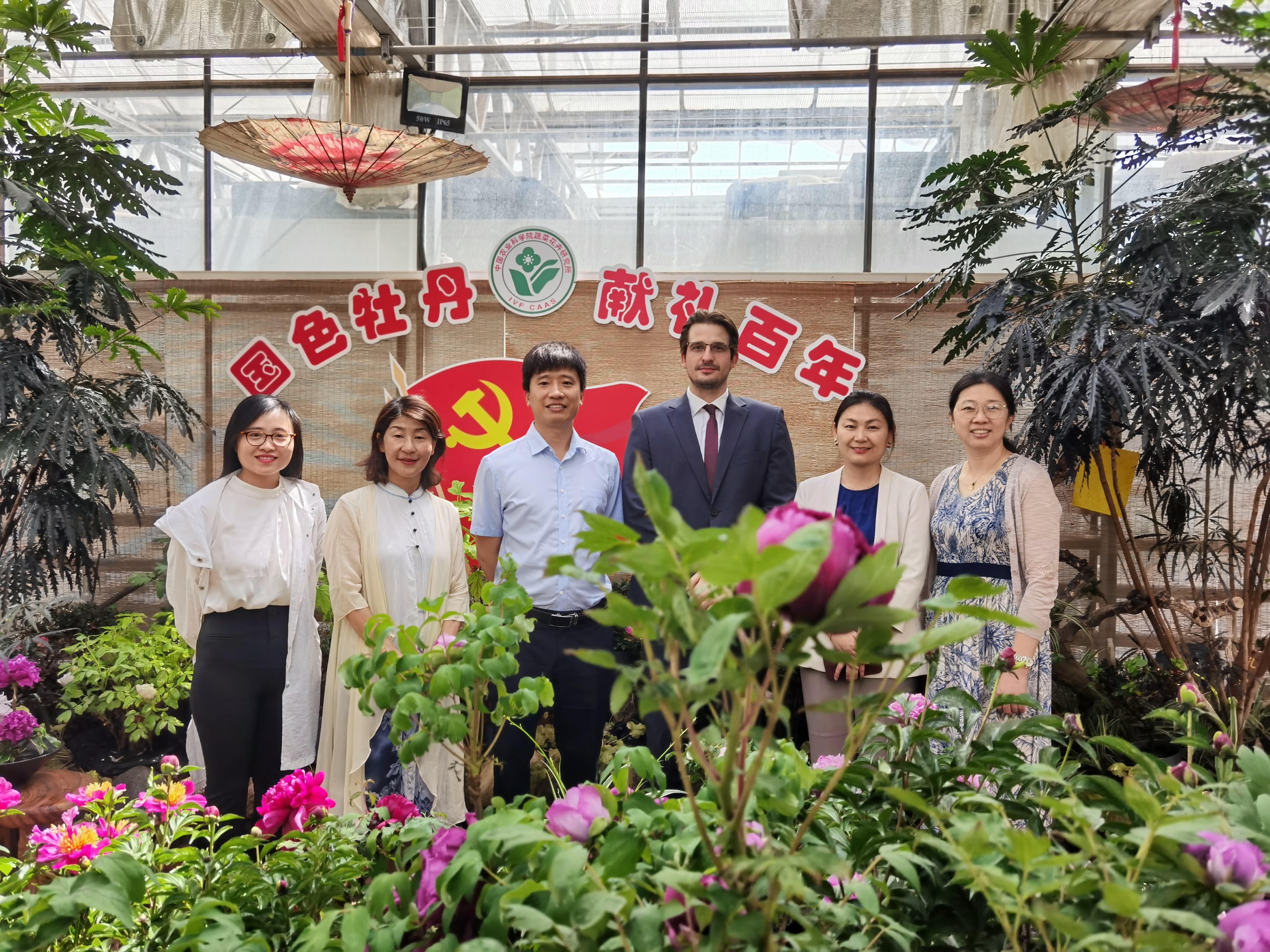
China and Serbia, both recognized as global centers of origin for functional plants, have joined forces to protect endangered botanical resources and advance rural development.
Against the backdrop of biodiversity loss driven by climate change and human activity, a China-Serbia collaboration originally launched as a research project has grown into a full-spectrum partnership encompassing technology transfer, poverty alleviation, and sustainable agriculture. This "small yet smart”model of cooperation embodies the shared vision of building a community with a shared future for mankind.
Joint conservation and utilization of endemic functional plants
This scientific collaboration took root during an international training program in 2019, when researchers from the Institute of Vegetables and Flowers, Chinese Academy of Agricultural Sciences (CAAS), conducted academic exchanges with Dr. Željana Prijić, principal research fellow at the Institute for Medicinal Plants Research "Dr Josif Pancic" in Belgrade. Subsequently, the two institutions signed cooperation agreements on resource sharing and academic communication, laying a solid foundation for subsequent joint research.
In 2020, the two sides jointly applied for the national key R&D international cooperation project, focusing on the conservation and efficient utilization of endangered functional plant resources endemic to China and Serbia. Centering on Paeoniaceae and Asteraceae resources, the team has achieved fruitful outcomes.
According to Xue Jingqi, a researcher at the Institute of Vegetables and Flowers, they have collected and preserved 65 valuable plant resources, built 120 mu (8 hectares) of resource nurseries, and planted over 50,000 seedlings with optimized seed breeding and tissue culture technologies.
They have also compiled a survival risk report on endemic functional plants, solving key technical bottlenecks including low propagation coefficient and slow industrial promotion of new varieties.
In addition, the cooperation has produced seven academic papers, two authorized new plant varieties, and two national invention patents, forming a replicable technical path for transboundary plant resource protection and utilization.
Joint sci-tech poverty alleviation empowers rural vitalization
Building on these achievements, CAAS and the China Rural Technology Development Center undertook the China-Serbia Joint Center for Poverty Alleviation through Functional Plant Science and Technology project in 2024, with centers in Belgrade and Beijing. Marking an upgrade from pure academic research to people’s livelihood-oriented industrial cooperation, the project has delivered tangible benefits to Serbian rural development.
According to Zhang Xiuxin, specialist of China Agriculture Research System-Chinese Materia Medica, the demonstration center has established ties with eight Serbian research institutions and enterprises, completing bilateral personnel exchanges 22 person-times.
Following targeted poverty alleviation principles, the project selected 17 Serbian rural households for precise support, The selected households are mainly young families under 45 years willing to engage in stable rural operations and with a higher education background, capable of adopting modern technologies and becoming local demonstration models.
Facing common rural dilemmas including population aging and backward agricultural infrastructure, these households have gained new development momentum through technological empowerment. Ten of them have already finished field surveys and professional training.
The experts have jointly developed intelligent agricultural equipment adapted to Serbia’s agricultural conditions: intelligent water and fertilizer integrated machines and high-efficiency hydrosol extractors. Five sets have been assembled delivered to local farmers.
Shared vision for the future
Both sides view the achievements as a foundation for deeper cooperation. Asked about the priorities of the Joint Demonstration Center, Dr. Dušan Nikolić, research associate from Institute for Science Application in Agriculture, highlighted three areas: smart farming solutions (digital tools, sensors, data-driven decision-making), high-tech processing technologies, and green technologies for sustainable production.
“We are also very interested in the application of artificial intelligence in agriculture to enhance efficiency, optimize inputs, and support precision farming practices,” he added.
Dr. Prijić, who has visited China five times, believes that Serbia’s strengths — 79 years of experience in medicinal and aromatic plant research, rich biodiversity, favorable climate, and expertise in sustainable production — complement China’s innovative technologies and advanced quality control systems. “This exchange of knowledge can significantly contribute to the modernization of medicinal plant cultivation and the development of safer, higher-quality products,” she said.
Dr. Nikolić, who has visited China four times, spoke warmly of the “steel friendship” between the two nations. "This relationship is based on mutual respect, trust, and a shared willingness to cooperate. This friendship has great potential to continue expanding in scientific exchange, agriculture, and the broader economy.”
From a chance encounter at a training seminar in 2019 to a jointly verified technical solution in 2025, the China-Serbia functional plant cooperation has demonstrated how science, when paired with trust and shared purpose, can move from the laboratory to the field — and from the field to the farmer’s doorstep.
As both sides prepare for the July training in Belgrade, the partnership stands as a replicable model of technology-enabled, people-centered international cooperation.