

Key Industries Get Tech Boost in Aksu
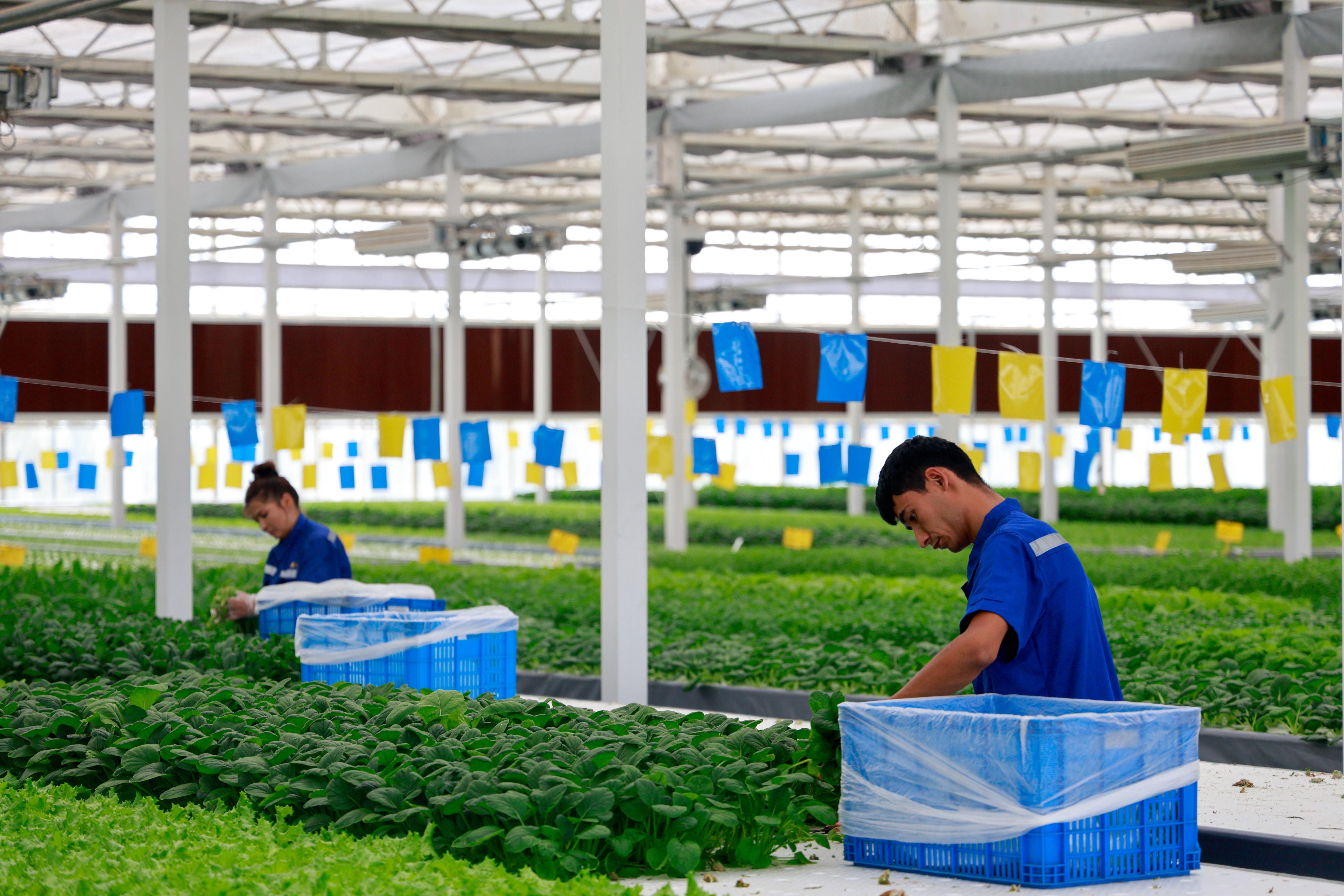
Qamgur (Brassica rapa L.), a unique medicinal and edible plant native to northwest China's Xinjiang Uygur autonomous region, has now been transformed into freeze-dried powder and compound beverages through sophisticated processing.
To protect the precious plants and keep them pest free, the services of a multi-rotor drone are used for crop spraying, with its output and efficiency far exceeding that of manual labor.
These technology-driven initiatives have become part of a vivid microcosm of industrial revitalization across the Aksu prefecture in Xinjiang.
In recent years, leveraging its distinctive competitive industries, Aksu has cultivated new quality productive forces in accordance with local conditions, promoted quality upgrading in traditional sectors and the rise of emerging industries, aiming to boost the regional economy.
Located on the northern edge of the Taklamakan Desert, Aksu's unique climate nurtures specialty agricultural products including qamgur and camel milk. Yet for years, inadequate deep-processing capabilities kept product added value low.
To overcome this challenge, local authorities have targeted enterprises as the primary drivers of innovation, essential to the upgrading of their agricultural processing industry.
A dairy company that settled in Kalpin county in 2021 has resolved longstanding difficulties of camel milk preservation and product quality through technological innovation. The company conducts strict testing on 115 indicators for fresh camel milk, and has independently developed a low-temperature spray drying system. This system retains 90 percent of active nutrients while extending shelf life.
Qamgur, the signature crop of Kalpin, has also been revitalized with innovation support.
Over six years, an agricultural technology company bred and purified two premium varieties: pure purple-skin and white-skin qamgur. By supplying high-quality seeds and standardized breeding techniques, they established a planting base of 35,000 to 40,000 mu. The result was raising the incomes of nearly 12,000 farming households under an order-based model.
Meanwhile, using vacuum freeze-drying technology at minus 45°C, the company processes fresh qamgur into freeze-dried powder, developing a series of products that include sauces and drinks, adding substantial value to the product.
While advancing the upgrading of traditional industries, Aksu has actively embraced the low-altitude economy, allowing technology to empower a diverse range of sectors.
Based in the Agricultural Industrial Park of Kalpin, Xinjiang Sanhe UAV Research Institute Co., Ltd. has established localized drone production, filling a gap in the drone industry in southern Xinjiang and emerging as a flagship project for the local low-altitude economy.
Drone-based plant protection can reduce pesticide costs by 30 percent and increase crop yields by 10 percent to 15 percent. In addition, they are more efficient than manual labor.
Taking agricultural and forestry plant protection as its focus, the company has launched plant protection stations for cooperatives and provided professional training to address the lack of agricultural expertise among drone operators.
In the fire protection field, the company has developed a 120-meter high-altitude heavy-duty fire-fighting and extinguishing drone, with a maximum payload of 120 kilograms. By connecting with fire trucks, the drone enables uninterrupted delivery of foam fire extinguishing agent.
Looking ahead, Aksu will continue to strengthen its competitive industries, foster and expand new quality productive forces, and strive for more solid progress in high-quality regional economic development.