

Sci-tech Development Goals Outlined
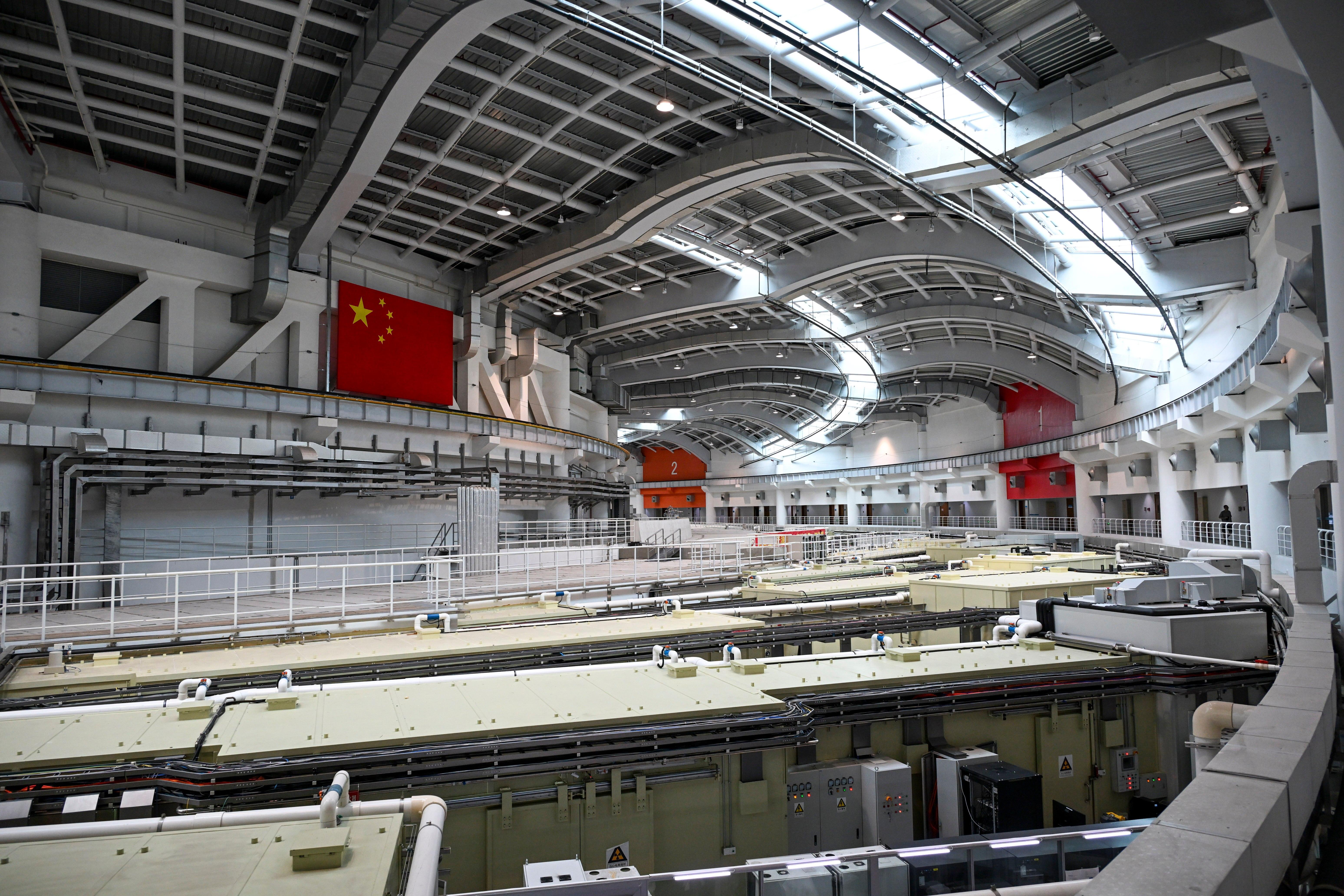
At a recent policy briefing in Beijing on promoting and improving people's well-being through high-quality development, Yin Hejun, minister of science and technology, elaborated on the key tasks for building China's strength in science and technology during the 15th Five-Year Plan period (2026-2030) while giving a systematic overview of the achievements in sci-tech innovation and the new situations and challenges.
Data shows that China's global standing in science and technology has improved, with the country transforming from a technology follower into a major contributor to global innovation.
China's ranking in the Global Innovation Index released by the World Intellectual Property Organization (WIPO) rose from 34th in 2012 to 10th in 2025. China has ranked first worldwide in the number of international patent applications filed under the WIPO's Patent Cooperation Treaty for seven consecutive years and led in the number of papers published in high-level international journals for five consecutive years.
In addition, China has the world's largest number of lighthouse factories, factories recognized by the World Economic Forum for their successful use of advanced technologies like AI. Its production and sales of new energy vehicles topped the world for 11 consecutive years.
Science and technology achievements have improved people's lives significantly. China's high-speed railway network has surpassed 50,000 kilometers in length; innovative medicines have witnessed rapid growth, with the world's first 5.0T whole-body magnetic resonance imaging system entering clinical use; the national average PM2.5 concentration has dropped to 28 micrograms per cubic meter.
Sci-tech innovation has provided strong support for China's rapid economic development and long-term social stability, laying a solid material and technological foundation for development during the 15th Five-Year Plan period.
Yin outlined five priorities for this period:
-Strengthening high-quality sci-tech supply to support high-quality development of the economy and society;
-Advancing deep integration of sci-tech innovation and industrial innovation to accelerate the development of a modernized industrial system;
-Improving regional innovation systems to foster new growth poles and sources of dynamism for high-quality development;
-Promoting integrated development of education, science and technology and talent to better leverage their fundamental and strategic supporting role; and
-Enhancing international sci-tech exchange and cooperation to ensure that science and technology better benefit humanity.
He added that strategic, forward-looking and systematic planning of basic research needs to be strengthened. China should keep abreast of the frontiers of global science and technology, and strengthen original innovation from 0 to 1.
In response to urgent national development needs, efforts should also be made to identify the fundamental scientific questions underlying key technologies (i.e. from 1 to 0) and accelerate breakthroughs in the basic principles behind technologies that face bottlenecks.
Talking about developing new quality productive forces in line with local conditions, Yin stressed the importance of preventing "involution-style" competition. Traditional industries, emerging industries and future industries are all crucial fields for developing new quality productive forces. Traditional industries should not be neglected or abandoned, nor should they engage in price-based competition. Instead, they should be revitalized through technological empowerment.
He added that emerging and future industries should not be developed through blind expansion, nor should there be a rush by all parties into the same fields, so as to prevent new bubbles and debt risks.
The Central Economic Work Conference last December proposed developing international technological innovation centers in Beijing (the Beijing-Tianjin-Hebei region), Shanghai (Yangtze River Delta), and the Guangdong-Hong Kong-Macao Greater Bay Area.
This will expand Beijing's international tech innovation center to include the entire Beijing-Tianjin-Hebei region, and Shanghai's center will now cover the whole Yangtze River Delta.
In the next step, Yin said efforts will be made to enable the three international sci-tech innovation centers better serve as sources of original innovation, lead the development of high-end industries, and attract top talent, accelerating their development into key strategic pillars in building China's scientific and technological strength. Localities will also be supported to develop distinctive innovation hubs based on their strengths and conditions.