

Millet: Original Chinese Staple
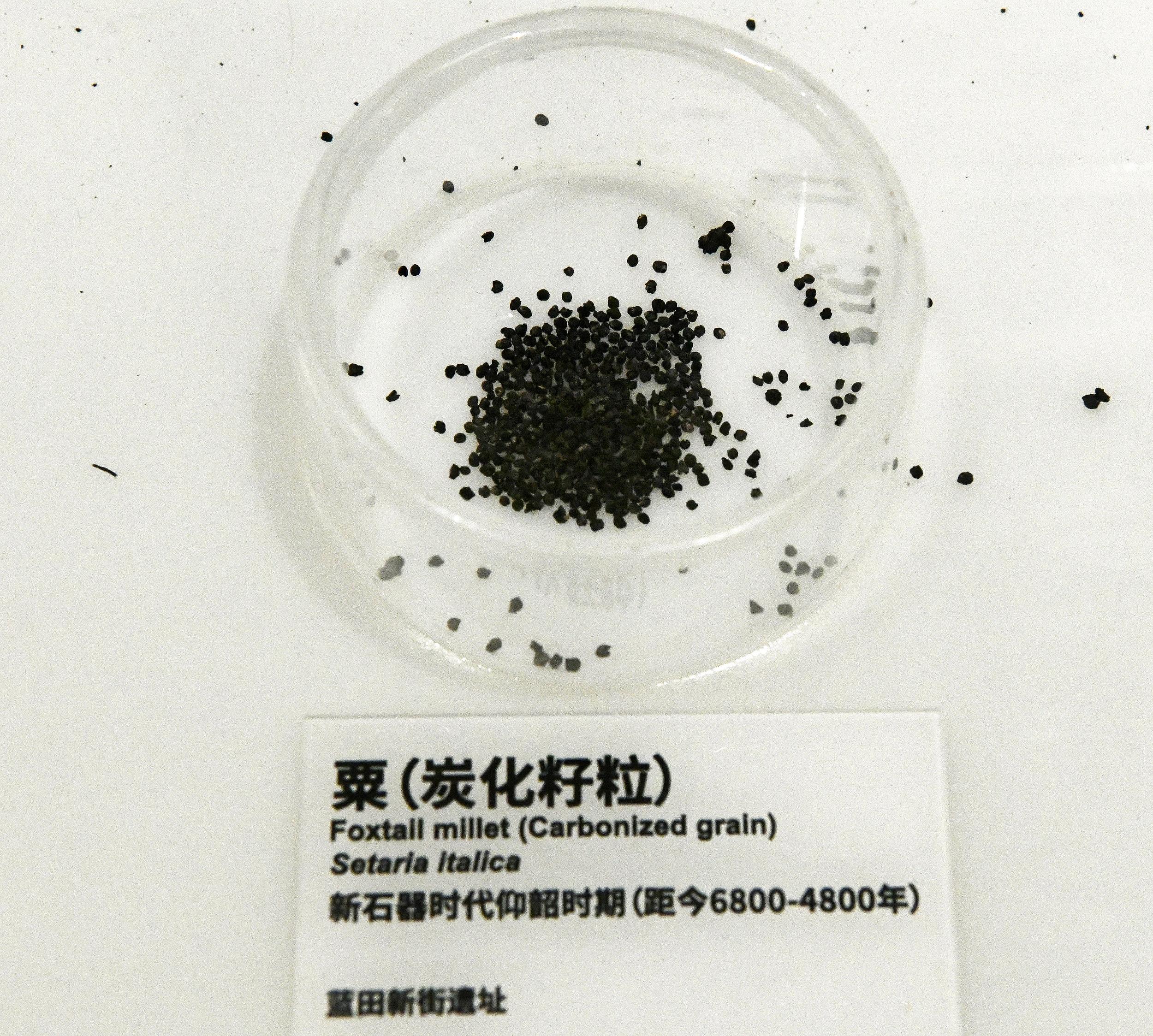
Contrary to what many may think, millet — commonly known as guzi — is China's oldest and most important staple crop, predating rice. Millet-based agriculture played a seminal role in the genesis of Chinese civilization.
Around 10,000 years ago, evidence of early domesticated millet grains first appeared at the Donghulin site in Beijing. By 7,000 to 5,000 years ago, millet had become the primary staple food in regions associated with the Yangshao culture in the middle reaches of the Yellow River. This marked a transition where formal agriculture replaced hunting and gathering as the dominant mode of subsistence.
During the Xia, Shang, and Zhou dynasties, millet held the highest status among the "Five Grains," which included soybeans, foxtail millet, broomcorn millet, wheat, and rice. It formed the bedrock of the national food supply and was central to ritualistic practices. Advancements in cultivation techniques emerged, such as deep ploughing, thorough harrowing to pulverize the soil and conserve moisture, timely sowing, and rational close planting. Furthermore, the practice of selecting superior seeds based on grain quality began during this era.
During the Qin and Han dynasties, sophisticated farming practices were fully established, and comprehensive systems for drought resistance and moisture conservation were developed. Autumn ploughing became standard agricultural practice. The Quzhong Method, also known as the Pit-Field Method, was invented, a high-yield, intensive farming technique focusing on maximizing land use in small, localized pits. It utilizes concentrated, heavy fertilization and close planting to significantly increase yields per unit area, even on poor land. The agricultural treatise Fan Shengzhi Shu systematically summarized millet cultivation techniques, and a dedicated official, the commissioner for grain procurement, was appointed to oversee grain production.
During the Wei, Jin, and Northern and Southern Dynasties period, the monumental agricultural compendium Qimin Yaoshu devoted its most extensive section to documenting 86 distinct millet varieties. Crop rotation featured as the core technical principle in this work, which explicitly stated that "millet fields must be rotated annually" and identified mung beans and adzuki beans as optimal preceding crops. This established a complete and systematic rotation model.
The cultivation of wheat expanded during the Song and Yuan dynasties, leading to a decline in the importance of millet. However, intercropping and relay cropping, which involved combining millet with wheat, legumes or vegetables, served to enhance the efficient use of land. During the Ming and Qing dynasties, farming practices became more refined and a rich variety of millet emerged, adapted to suit different regional environments and climatic conditions. Meanwhile, the accumulated technical expertise was systematically codified.
Millet cultivation has also profoundly influenced global food systems. Over 3,000 years ago, dryland farming systems centered primarily on millet spread from China's Yellow River Basin to the Korean Peninsula, various parts of Southeast Asia, the Indian subcontinent and the Eurasian steppe, reaching as far as Eastern Europe.