

AI Era Unleashes New Cybersecurity Imperatives
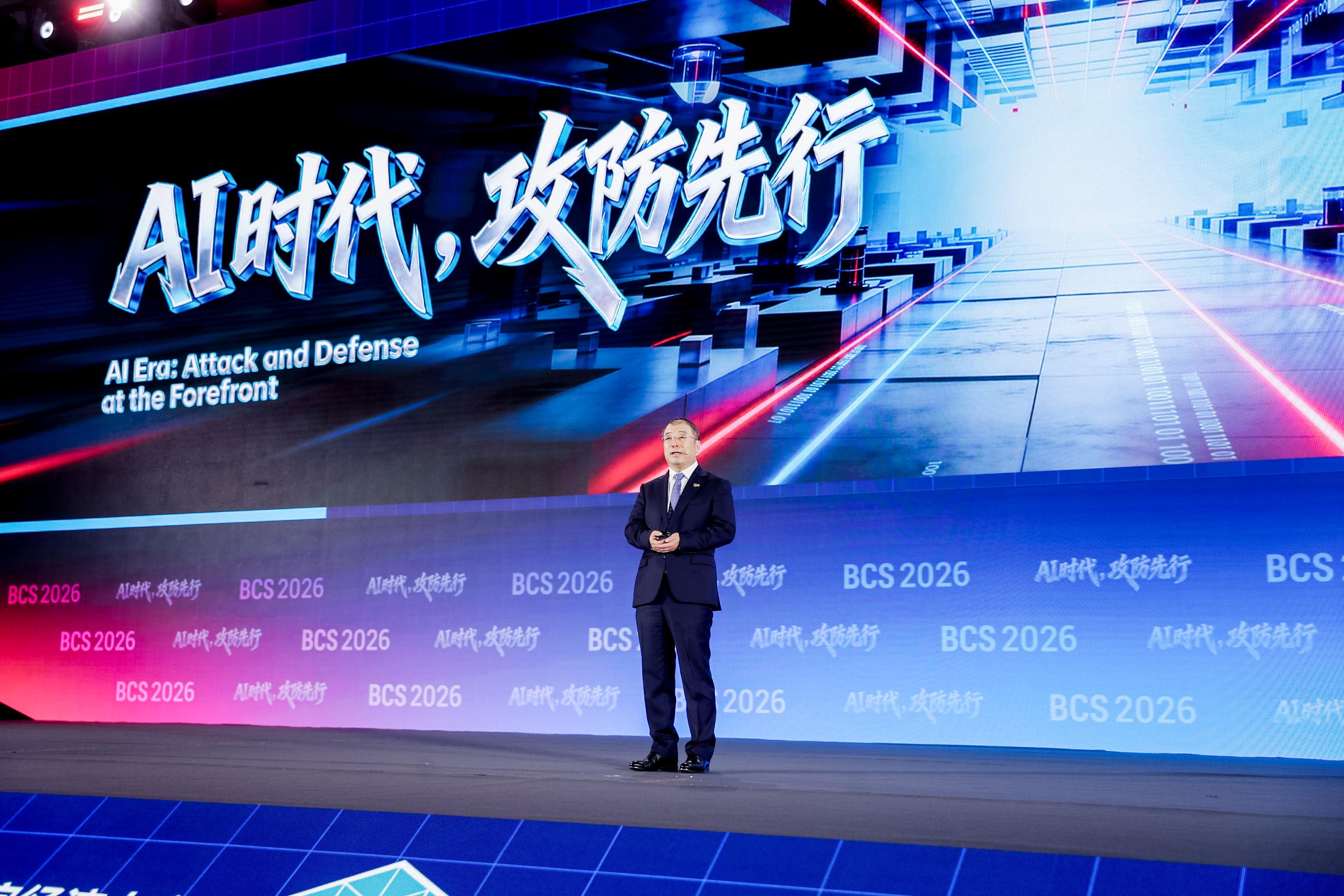
With the revised Cybersecurity Law coming into force this January, an AI security framework was introduced for the first time, setting a higher bar for AI security development.
"In the AI era, cybersecurity is a foundational industry whose market scale expands in tandem with the proliferation of digital intelligence transformation," said Qi Xiangdong, chairman of cybersecurity company Qi-Anxin Technology Group, in his keynote speech at the 2026 Beijing Cybersecurity Conference.
Institutions predict that by 2030, China's digital economy will exceed 80 trillion RMB, and its AI-driven core industries will reach 12.6 trillion RMB — presenting a hundred-billion-level growth opportunity for cybersecurity.
While technologies like AI continue to drive high-quality development, they have simultaneously amplified security risks.
This dynamic is fundamentally recalibrating the global cybersecurity landscape, catalyzing a wave of urgent, high-stake demands.
Since the start of this year, the continuous revelations of large language models (LLMs)' vulnerability-mining capabilities have triggered fluctuations in the cybersecurity sector.
Such fluctuations vividly reflect the widespread anticipation, uncertainty and anxiety surrounding AI, presenting the cybersecurity industry with both novel challenges and fresh opportunities.
According to Qi, as digital intelligence transformation scales up, three core demands — practical security, data security and full-stack security — are surging in tandem.
By 2027, 45 percent of enterprises will adopt AI-based risk and compliance solutions to guard against non-compliant behaviors from internal sources or associated third parties, and the investment scale of China's data security market is projected to reach approximately 20.5 billion RMB, according to a report from the International Data Corporation.
The explosion of AI applications is also driving a massive surge in full-stack security demands.
Golden growth opportunities with the highest potential lie in AI-native security, scenario-specific security, application security, LLM security and embodied AI security.
Cybersecurity in the age of AI is a complex challenge, requiring capabilities that seamlessly cover all digital and intelligent blind spots.
"To this end, building an integrated, defense-in-depth endogenous security system represents the inevitable path for upgrading cybersecurity in the AI era," Qi said.