

Standards Proposed for Humanoid Robots
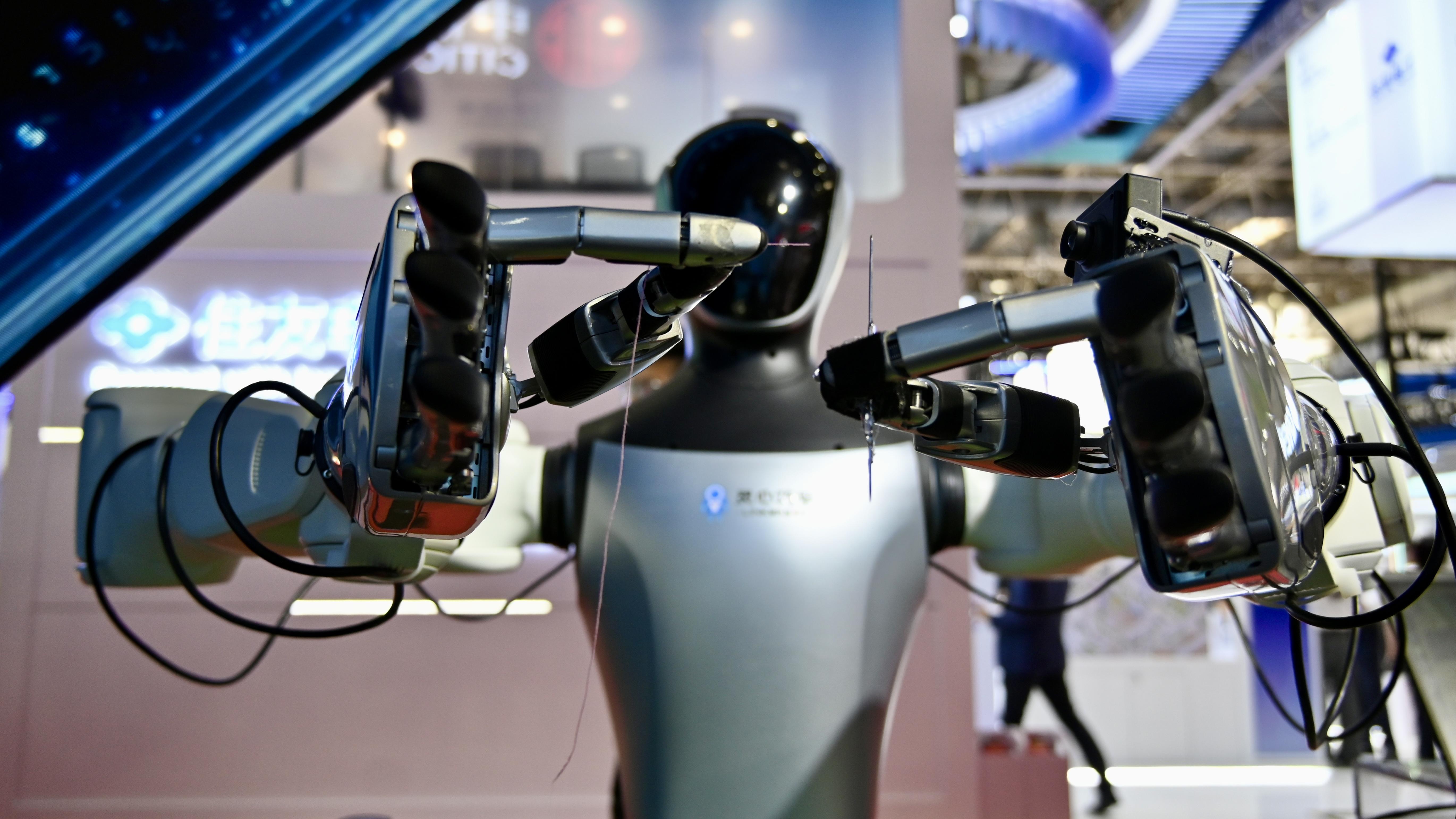
The Ministry of Industry and Information Technology has issued a notice soliciting opinions for formulating and revising plans for multiple industry standards. The proposed standards also include technical requirements for humanoid robots in scenarios such as electrical substations and home appliance manufacturing.
Electrical substations, the heart of the power grid, currently rely mainly on wheeled or tracked robots for intelligent inspection. However, approximately 30 percent of inspection points inside substations are still blind zones that wheeled robots cannot access.
Yet humanoids with their human-like mobility, bipedal walking capabilities, and multi-joint coordination can effectively compensate for the shortcomings of the existing inspection robots. However, the lack of standards has become a bottleneck restricting the large-scale application of humanoid robots in substations.
The proposed technical requirements for humanoid robots in substation scenarios will establish a terminology system tailored to such robots, set out technical specifications across eight dimensions, and stipulate full-process management rules for their deployment. These standards will provide a unified technical guideline and testing evaluation methodologies for the industry.
At present, many Chinese home appliance companies have deployed humanoid robots in their manufacturing plants. Therefore, establishing evaluation standards for their operational performance is particularly crucial.
The proposed technical requirements will build a complete indicator system to assess the operational performance of humanoid robots used in home appliance production and define relevant evaluation methods. They will guide manufactures on technical development, enable users to more efficiently evaluate and optimize robot performance, and serve as a reference to assess the performance of humanoid robots in other fields.
Additionally, other standards proposed for approval include the general technical requirements for humanoid robot interconnection systems, technical specifications for automated battery-swapping systems, and after-sales service specifications for humanoid robots and embodied intelligence.