
South Africa Draws on Chinese Experience for New Renewable‑Energy Integration Pathways
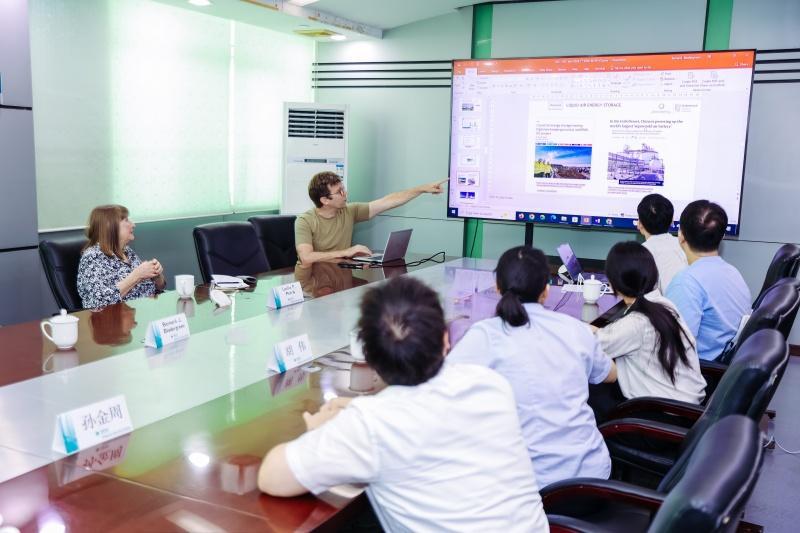
Professors from the University of the Western Cape, South Africa, visited the State Grid Hubei Electric Power Research Institute (SGEPRI) in Wuhan, central China's Hubei province, on July 10.
Given South Africa's abundant wind and solar resources and its growing urgency to reduce emissions, both sides focused their discussions on how hydrogen production via water electrolysis can work in harmony with the power grid.
The delegation also held in-depth talks on hydrogen's role as a "flexible regulator" in grid peak-shaving and its potential to address challenges in renewable energy integration.
Researchers at SGEPRI noted that water electrolysis for hydrogen production is not only a source of fuel but also arm of long-duration energy storage. Through coordinated operation between the grid and electrolysis systems, the fluctuating and intermittent output from wind and photovoltaic power can be converted into hydrogen, enabling large-scale storage and long-distance transport. This approach allows for the flexible dispatch of electricity across both time and space.
This exchange comes at a time of deepening China-South Africa cooperation in science, technology, and innovation. Dr. Blade Nzimande, South Africa's minister of Science, Technology and Innovation, has previously identified clean energy as a "key priority area" for bilateral collaboration.
This visit is a tangible move toward practical cooperation between the two countries, centered on the hydrogen industrial chain, to tackle the challenges of renewable energy integration and deliver mutually‑beneficial outcomes.