

Energy Development Plan Sets 2030 Milestone Goals
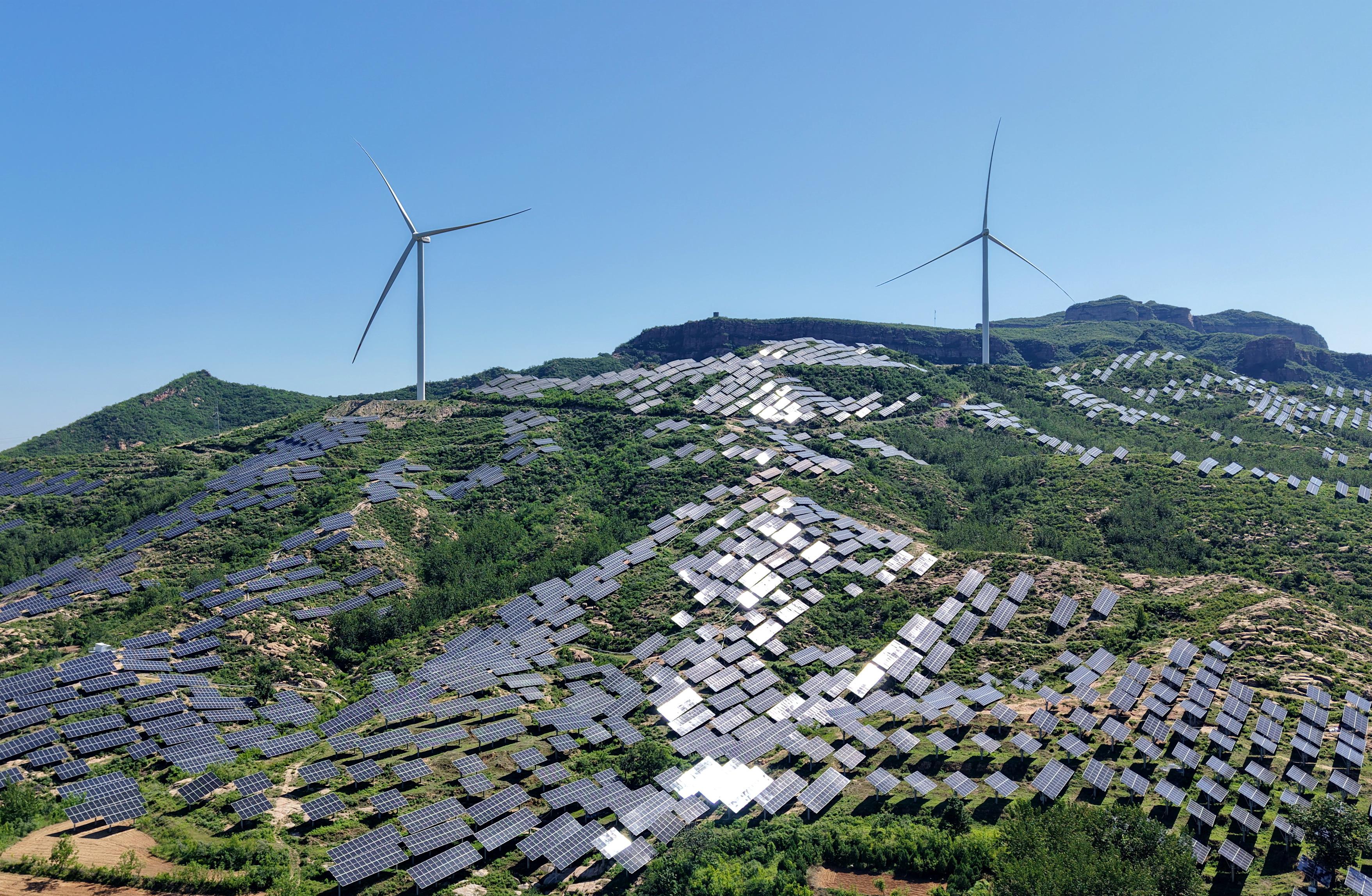
China will build a low-carbon, secure, and efficient new energy system by 2030, according to a blueprint issued by the National Development and Reform Commission and the National Energy Administration (NEA).
The plan for building a new energy system during the 15th Five-Year Plan (2026-2030) period envisions energy production capacity hitting 5.8 billion tonnes of standard coal by 2030.
Total installed power generation capacity will reach 5.4 billion kilowatts. Wind and solar power will make up 50 percent of installed capacity and become the mainstay of installed power capacity.
Non-fossil energy generation will also make up 50 percent of total electricity output as a dominant power source; coal and oil consumption will peak by 2030.
A series of milestone targets have been set to guide high-quality energy development in a scientific manner.
Energy security
Oil and gas reserves and production will be boosted, and oil substitution advanced.
Annual crude oil output will be stabilized at 200 million tonnes, with steady growth in natural gas production. The primary transmission capacity of natural gas pipeline networks will reach 500 billion cubic meters per year by 2030.
Production capacity and technical reserves for coal-to-oil and coal-to-gas conversion will be built up. Production capacity for green fuels tailored to local conditions will be developed in tandem. They include non-grain fuel ethanol, biodiesel, biomethane, sustainable aviation fuel, green ammonia and green methanol.
Green transition
A green and low-carbon energy consumption system will be built and green energy uptake raised.
The application of energy-saving and high-efficiency production technologies and processes in the industrial sector will be scaled up, low-carbon and zero-carbon transport corridors constructed, and energy efficiency boosted in emerging industries such as computing power.
Household energy electrification will be elevated, with per capita annual residential electricity consumption reaching 1,500 kWh by 2030.
Open and smart charging facilities will be perfected, with the number of charging piles doubling to 40 million by 2030.
New energy infrastructure
Focusing on integrated hydropower, wind and solar projects, China will push forward hydropower development.
Conventional hydropower installed capacity will stand at around 410 million kilowatts by 2030, and new energy power generation will account for 30 percent of total electricity output.
Nuclear power will be developed safely and steadily based mainly on third-generation pressurized water reactor technologies, with operational nuclear power capacity reaching approximately 110 million kilowatts by 2030.
An energy sci-tech innovation system underpinned by self-reliance and strength will be developed. Technological breakthroughs in and R&D of equipment for small modular nuclear reactors, fourth-generation nuclear reactors, offshore wind power, and advanced photovoltaic power will be accelerated.
International energy cooperation
China will strengthen international alignment of technologies and standards, promote integrated export of products, technologies, standards and services, and deliver benchmark green energy projects focusing on wind power, photovoltaics, hydrogen energy and energy storage.
It will also operate cooperation platforms including the Belt and Road energy partnership and the global clean energy partnership.
In addition, South-South renewable energy cooperation will be advanced, and a non-governmental international organization for nuclear power in China facilitated.