
How a Small Chinese City Became a Hub for German Firms
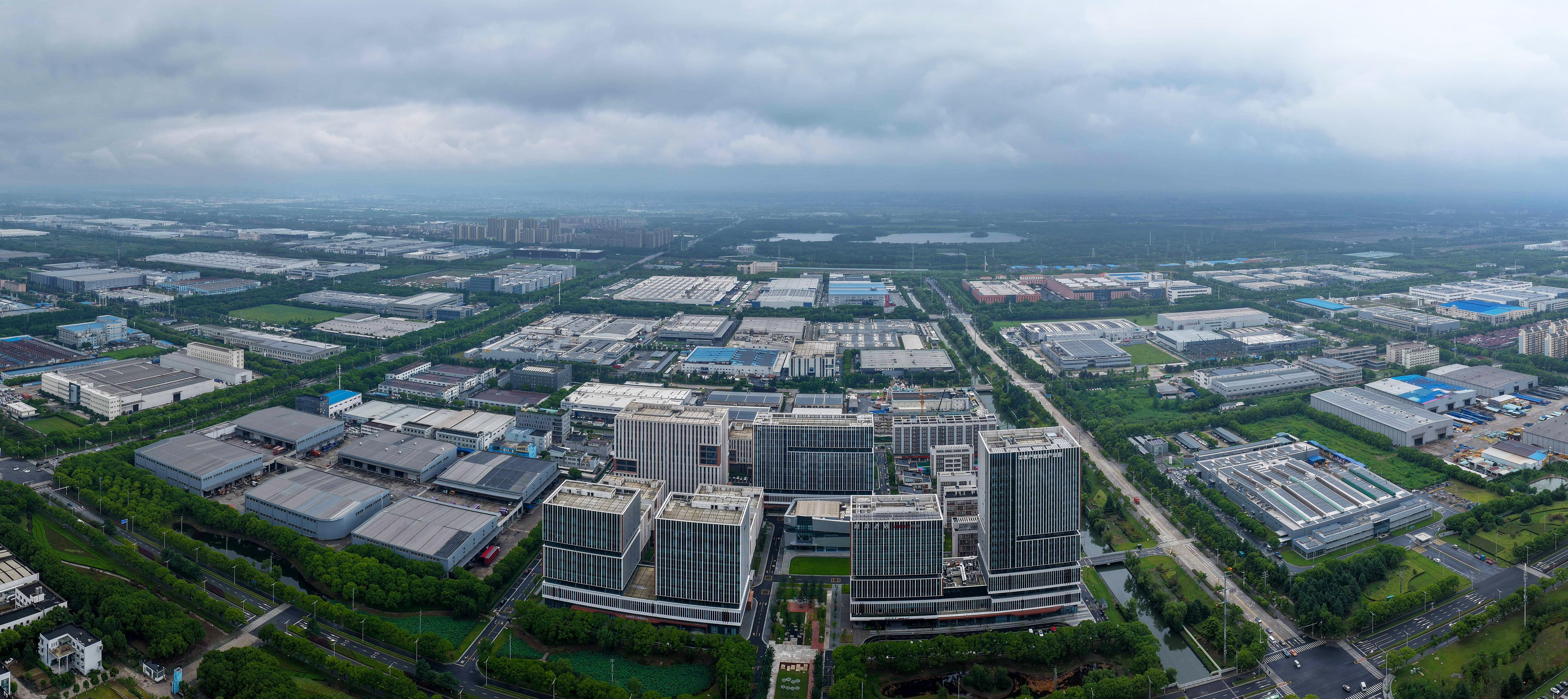
Six hundred years ago, Taicang, a small city on the south bank of the Yangtze River in Jiangsu province, east China, was the starting point of Admiral Zheng He's voyages to Southeast Asia and beyond. Even back then, Taicang was a gateway for China to connect with the outside world. Today, that spirit of openness continues, but in a different form. The city has become home to a large number of German companies.
The story of one couple explains why so many German businesses choose this place. Christopher Praetzas is an expert in aviation manufacturing and artificial intelligence. His wife Jiang Xiaohua worked in China's automotive industry. For years they had dreamed of starting their own company. They traveled between Germany and China, looking for the right location.
In early 2023, they spent a month visiting cities across China. "But after arriving in Taicang, we immediately knew that we wanted to start our company here," Praetzas told Science and Technology Daily (S&T Daily).
What convinced them? Praetzas recalled their first visit, when the government gave them a warm welcome, showed them around the city, and explained the available support policies. At that time, they hadn't even founded their company and were just two people with a vision. Yet they immediately felt welcomed and, as he put it, "We were treated not as who we were then, but as what we could become."
That impression made the decision easy. Praetzas said since starting the company, he has had many rewarding surprises. "The most rewarding one is how well the government and business work together in Taicang," he remarked. He feels the government's strong economic focus every day, something he would never experience back in Germany.
By early 2024, their company, CIT (Taicang) Automotive Technology Co., Ltd., was running at full capacity in the Sino‑German Life Science Park. It produces air‑suspension compressors for new‑energy vehicles. Now in their fourth year in Taicang, the couple are busy with production line upgrades and new growth plans. "We fully located our R&D center here, with a highly skilled mixed Chinese‑German team," Praetzas said. "For example, we are the technology leader in central air supplies for automotive, a new industry trend, and this product was fully developed in Taicang."
Their story is not unique. Today, this city hosts a large cluster of German companies, including many "hidden champions" – global leaders in their specialized fields. Over more than three decades, Taicang has worked hard to build its reputation as a model for Sino‑German cooperation. It combines government support, vocational training, and strong R&D partnerships.
German companies in Taicang do more than produce goods. A significant number have set up R&D centers in the city, and most take part in innovation activities like process improvement. Their R&D spending is substantial. Major platforms have also set up operations here.
In 2025, Taicang signed a cooperation deal with Germany's Fraunhofer Society. This allows local companies to work with many of the society's research institutes on specific projects. The model works like this: Companies raise technical problems, institutes provide solutions, and the government offers policy support.
To make cooperation easier, Taicang has set up a network of liaison offices in Germany. It has also opened a dedicated data link between China and Germany, created special service windows for German firms, and solved mobile payment problems for German nationals. These steps form a complete service system for German businesses.
A key reason for Taicang's success is its talent pool. As Praetzas said, "We decided to pursue R&D in Taicang because innovation needs talents, and in Taicang many talented employees can be found. Taicang built a lot of different educational systems, which provides us with a big pool of potential employees." German nationals now make up a significant portion of foreign professionals working in Taicang.
The city introduced Germany's dual‑system vocational education model in 2001, the first in China. It set up the country's first training center that follows German standards, and the only AHK (German Chamber of Commerce Abroad) dual‑system demonstration base in China. Since then, Taicang has launched China's first dual‑system undergraduate program and created the first national standard for this type of education. Today, it is a major examination and training base for German professional qualifications in China. It has trained a large number of skilled managers and technical workers.
This strong talent foundation has been key to Taicang's success, but local officials say there is more to come. Wang Weifeng, director of Taicang's Bureau of Science and Technology, told S&T Daily that their work is guided by a constant process of exploration, exchange, and implementation. The cooperation models and matchmaking channels are being refined through practice.
He stressed that substantive outcomes come from frequent, in‑depth, face‑to‑face dialogue, not from signed agreements alone. "Our current priority is to make cross‑border cooperation more tangible and results‑oriented, ensuring that joint efforts deliver concrete technical solutions and foster genuine two‑way innovation between China and Germany."