
Shanghai to Build Basic Research-driven Innovation Hub
As construction of the Shanghai (Yangtze River Delta) International Science and Technology Innovation Center accelerates, Shanghai, a prime window into China, is channeling scientific momentum into the region's high-quality development.
A symposium on strengthening basic research in April has enhanced researchers' determination to "venture into the unknown." Scaling the peak of discovery demands fresh approaches that will aid pioneers in their ascent and provide a safety net for the arduous journey from lab to market.
New paradigms of discovery
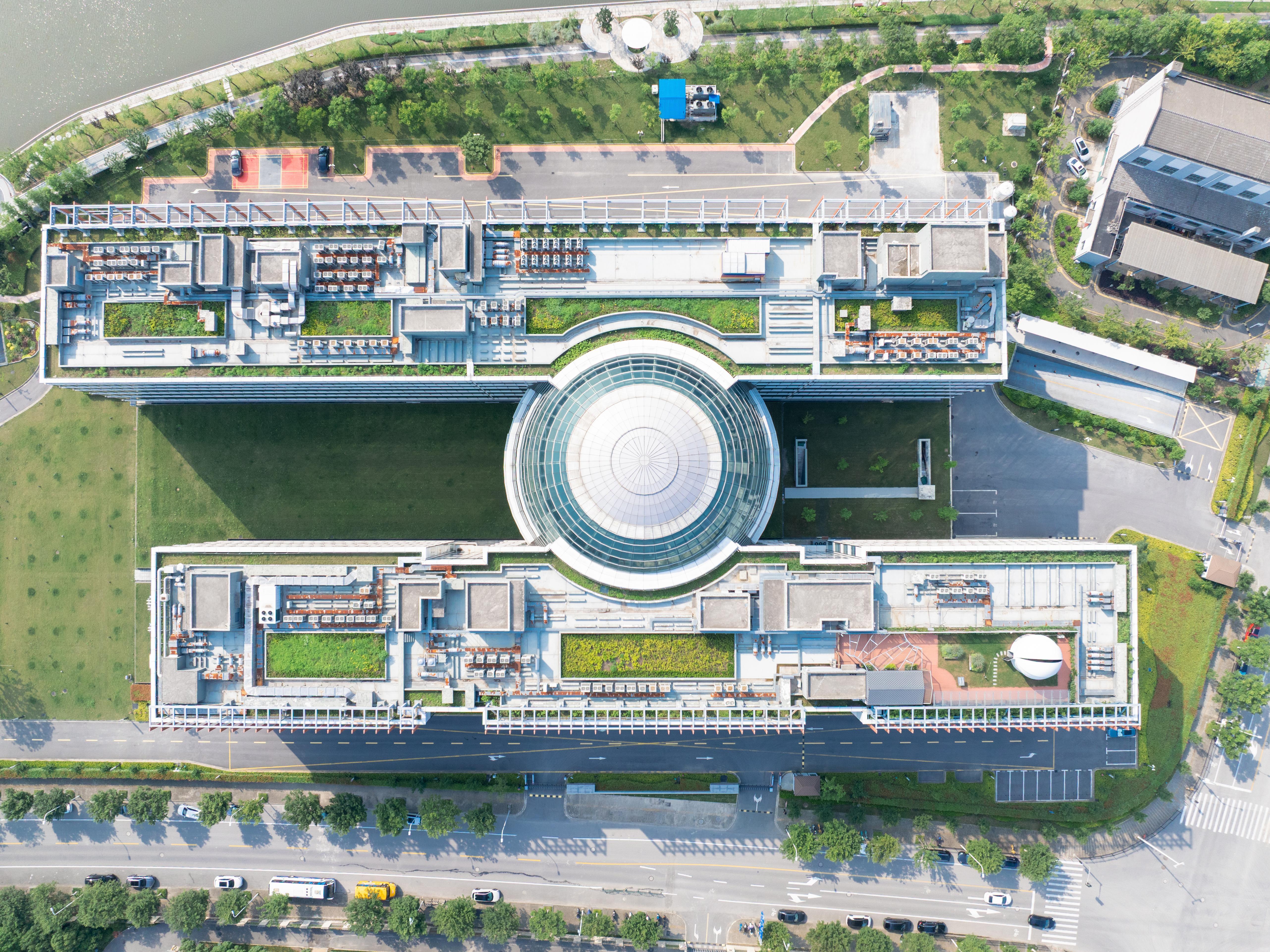
"China today offers the best opportunity for basic research," said Zhang Jie, an academician of the Chinese Academy of Sciences (CAS) and director of the Tsung-Dao Lee Institute (TDLI) at Shanghai Jiao Tong University. "As we push the frontiers of fundamental science, we must leverage the big-science paradigm to conduct focused research. TDLI is a proving ground for this approach."
At the TDLI, different disciplines collaborate and theoretical and experimental scientists work side by side. A tolerant, pluralistic atmosphere drives iterative progress on fundamental questions. Anchored by mega science initiatives like the TRIDENT project, the TDLI has built a global collaborative network.
"Our goal is to create a new model of international cooperation where Chinese institutions set goals, build facilities, assemble teams and lead the charge," Zhang said. "We aspire to build an institute like Denmark's Niels Bohr Institute in the 1920s — one that advances human civilization, fulfilling physicist Tsung-Dao Lee's vision of making 'fundamental contributions to the progress of humankind.'"
Young talent pours in from around the globe. International scholars now account for nearly 40 percent of the TDLI's researchers.
Innovative talent selection
Between basic biology and clinical medicine lies a notorious "valley of death": Thousands of biological targets are identified and hundreds of thousands of papers published — yet only a fraction become approved diagnostics or therapies. CAS's Interdisciplinary Research Center on Biology and Chemistry (IRCBC) is building a bridge across that chasm.
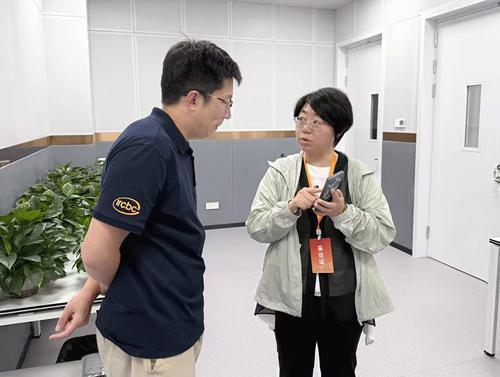
When Yuan Junying, a foreign member of CAS and director of the IRCBC, first spotted Liu Cong, the latter was then a young postdoctor without any prestigious academic title. The center created an environment that fostered close interdisciplinary collaboration between biologists and chemists. Liu spent 10 years focusing on a key protein in Parkinson's disease. Together with organic chemist Tan Li, he found the "bridge" — a world-first early diagnostic method that teams worldwide had been hunting for. In collaboration with Wang Jian, director of neurology at Huashan Hospital in Shanghai, they brought it to clinical use, making early Parkinson's detection possible.
For Li Dangsheng, chief scientist at the Shanghai Academy of Natural Sciences, Liu is a standout example of the academy's new funding model. As one of the first batch of young scientists backed through its closed-loop system — select and evaluate, fund and empower, exchange and collaborate — Liu has moved his research from lab to clinic, cracking a challenge that stumped the global scientific community.
"Liu's success fills us with pride," Li said. "Our mission is to provide long-term, stable support for high-risk, high-value basic research based on proposal merit. We aim to explore replicable models for talent identification, evaluation and funding that can drive original and disruptive discoveries."
Luo Dajin, director general of the Shanghai Science and Technology Commission, said Shanghai will deepen institutional reforms of science and technology, enhance original innovation capacity and improve overall system efficiency.
Elevating scientific support
"The success may not be mine, but I'm proud to have contributed" — this motto captures the spirit of the Shanghai Synchrotron Radiation Facility (SSRF), one of China's key national science and technology infrastructures.

The SSRF is China's first third-generation synchrotron light source. Located in Shanghai's Zhangjiang, it opened in 2009. To date, its 38 beamlines and 55 experimental stations have served over 6,000 users from more than 1,000 institutions nationwide, supporting some 30,000 experiments and yielding about 17,000 papers. It has facilitated breakthroughs in life sciences, materials science, condensed matter physics, chemistry, energy, environmental science and medicine.
More such facilities are coming up. Shanghai has built, or is building or planning 20 major facilities across fields like matter, chemistry, life sciences and marine studies — with a total investment of 35 billion RMB. These facilities are working to enhance openness and sharing, serving corporate innovation and supporting industrial development.
China's 15th Five-Year Plan period (2026-2030) has begun. "Under the guidance of the Ministry of Science and Technology, Shanghai is expected to strengthen strategic alignment with Jiangsu, Zhejiang and Anhui provinces," said Wang Weinan, an associate researcher at the Chinese Academy of Science and Technology for Development. "Together, they will build a world‑class research environment and innovation ecosystem, accelerating Shanghai's emergence as a global innovation powerhouse."