

Growing Green Ecosystems on Barren Mountains
Once described as a desolate, windswept, landscape devoid of vegetation, the north and south mountains of Lhasa in Xizang autonomous region, situated on the Qinghai-Xizang Plateau, have now taken on a completely different look. On both sides of the Lhasa River, patches of green spread across the slopes in terraces, a transformation achieved by the Lhasa North-South Mountain Greening Project.
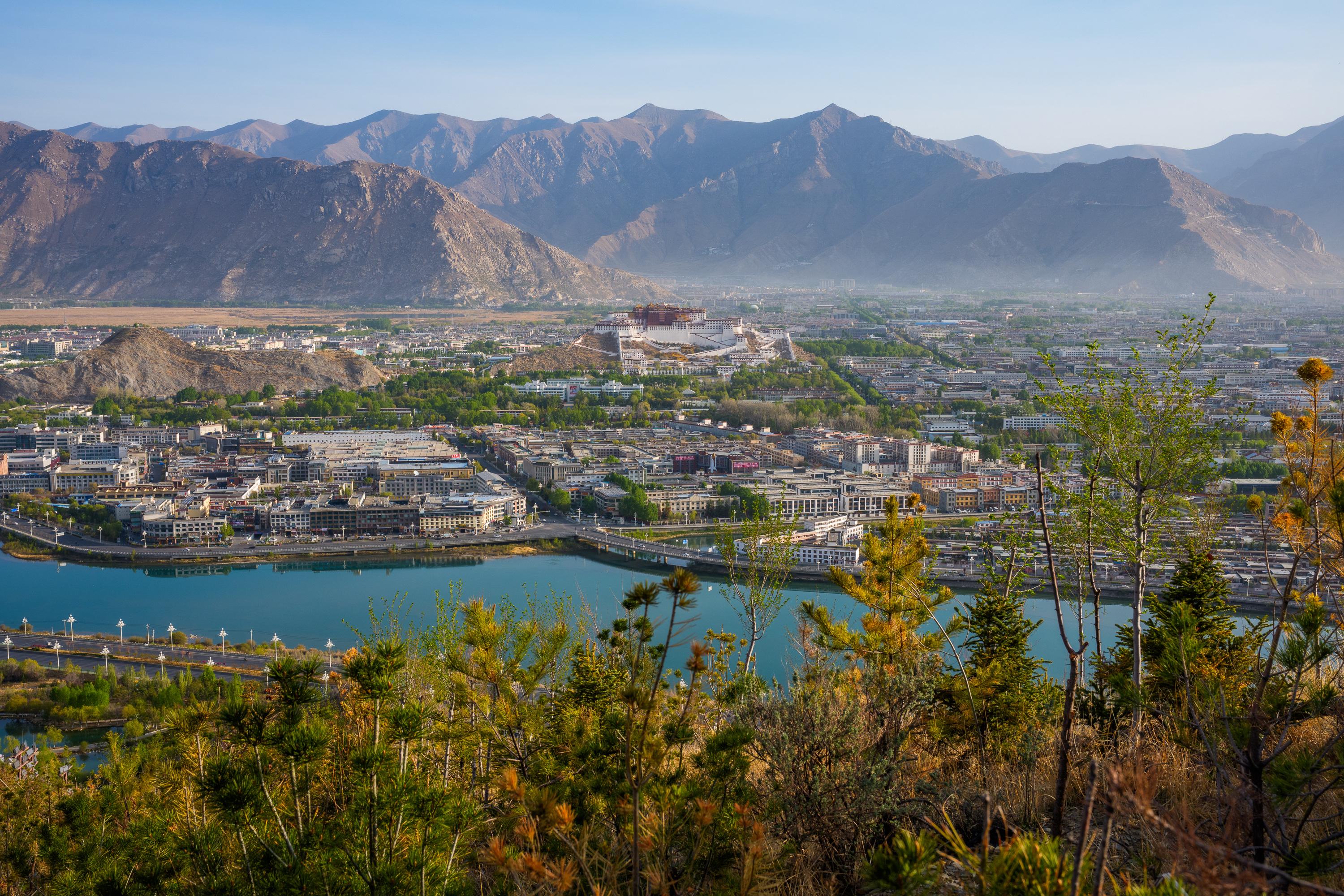
In 2022, the policies on encouraging and supporting participation in the greening of the north-south mountains of Lhasa were issued, establishing a systematic support framework covering land, funding, carbon sinks and insurance, while guiding private capital to engage in the project.
In 2023, the Lhasa north-south mountain greening management regulations were introduced, providing a solid legal foundation for the construction and management of the greening project.
In 2025, a directive released by the head of Xizang forestry, suggested making the North-South Mountain Greening Project a demonstration initiative for science-driven afforestation across the region.
With all the policies and guarantees in place, the next challenge was to tackle afforestation on the barren, high-altitude Qinghai-Xizang Plateau, where the harsh climate makes it difficult for many tree species to survive.
Technology became the key to cracking this challenge, with researchers selecting species that could overcome low survivability.
The Institute of Tibetan Plateau Research of the Chinese Academy of Sciences, together with Sichuan University and other institutions, conducted research on mixed planting of male and female poplar and willow trees to improve stress tolerance in forest stands, allowing these trees to live longer and grow better on the plateau.
Other teams simultaneously focused on tapping into local genetic resources, assisted by experts from Hubei province who selected eight native Tibetan tree species with excellent traits, such as cold resistance, drought tolerance and adaptability to poor soil. This included Quercus spinosa, also known as the spiny-leaf oak, which were scientifically cultivated to better withstand the plateau's extreme environment.
Yet having the right seeds was only half the battle. The next challenge was to plant them successively on the high-altitude slopes.
At altitudes above 4,000 meters, drones were used to deliver seedlings. Each drone carried 40-45 kilograms per flight, speeding up the planting process and greatly improving efficiency.
In Lhasa's Qushui county, Shanxi Construction Engineering Group Co., Ltd. dispatches drones in real time through a digital command-and-control system, increasing efficiency by 60 percent.
According to official data, the North-South Mountain Greening Project has planted a total of 932,400 mu (approximately 62,160 hectares) of trees, with over 125 million seedlings planted. The overall survival rate of seedlings remains stable above 85 percent, marking the successful achievement of the five-year goal to turn the mountains green.