

Xuelong Completes Ice Station Operations in Arctic Ocean
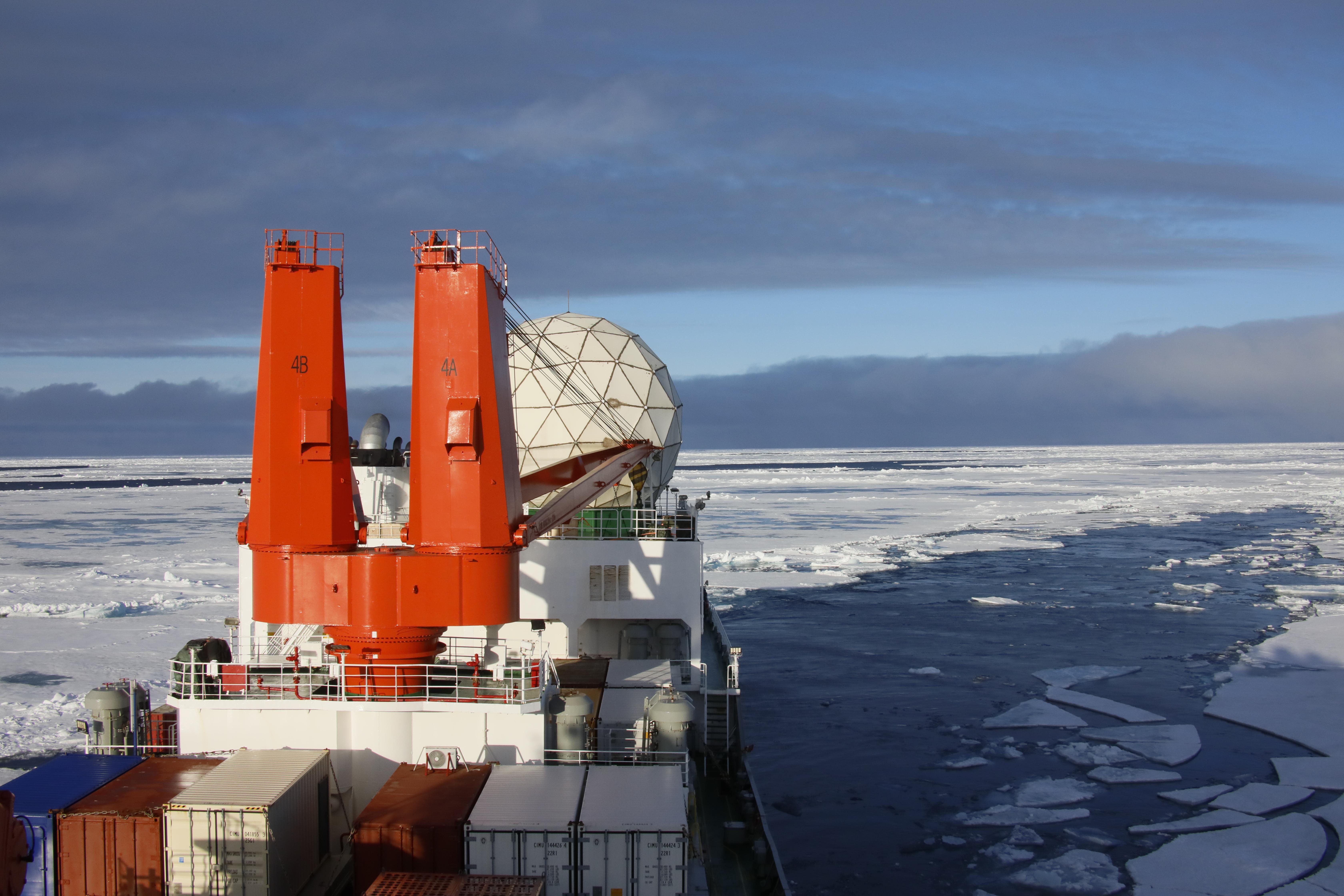
China's research icebreaker Xuelong completed operations at the 12th ice station in the central Arctic Ocean on August 7 as part of the 16th Arctic Ocean scientific expedition. It was also its final ice station on this expedition.
He Jianfeng, deputy leader and chief scientist of the expedition team aboard Xuelong, said the number of ice station operations was a record high. The team transported all supplies for the expedition across the frozen ocean surface, deploying over 30 sets of ice-based buoys.
Why did they conduct operations on the ice surface when Xuelong the ice breaker was there? That's because the sea ice in the Arctic plays an important role in modulating the climate and environment, and is a key subject of research during each expedition, He said. There are two goals for conducting operations on the ice surface: to conduct detailed observations and sampling of sea ice and the air-ice-sea interface, and to use sea ice as a platform for deploying unattended long-term observation equipment to collect continuous observational data.
Limited by logistical support, ship-based expeditions normally take place in summer, but the Arctic's influence on the planet is all year round. Therefore, the second goal is a crucial approach to supplement the ship-based expeditions and collect long-term and continuous data.
Traditionally, there are two kinds of ice stations. The short-term ice stations last for only several hours and focus on basic environmental data and sample collection; the long-term ones could last for days and focus on process observation and research.
Qu Meng, leader of Xuelong's sea ice team, said the 12 ice stations designated for the expedition were short-term stations. There was relatively heavy sea ice cover in the Chukchi Plateau ocean operations area at relatively low latitudes, making ocean operations unsuitable. After careful consideration, the team decided to bring forward the ice-station operations at higher latitudes to late July.
Sea ice will continue to melt over the next two months. To ensure that the unattended observation equipment remain operational through the summer melt season and continue operating as long as possible, the team looked for thicker sea ice when selecting sites for the ice stations.
The planned sites are at relatively high latitudes, all north of 82°N. Overall, they are at higher latitudes than those where the Xuelong deployed ice stations in previous years.
Before ice station operations begin, the expedition sends personnel to assess the ice conditions. Even in the depths of winter, Arctic sea ice is constantly on the move, drifting under the influence of winds and ocean currents and forming ice floes of various sizes.
Zhou Hongtao, who conducted multiple ice assessments during the expedition, said the first requirement is finding relatively flat sea ice that is thick enough to set up a tripod to deploy instruments and other equipment. There should be few melt ponds or ice cracks near the selected site so that the equipment remains in place as long as possible.
China has been conducting Arctic Ocean expeditions since 1999. This is the Xuelong's 10th Arctic Ocean expedition, six years after its previous mission.