

Claim of China's 'Overcapacity' Nothing but a False Proposition
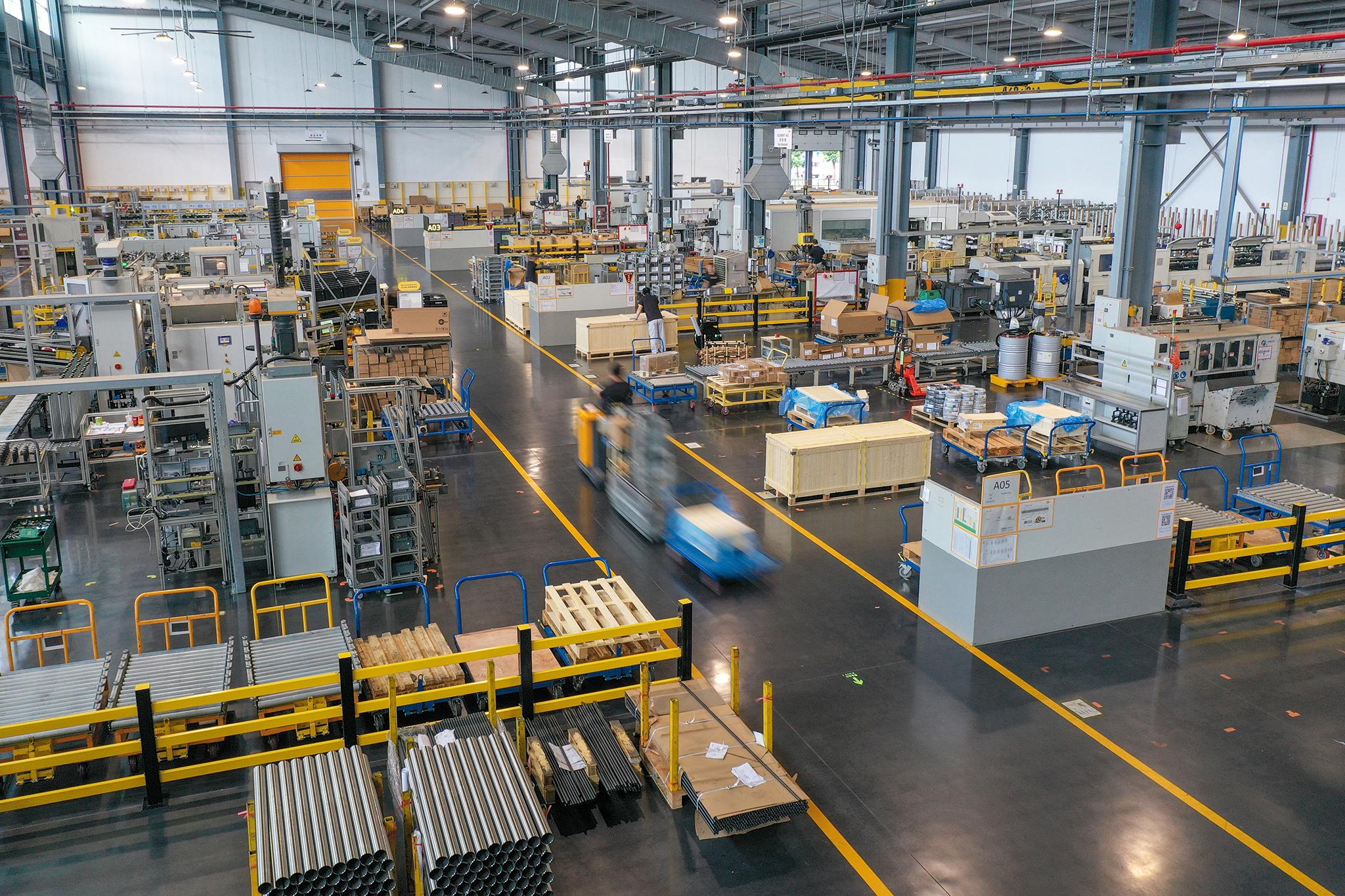
Lately, Western media outlets have been publishing articles accusing China of so-called "overcapacity," which is largely a political tag imposed by some Western politicians and media to advance protectionism, rather than an objective description of the economic realities.
Lin Weilong, director of the Policy Research Office of China's Ministry of Commerce, said overcapacity is a dynamic phenomenon in the market economy. It is related to changes in supply and demand and is influenced by the industrial life cycle. It is always in a dynamic cycle of "balance - imbalance - re-balance." Balance is relative, and imbalance is universal.
At the same time, the rate indicator of capacity utilization needs to be viewed separately based on the actual situations of different countries and various industries.
"From the perspective of China's situation, the overall industrial capacity utilization rate is within a reasonable range," Lin said.
In 2025, the capacity utilization rate of large-scale industrial enterprises was 74.4 percent. In high-tech manufacturing, high-end equipment manufacturing, and strategic emerging industries, it was more. However, for some traditional industries such as raw materials, it was temporarily lower due to structural adjustments and green transformation, which are adaptive adjustments brought about by the process of industrial quality improvement and upgrading.
"Overall, China's industrial supply and demand are basically balanced and the operation trend is stable," Lin added.
As for the fallacy that subsidies lead to overcapacity, from the perspective of economic laws, there is no inevitable causal relationship between subsidies and overcapacity. Reasonable industrial subsidies are used to correct market failures and support the growth of emerging industries. They are a common and legal policy tool worldwide.
Data from the United Nations Conference on Trade and Development shows that the number of global industrial policies continued to increase in the past five years. Research and development subsidies, tax incentives, and low-interest loans are all policy measures commonly adopted by World Trade Organization (WTO) members.
If the claim that "subsidies inevitably lead to overcapacity" held true, then all major economies in the world would face accusations of overcapacity — a conclusion plainly at odds with the facts. Forcibly tying subsidies to overcapacity runs counter to the prevailing practices of global industrial development.
To assess the correlation between subsidies and production capacity, the first step is to examine the actual intensity of the use of industrial policies. A long-term tracking study conducted by a research team from the University of British Columbia in Canada on major economies worldwide found that between 2009 and 2020, Germany, Japan, Brazil, and the U.S. were among the economies that utilized industrial policies most frequently.
China ranked only 11th, with its frequency much lower than that of many emerging market countries. China's implementation of subsidy-based industrial policies was limited in terms of quantity. Therefore the conclusion that "subsidies lead to overcapacity" is unfounded.
The international competitiveness of China's industries stems from the support of domestic demand from an extremely large domestic market, the complementary advantages of a complete industrial system, and the long-term accumulation of technical talent. Attributing competitive advantages simply to subsidies lacks empirical research support and goes against the basic principles of industrial development.