
Fostering Integrated Innovation of Digital, Intelligent & Green Tech
An action plan to advance coordinated digital and green transformation during the 15th Five-Year Plan period (2026‑2030) is issued jointly by seven authorities including the Cyberspace Administration of China (CAC), the National Development and Reform Commission, the Ministry of Industry and Information Technology, and the Ministry of Ecology and Environment.
The plan targets to significantly improve energy efficiency in emerging sectors such as computing power facilities and 5G base stations by 2030.
Digital and green transformation will be advanced in key areas including agriculture, manufacturing, trade, consumption and urban operation. The capacity of digital and intelligent technologies to empower ecological and environmental governance will be enhanced.
The CAC defined coordinated digital and green transformation as a process that fosters integrated innovation of digital, intelligent and green technologies, and advances coordinated development of the digital economy and green economy.
Centering on the development goals for the 15th Five-Year Plan period, the plan lays out 14 key tasks under four categories: advancing integrated innovation of digital intelligent and green technologies, boosting energy-use efficiency in emerging sectors, scaling up applications in key fields, and strengthening foundational support.
The specific measures are:
◆Deploying general large models, industry-specific large models and agents, and promoting low-carbon and green development of computing power facilities, communication base stations and digital enterprises.
◆Focusing on key technologies such as digital-twin simulation and multimodal perception, and expanding innovative applications of AI algorithms in green operation scenarios.
◆Developing new energy agricultural machinery,and advancing digital-intelligence-driven green farming.
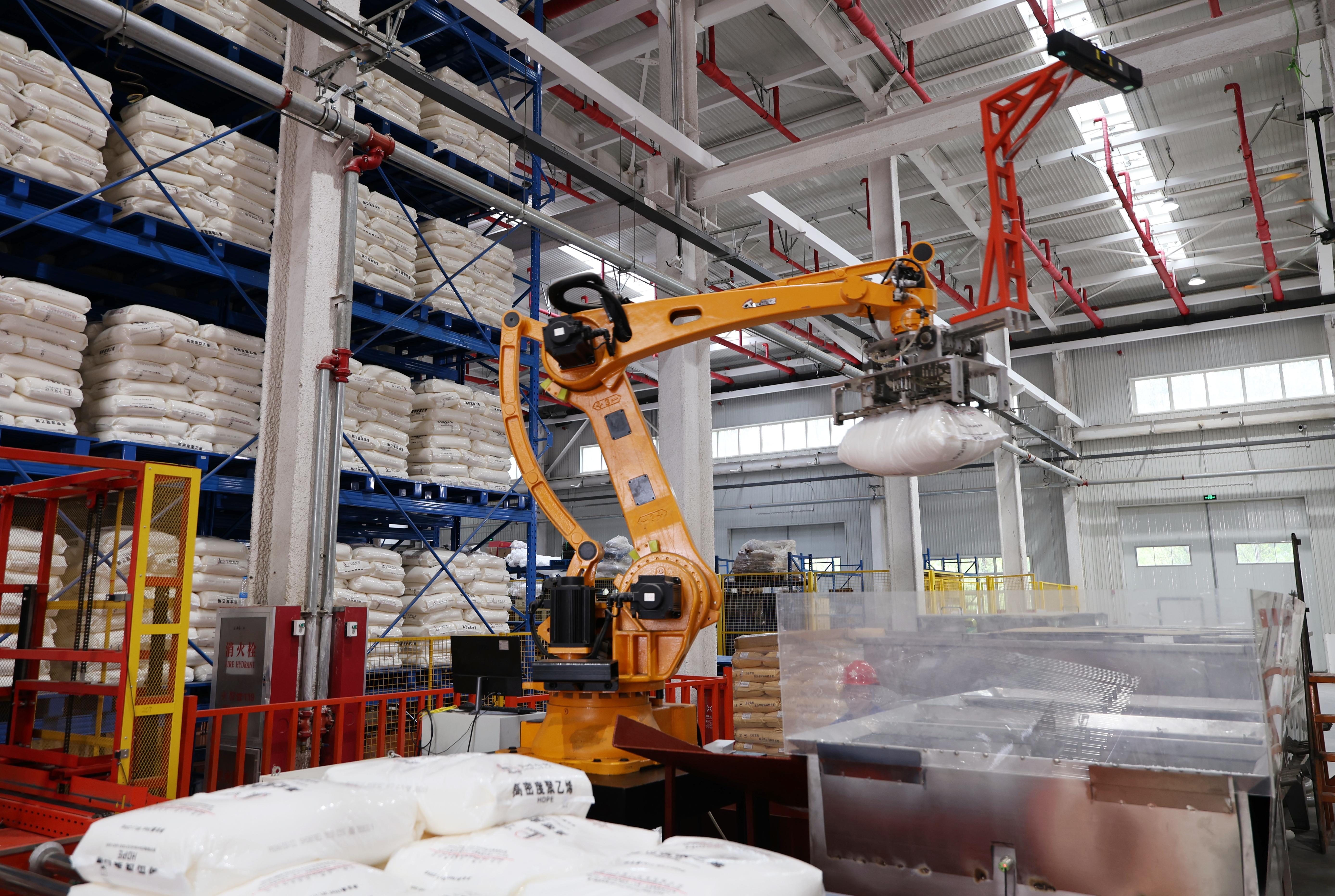
◆Accelerating the development of new generation smart manufacturing and green manufacturing.
◆Researching and formulating a guiding catalog for the import and export of green goods and services.
◆Increasing the supply of AI-enabled terminals, smart wearables, green home appliances, green building materials, new energy vehicles and other products to boost consumption of green and smart commodities.
◆Promoting the construction and upgrading of city information modeling platforms, and deepening the application of digital-twin technologies in urban energy networks.
For deeper international exchanges and cooperation, the plan calls for dialogue and collaboration on digital and green economies through multilateral mechanisms and forums including the World Trade Organization, the Belt and Road Initiative, G20, BRICS, the Shanghai Cooperation Organization, APEC and the World Internet Conference.