
2026 World Young Scientist Summit: Youth at the Heart of AI-era Science

With AI increasingly influencing the global scientific landscape, young scientists are stepping to the forefront to drive responsible innovation. Against this backdrop, the 2026 World Young Scientist Summit (WYSS) was held in Wenzhou, Zhejiang province, on October 24-25, bringing together global science talent to chart a sustainable future in the AI era.
Centered on the theme "Converging the World's Talents, Creating a Better Future" and the annual focus "Global Youth Action in the AI Era: Building a Sustainable Future," the event encouraged young scientists to pursue responsible innovation in AI, promote cross-cultural exchange and mutual learning, and engage in global science and technology governance.
Advancing global cooperation
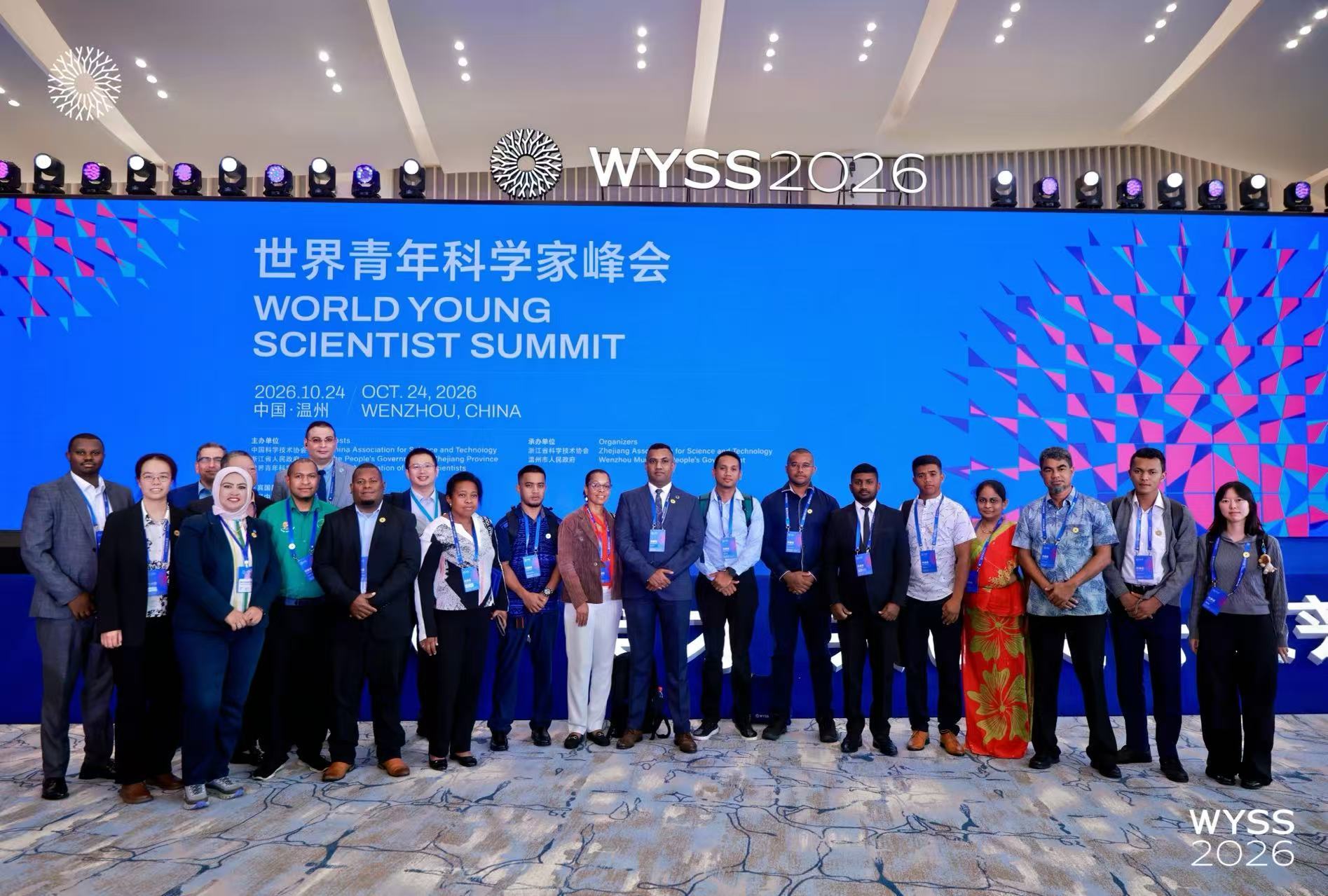
In a first, the World Academy of Sciences (TWAS) was invited as the “guest of honor” international organization, bringing approximately 22 scientists from 15 countries to dialogue and build partnerships with young Chinese scientists. Voices from the Global South had a prominent place at the gathering with members of the Organization for Women in Science for the Developing World participating.
Marcelo Knobel, executive director of TWAS, highlighted the critical role of AI in addressing global challenges. "Responsible AI requires rigorous science, ethical judgment, and public trust," Knobel said, adding that "young scientists must have a voice in global technology governance." He also pointed out the existing disparities in scientific resources. "Access to these opportunities remains unequal," he said, noting that many talented researchers lack advanced training, computing resources, or international connections.
To address this, TWAS and the China Association for Science and Technology (CAST) signed a cooperation agreement running through 2031. It will support up to 100 research visits a year by young researchers in the TWAS network, together with workshops and joint research activities in China.
Renewal and growth
Several major initiatives were launched to empower young researchers, including the WYSS Journal Partnership Program, the Global Young Scientists Innovation and Entrepreneurship Growth Support Program (2026), the Global Young Scientist Pioneers Under 35 List, and the 2026 Young Scientist Sustainable Development Goals Award.
The Report on the Distribution and Mobility of Young Scientists in Embodied Intelligence, compiled by the Institute of Scientific and Technical Information of China, mapped global scientific talent. Drawing on a sample of about 1,800 scientists, it shone the light on a demographic with a median age of 34. Furthermore, nearly 70 percent of these researchers have experienced cross-regional mobility, demonstrating strong integration across academia and industry.
Reimagining education in the AI era
With a highly mobile and youthful workforce, how to educate and train the next generation in the age of AI has become a pressing question. Efim Zelmanov, Fields medalist and chair professor at the Southern University of Science and Technology, China, advised young scientists to “listen respectfully to what your teachers say, but take your own decisions.” He also urged them to be ambitious: “If the logic of your research brings you to a big problem, take it as an opportunity.”
While acknowledging that AI unleashes unprecedented productivity, Zelmanov warned against the risks of over-reliance. "The AI revolution cannot slow down, but you have to pay increased attention to safety," he cautioned. He firmly believes that technology cannot replace human connection in education: "AI is a powerful tool in the hands of a good teacher. But AI cannot replace the teacher."
Reflecting on Wenzhou's reputation as a "hometown of mathematics," Zelmanov attributed the city's success to a strong education system and good schools, adding that cherishing this scientific legacy was vital.
Driving sustainable development
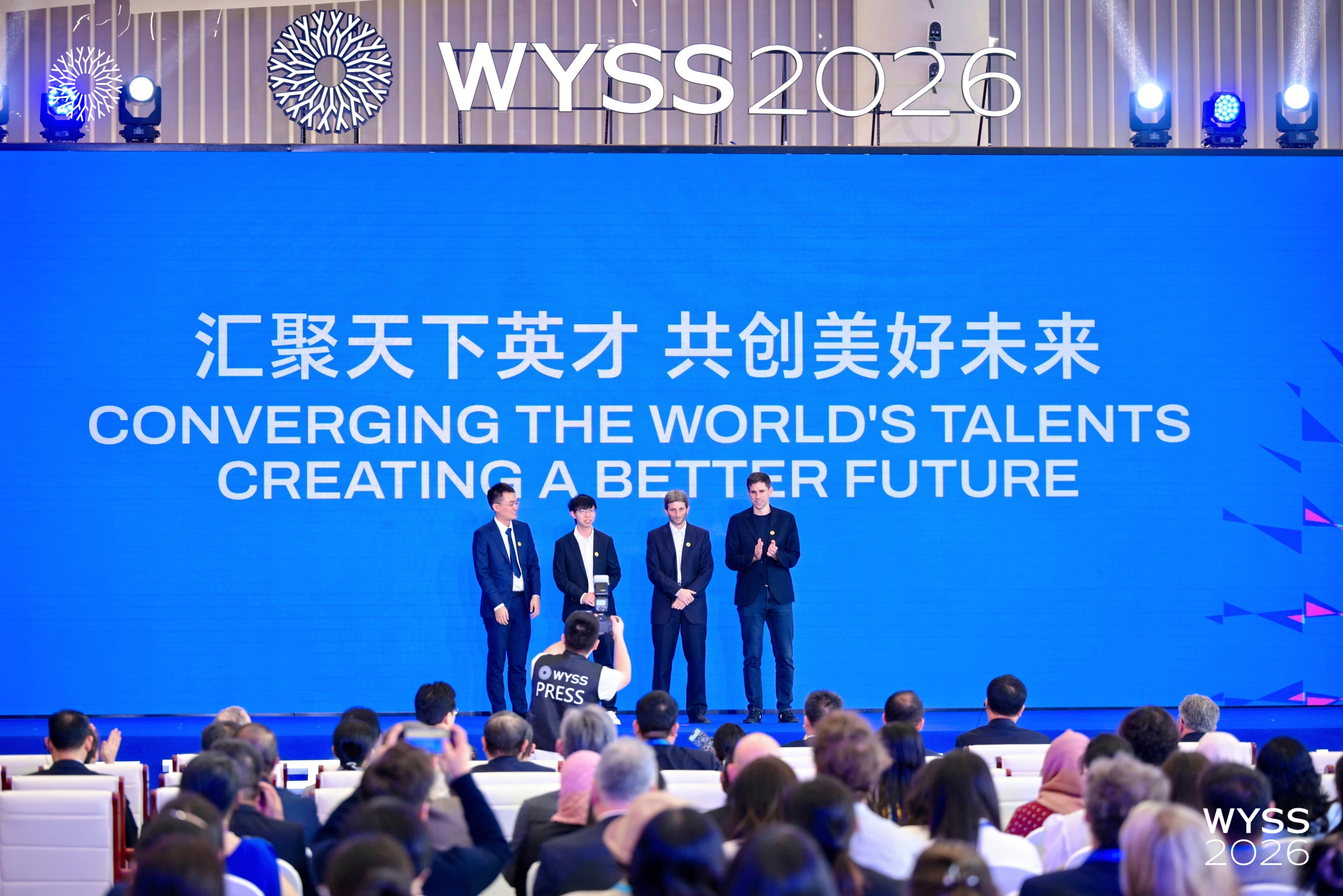
Early-career researchers took center stage at the summit, accounting for 88 percent of participants. The 2026 Young Scientist Sustainable Development Goals Award was presented to four recipients from China and abroad. Two international awardees shared their research and reflections on the flash-talk stage.
Nicola Segata, professor at the University of Trento, Italy, who was recognized for applying computational methods to study the human microbiome, emphasized that modern science is “fundamentally a collaborative effort, so I really need to share the milestones with the members of my group, my international collaborators.” "Understanding this microscopic world inside us is essential to achieving our macroscopic goals,” he added, “particularly in fostering sustainable food systems and increasing the well-being of populations worldwide."
Cesar de la Fuente, associate professor at the University of Pennsylvania, USA, was honored for using AI to accelerate the discovery of new antibiotics. "Our AI systems have vastly accelerated our ability to come up with new molecules that allow us to combat currently untreatable infections," he said. He credited his multidisciplinary team of computer scientists, engineers, biologists, and chemists for pushing the boundaries of knowledge. "There's still a lot of work ahead and this recognition only gives us more confidence to chart forward," he added.
To support such cross-disciplinary breakthroughs, the summit featured 12 parallel forums covering future manufacturing, quantum information, embodied intelligence, brain-computer intelligence, environmental science, deep-sea resources and life and health.