

Shuipai: World's First Water-powered Bellows
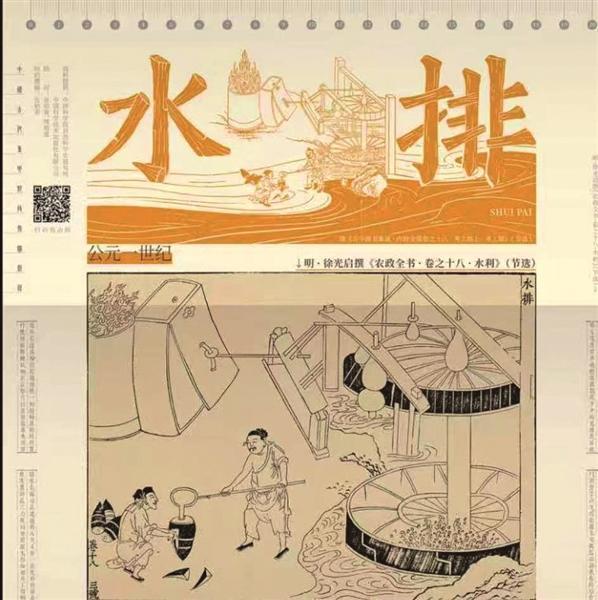
The shuipai — water-powered bellows — was a monumental leap in engineering history, transforming metallurgy from a labor-intensive process into an automated, highly efficient industrial one. Ancient China was the birthplace of this technological revolution, pioneering automated metallurgy centuries before the rest of the world.
Manual bellows operated by feet or hands had been used globally for generations, but China's early mastery of cast iron demanded a radical solution. Cast iron requires much higher temperatures than wrought iron, so Chinese metalworkers needed a way to supply their massive blast furnaces with a constant, high-volume flow of oxygen.
The definitive breakthrough occurred in 31 CE during the Eastern Han Dynasty when Du Shi, an engineer and government official, invented the first recorded water-powered bellows. By applying the power of horizontal and vertical waterwheels to highly sophisticated reciprocating piston bellows, China fundamentally decentralized the effort required for smelting.
This technological leap enabled the Han Dynasty's state monopolies to mass-produce high-quality cast iron weapons, advanced agricultural tools such as iron plows, and large-scale architectural components.
A water-powered bellows system relies on several core mechanical parts working in unison: the waterwheel, the axle and camshaft, levers and linkages, air chambers, valves, and the tuyere.
The mechanism relies on continuous transfer of motion among these components. A flowing river or stream turns the waterwheel, converting hydraulic energy into rotational mechanical energy. The wheel's main axle turns and the protruding cams or crank rods push down rhythmically on the connected levers, converting the wheel's rotational motion into back-and-forth linear motion.
This motion systematically compresses and releases the air chambers. As one chamber compresses to expel air, the other expands to draw it in. Heavy-duty valves regulate this airflow, ensuring a powerful, uninterrupted blast of oxygen is pushed straight through the tuyere into the heart of the furnace.
Before China's automation, forcing oxygen into a blast furnace required hundreds of laborers or draft animals to work in grueling and hazardous conditions. Water-powered bellows reduced human labor costs while vastly increasing output. Their steady, high-volume airflow helped furnaces to sustain temperatures above 1,200°C, making consistent iron melting and refining possible. This sparked a metallurgical revolution that changed infrastructure, warfare and global technology.