

Youth Innovation and Entrepreneurship Competition Sparks Creative Ideas
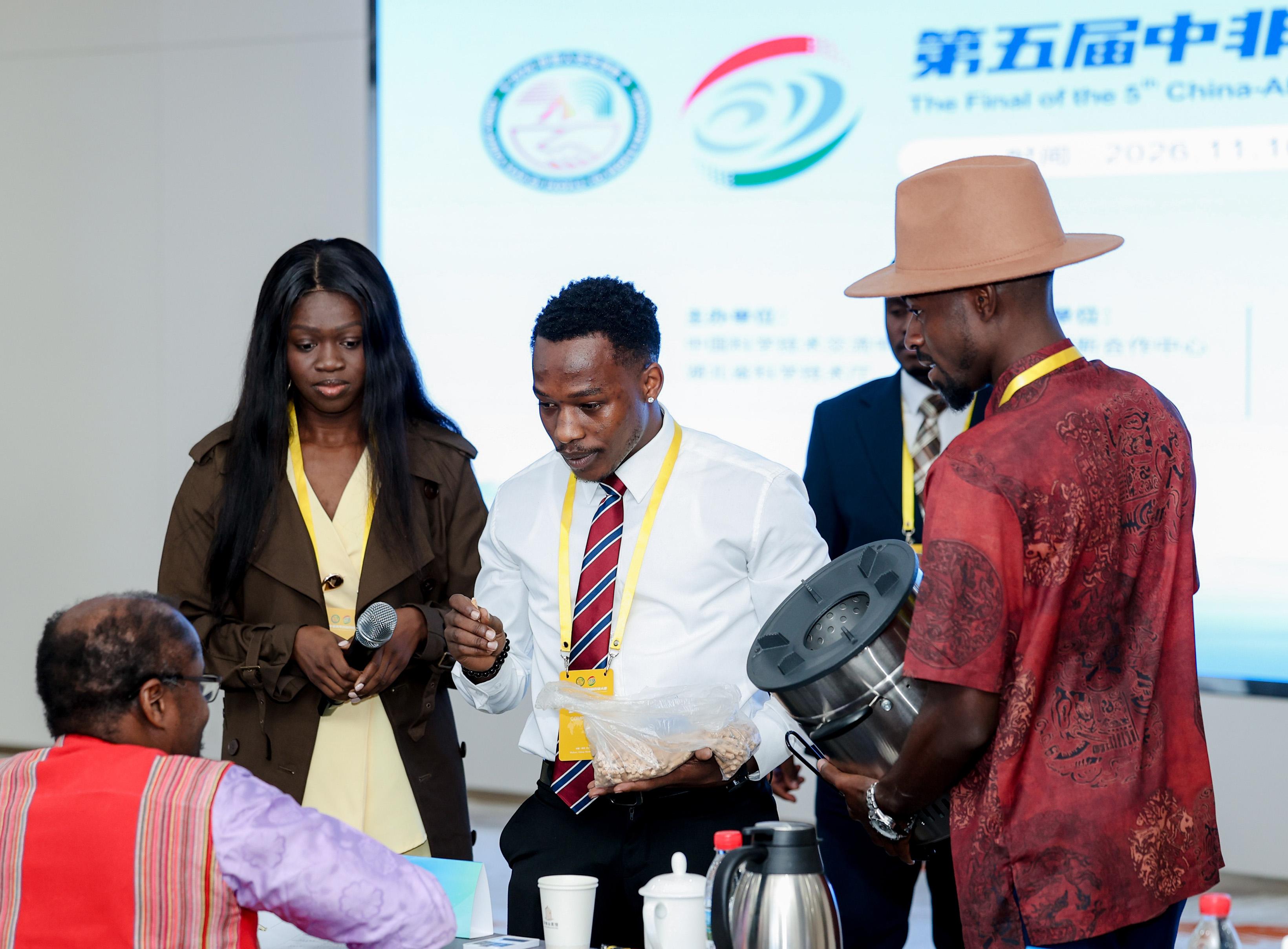
"I am very honored to have the opportunity to introduce our project." When Kem Seno Pavel Daryl, a young man from Cameroon, took the stage, he drew everyone's attention with his fluent Chinese.
After Daryl's 10-minute pitch delivered entirely in Chinese, Diarra Boubacar Thiemoko, a competition judge from Mali, was the first to ask a question. Interestingly, Thiemoko also asked his question in Chinese.
This scene unfolded on November 10 at the final of the 5th China-Africa Youth Innovation and Entrepreneurship Competition held in Wuhan, Hubei province. A total of 17 projects competed in the final.
Africans are eager to learn about China, and there is huge demand for Chinese-language learning, Daryl said. This is the entry point for his startup: building a platform for digital learning, demand matching, and resource connection.
"Entrepreneurship is both exciting and anxiety-inducing," Daryl said. In his view, the competition provided a platform for Chinese and African youth to exchange views, compete, and learn from one another on innovation and entrepreneurship. The judges' comments helped him recognize the shortcomings of his project and chart a direction for further improvement.
Feysa Negassa, a general neurologist from Ethiopia, came to know about the remarkable pediatric tuina massage while studying in China and decided to learn the technique and start a business in this field.
"More than 60 years ago, Chinese medical teams came to Africa with medicine kits. Today, our team's goal is to bring pediatric tuina — a green, non-invasive external therapy of traditional Chinese medicine — to Africa," Negassa said. He greatly values the competition, seeing it not merely as a contest but also as a "bridge" for China-Africa youth innovation and entrepreneurship cooperation. Most importantly, he said, he met many like-minded people working to take traditional Chinese medicine global.
Life and health, AI, digital economy, modern agriculture, green and low-carbon development, and advanced manufacturing were focus areas for the competition's entries and the highlights of the finalist projects.
Traore Abdel from Burkina Faso is pursuing a master's degree at China Agricultural University. His team is combining AI and agronomic testing technologies to build smart agricultural infrastructure for smallholder farmers in Africa.
"The China-Africa Science and Technology Backyard inspired our startup project," Abdel said. The project has completed its prototype and field testing in China and is preparing to conduct trials in Africa.
Among the modern agriculture projects in the final, another entry was the project "Precision Improvement of Potato Varieties and Development of a Low-Carbon Factory-Based Seed Potato Propagation System in East Africa."
"We want to transfer the technologies behind 'China's rice bowl' into 'Africa's granary,'" Yang Shuya, a member of the project team, said. The potato yield in East Africa is only about 12 tonnes per hectare, with low output and a large market gap. The project aims to raise the yields to more than 20 tonnes per hectare and reduce seed potato costs by 40 percent.
This year's competition collected 166 innovation and entrepreneurship projects from China and 33 African countries. For the first time, the event launched an Africa division, so that more local African young people could participate nearby.
Youth create the future, and friendship builds new journeys. Although the competition has wrapped up, cooperation has not ended. The contestants said they would turn the friendships formed at the competition into motivation for future cooperation and continue to walk hand in hand on the path of innovation and entrepreneurship.