

Academic Research Must Have Bottom Line for AI Use
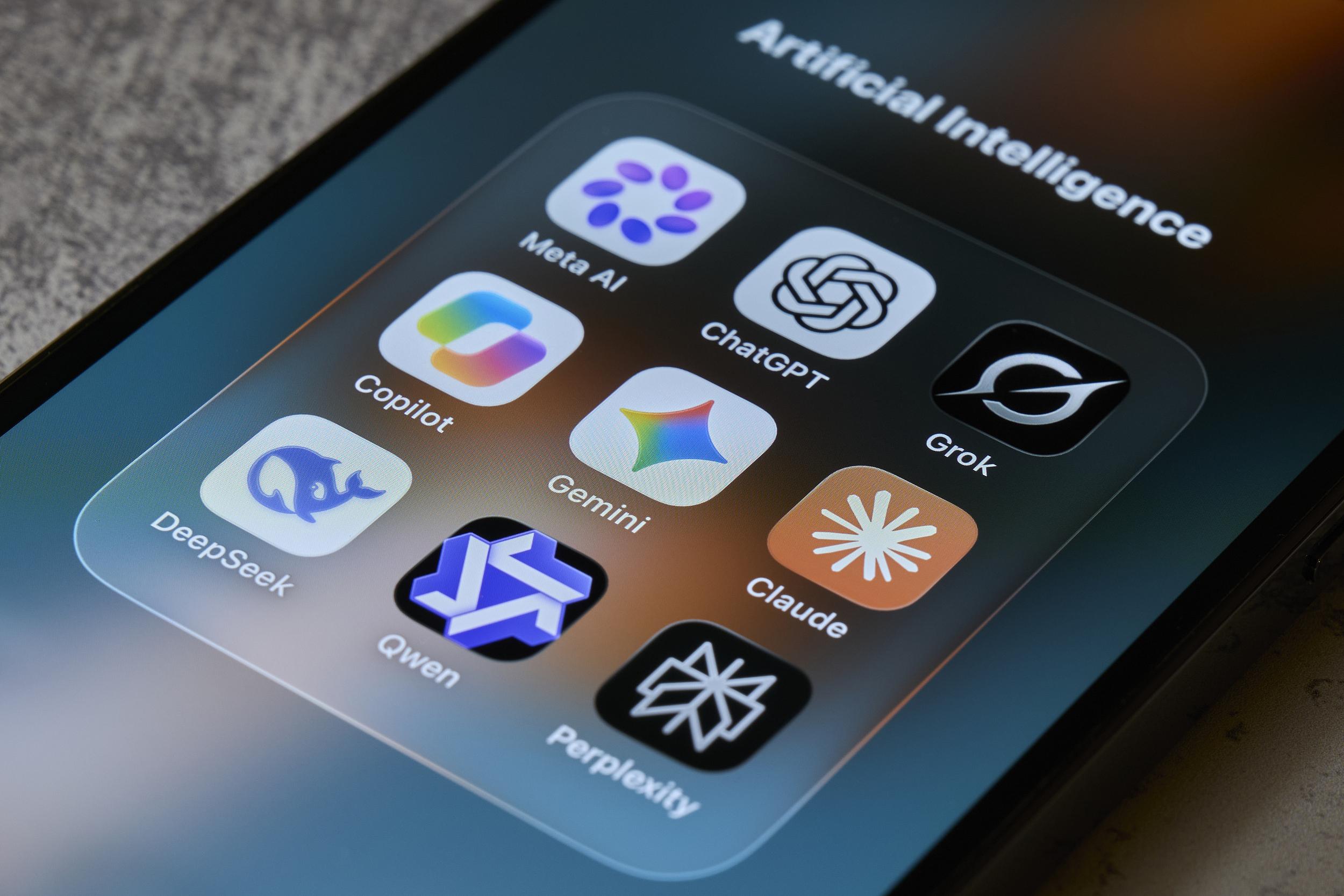
In view of the fabrication of historical records and fake citations generated by AI in academic writing, multiple Chinese academic journals have rolled out guidelines on AI use, imposing stricter and more granular requirements.
Some journals explicitly bar the use of generative AI in paper writing, even banning AI-powered editing, paraphrasing and translation. Some permit AI assistance only under conditions and mandate disclosure.
New forms of academic misconduct facilitated by AI that warrant vigilance include contract writing, text laundering, data fabrication and falsification, undisclosed AI use, and AI-drafted peer reviews.
Hu Haiyan, director of the Committee on the Construction of Scientific Morality of the Academic Divisions of the Chinese Academy of Sciences, said at a seminar that AI detection technologies are falling noticeably behind generative AI capabilities. Traditional plagiarism checks and identification tools are losing effectiveness, making research misconduct more covert and sophisticated.
Rising cases of retractions stemming from AI-generated text and false references have raised widespread alarm across the global academic community.
Why has AI exacerbated longstanding research misconduct? According to Mei Hong, an academician of the Chinese Academy of Sciences and a professor at Peking University, generative AI drastically cuts the cost of committing fraud. Also, outputs from large language models (LLMs) boast a polished structure, formatting and grammar, making them hard to detect.
But rejecting AI-enabled fraud does not mean rejecting AI-enabled empowerment.
Professor Liang Zheng at the School of Public Policy and Management, Tsinghua University, said AI can support academic writing. Generative AI, especially LLMs, excels at sorting literature, compiling routine materials and brainstorming writing frameworks. Human knowledge is limited and rarely covers the full scope of a discipline, while large models act as powerful knowledge synthesizers.
Wang Jian, a professor at the School of History and Archaeology, Nanjing Normal University, said generative AI brings much convenience to scholars who study Ming and Qing history in processing and synthesizing sources, translating documents and compiling annotations. It can also inspire fresh perspectives on research methods, approaches and paradigms for the field.
Nevertheless, Wang stressed that inherent limitations and latent risks remain. Generative AI recombines information within existing datasets and logical frameworks drawn from known materials. It cannot originate truly innovative research questions. Furthermore, it is prone to AI hallucinations, and cannot vouch for the veracity of its outputs. Additionally, it lacks the capacity to authenticate historical sources and grasp their contextual meaning.
Many countries have largely reached consensus in their guidelines governing AI use in research.
According to the EU's "Living guidelines on the responsible use of generative AI in research," researchers should maintain a critical approach to using the output produced by generative AI. They should be aware of the tools' limitations, such as bias, hallucinations and inaccuracies.
The Royal Society of the UK said AI technologies should be used only to improve the readability and language of the work in the writing process. These technologies can produce unpredicted outcomes, and the authors should accept responsibility for the veracity and correctness of all material in their work. This is also highlighted by Science. It said authors are accountable for the accuracy of their work and for ensuring that there is no plagiarism.
In addition, both the Royal Society and Science stressed that AI tools cannot be authors.
Liang said the new academic misconduct cannot be attributed to the AI tools themselves, but to academic norms. Disciplinary measures have not been fully enforced in all cases after violations were uncovered. Therefore, the priority is to improve mechanisms for academic integrity and strengthen relevant education, so that researchers clearly understand that academic misconduct is unacceptable.
Faced with challenges to academic integrity brought by AI, global coordination is required. While embracing technological innovation, the international community must firmly uphold the bottom line of academic integrity.