

Advanced Technology to Boost Archaeology
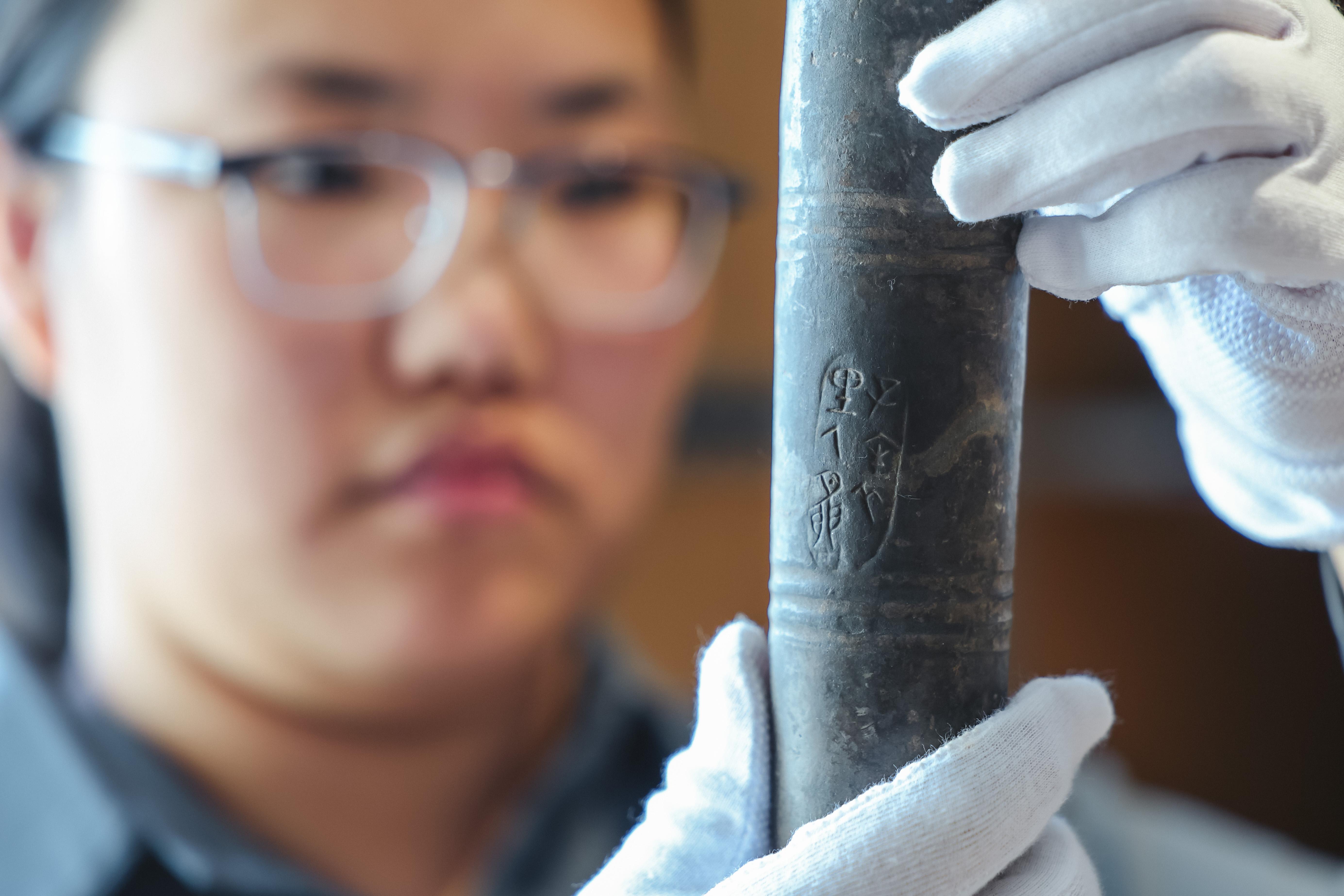
China's National Cultural Heritage Administration (NCHA) has issued the 15th Five-Year Plan (FYP, 2026-2030) for archaeological work, outlining seven major tasks, including strengthening technological support and multidisciplinary integration, promoting the sharing of archaeological achievements, and expanding international archaeological cooperation.
The plan emphasizes empowering archaeology with advanced technology. It proposes building a number of national-level archaeological science laboratories and deep-sea archaeology laboratories with international competitiveness and influence, forming a networked, intelligent and differentiated technological support system.
During the 15th FYP period, China will elevate the use of science and technology in cultural relics, focusing on solving major scientific problems and key technical challenges in archaeology and the protection of cultural relics, said Luo Jing, head of the NCHA's department of science, technology and education .
Capabilities in on-site information acquisition, analysis and testing, and cultural relic protection will be enhanced. Archaeological technical equipment will be promoted, with support for the configuring and iteratively upgrading of professional devices for portable analysis and testing, archaeological geophysical prospecting, and archaeological surveying and mapping.
Key technologies to be developed include remote sensing, geophysical exploration, high-precision sequence chronology construction, trace residue identification, resource origin tracing, and ancient DNA extraction and analysis.
Support will be given to development and advancement of R&D for facilities and equipment for underwater archaeological robots, underwater cultural relic detection, refined excavation and on-site conservation.
The plan also supports the development of specialized AI large models for archaeology, tapping AI's potential in artifact identification, fragment matching and reassembly, virtual restoration and intelligent collection. Processing and analysis of geospatial data, and digital display of unearthed artifacts will be supported as well.
On expanding international archaeological cooperation, Zhang Lei, head of the NCHA's archaeology department, said Belt and Road partner countries will be a focus. Five to 10 demonstration projects of joint Chinese-foreign archaeology will be developed, and joint archaeology initiatives advanced. According to the plan, overseas projects will be scientifically laid out in countries including Egypt, Greece and Central Asian countries, and cooperative archaeological facilities will be coordinated in those countries. The plan also specifies that archaeological research platforms will be promoted in South Africa, Tunisia, Saudi Arabia and Türkiye.