

Yongle Dadian: Largest Encyclopedia in World History
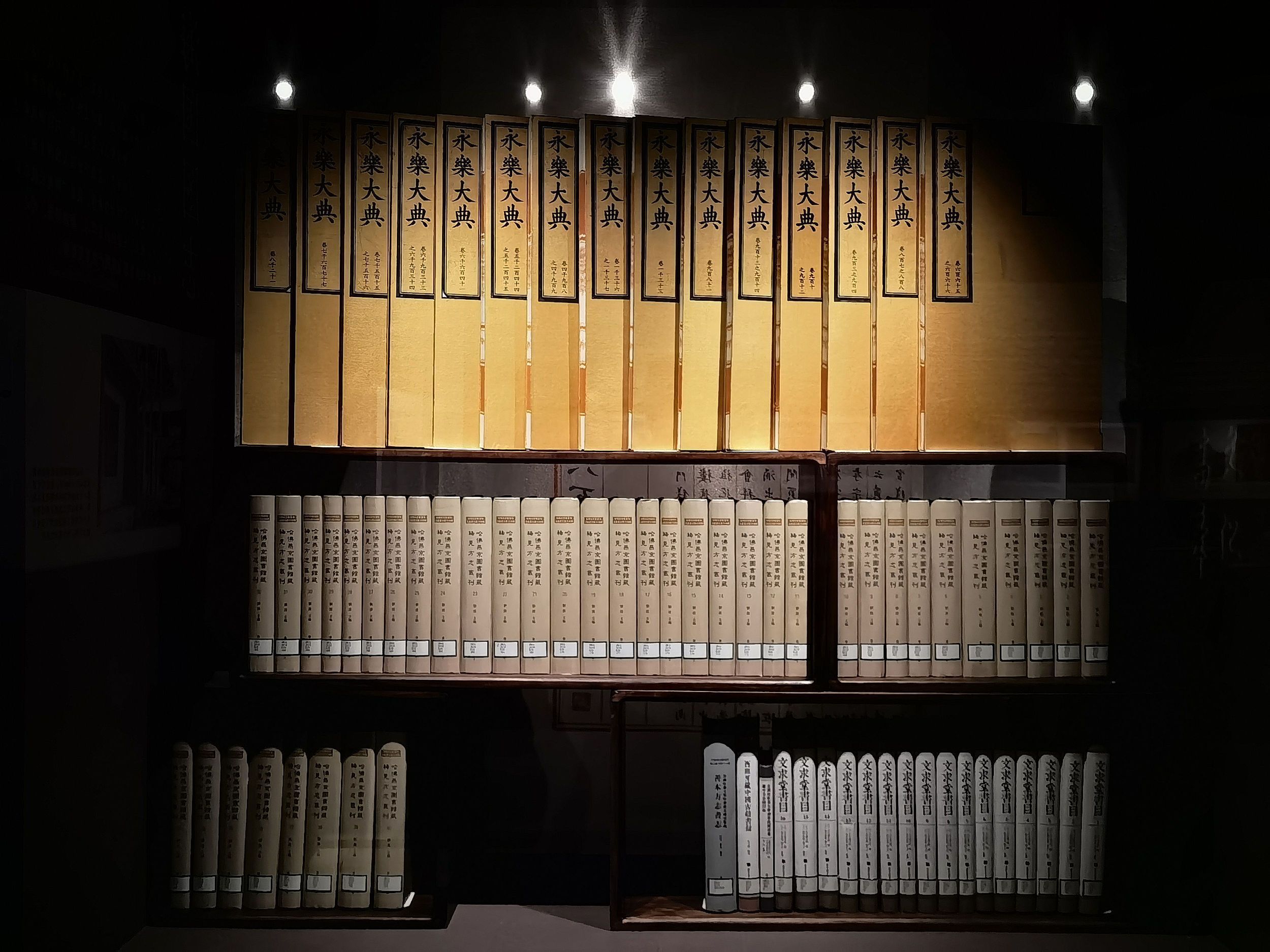
Yongle Dadian, a Chinese compilation, is the world's largest known encyclopaedia. It was compiled during the Ming dynasty (1368-1644) by thousands of Chinese scholars under the direction of Emperor Yongle (reigned: 1402-1424) and was completed in 1408. Containing 22,937 "juan" or sections (including the index), in 11,095 volumes, the work was designed to include everything ever written at that time on the Confucian canon, history, philosophy, and the arts and sciences.
In effect, it was a vast collection of excerpts and entire works from Chinese literature. However, fewer than 400 volumes of the three manuscript copies survive today. Around 800 rolls have been published as photo-offset copies.
The encyclopedia's physical appearance differed from that of any other Chinese encyclopedia of the time. It was larger in size, made of special paper and bound in a "wrapped-back" style. The use of red ink for titles and authors — a mark of imperial commission — confirmed that the volumes were of royal origin.
Each volume was protected by a hard cover wrapped in yellow silk. Unlike other encyclopaedias, this one was not arranged by subject, but by Hongwu Zhengyun, a system in which characters are ordered phonetically or rhythmically. This system helped readers to find specific entries with ease.
Although printing had already been invented long before the Ming dynasty, Yongle Dadian was written entirely by hand. Each entry was a compilation of existing literature, some of which was derived from rare and fragile texts. The compilation's importance lay in preserving such texts and covering such a vast range of subjects.
Yongle Dadian represents the accumulated knowledge of the Chinese nation over thousands of years. In its entry on "Encyclopedias," the Encyclopedia Britannica calls it "the largest encyclopedia in world history," and it has become an important symbol of Chinese culture.