

Yangtze Belt Epitomizes Rivers as Shared Growth Engines
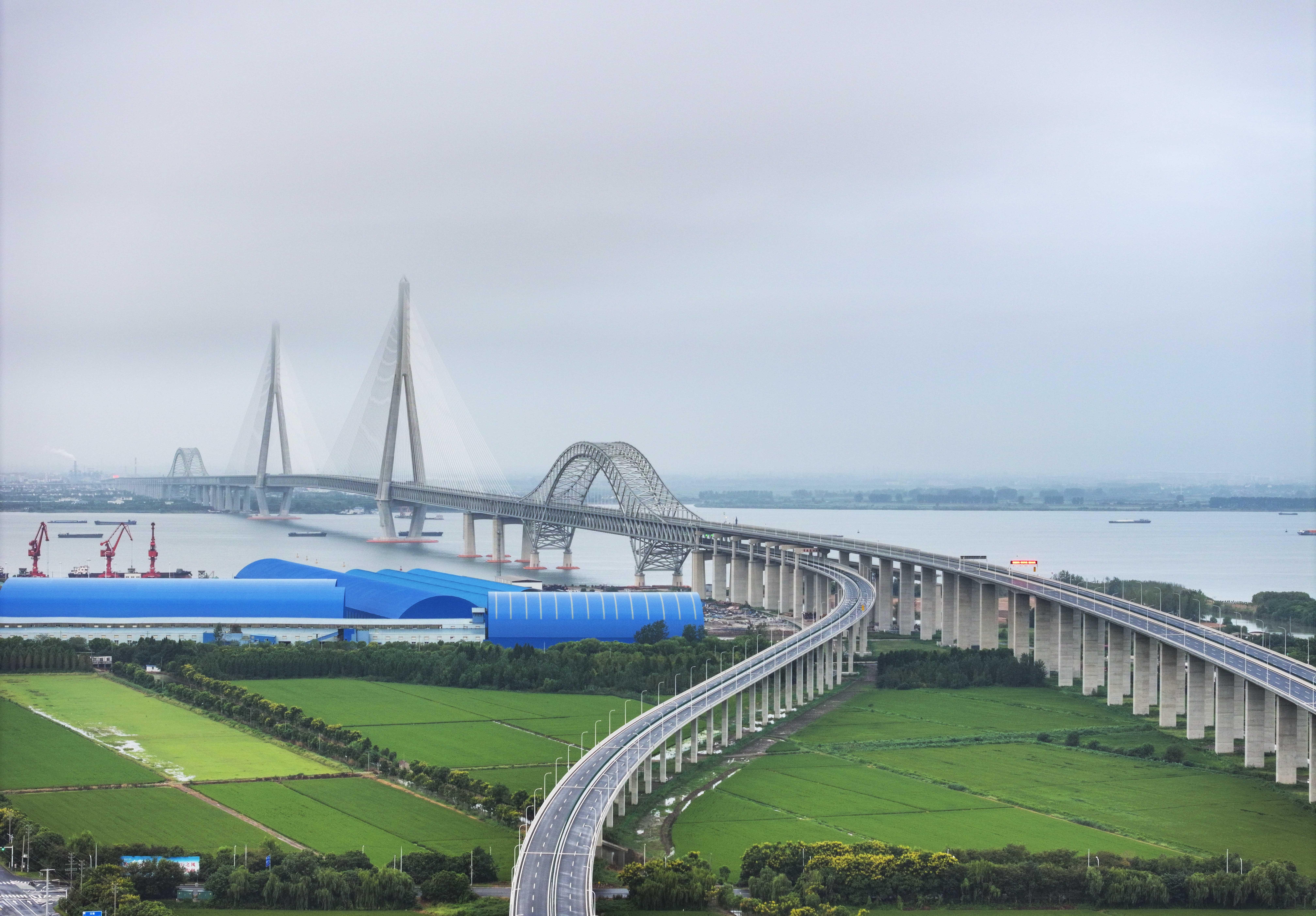
Rivers are both the arteries of Earth and vital channels of economic development.
China's State Council Information Office held a press briefing on January 5, reviewing 10 years of the development of the Yangtze River Economic Belt, in which ecological protection and high-quality growth have advanced in tandem.
The Yangtze River Economic Belt has followed a development path with environmental protection and green growth at its core. This strategic orientation has reshaped the relationship between development and conservation along China's longest river, turning ecological constraints into drivers of transformation. Today, the results are increasingly visible.
The "green index" of the Yangtze continues to rise.
More than 96 percent of the monitored sections along the river now report good water quality. Native fish species have increased, the population of the finless porpoises, listed as critically endangered by the International Union for Conservation of Nature, has rebounded to over 1,000, and rare species such as the Chinese sturgeon have resumed migration between the river and sea. Major lakes including Poyang and Dongting have seen eutrophication curbed, with aquatic ecosystems gradually recovering.
At the same time, innovation has become the core engine of this "golden economic belt."
In 2024, the Yangtze River Economic Belt generated over 63 trillion RMB in GDP, growing 5.4 percent year on year and accounting for nearly half of the national economic output.
In the first 11 months of 2025, its 11 provinces and municipalities recorded 19.12 trillion RMB in foreign trade, representing 46.4 percent of China's total. Ecological gains and economic performance are no longer in tension, but increasingly reinforcing one another. See page 2
This progress has been underpinned by integrated infrastructure and industrial coordination.
Major water conservancy projects and modernized shipping networks have significantly enhanced the Yangtze's transport capacity, providing low-cost, high-efficiency logistics support for industries along the river. Five globally competitive industrial clusters—electronics, high-end equipment, automobiles, home appliances and textiles—have taken shape.
Regional innovation collaboration has accelerated industrial upgrading. Along the river, cities have formed tightly linked production networks: Upstream and downstream regions specialize in research, manufacturing, assembly, and testing.
In the new energy vehicle sector alone, a "four-hour industrial circle" has emerged, with the Yangtze River Delta accounting for around 40 percent of national output and more than a quarter of global production.
China's planning framework has for the first time proposed "expanding the river-basin economy," extending successful practices from the Yangtze to other major river systems.
The concept emphasizes ecological co-governance, shared infrastructure, coordinated industries, and benefit-sharing across regions, transforming natural waterways into platforms for integrated development.
From the Yangtze to the Yellow River and beyond, coordinated basin development is gaining momentum. By combining top-level coordination with place-based specialization, China is steadily shaping a new development landscape in which technological innovation, ecological restoration, and regional cooperation flow together—much like the great rivers themselves.