

Rising Integration of Technology and Industry in 2025
In 2025, the integration of technological and industrial innovation was no longer an abstract concept in policy documents, but a vibrant practice spreading across the country.
Technological foundation
The advancement of technology determines the depth of integration between technological innovation and industrial innovation. Over the past year, multiple breakthroughs have been made in key core technology R&D, providing a source of vitality and fundamental support for industrial upgrading.
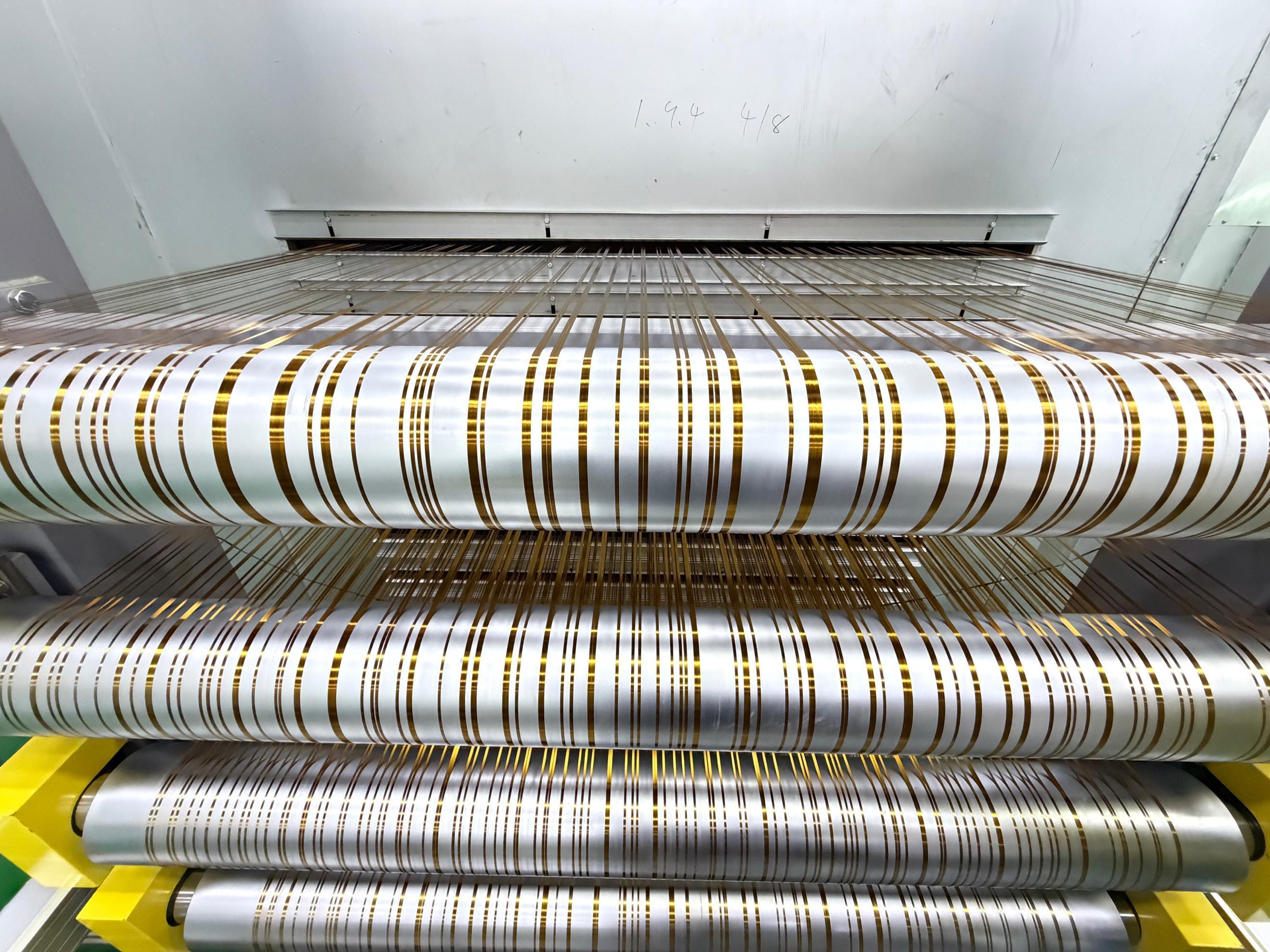
Carbon fiber, dubbed "black gold," is an indispensable strategic material for high-end equipment in industries such as aerospace. The Institute of Coal Chemistry, under the Chinese Academy of Sciences, and Shanxi Huayang Carbon Materials Technology Co., Ltd. have jointly built a production line in Datong, Shanxi, in north China, with an annual output of 200 tons of high-end T1000 carbon fiber.
It was put into operation last November. The products will be widely used in fields such as aerospace, rail transit, new energy and low-altitude economy, providing support for strategic emerging industries and future industry development.
Breakthroughs in quantum communication technology are promoting the industrial application of the technology in areas such as digital and intelligent office and cities.
In the field of biomanufacturing, material innovation company Bluepha uses waste bio-oils as carbon sources, mass production of PHA and opening up a trillion-RMB market for bio-based materials.
In new energy, the Experimental Advanced Superconducting Tokamak (EAST) has laid the foundation for nuclear fusion energy.
Booming industries
Industry serves as the carrier and amplifier of technological innovation. Over the past year, cutting-edge technologies represented by AI have empowered traditional industries such as manufacturing, and expanded the boundaries, scenarios and possibilities of the technology-industry integration.
By December 2025, China had released over 1,500 industrial large models, covering 50 sectors and more than 700 scenarios. The application of large models in the production and manufacturing process has grown significantly, with cases increasing to 25.9 percent from 19.9 percent in the previous year.
This indicates that AI has been upgraded from an auxiliary tool to the "core engine" for the transformation and upgrading of traditional manufacturing.
In 2025, the low-altitude economy took a significant step from pilot exploration to large-scale implementation. Six cities became national pilots for electric vertical take-off and landing aircraft operations, expanding the application scenarios of low-altitude technology.
The output of industrial robots, new energy vehicles and integrated circuits increased by 28 percent, 25 percent and 11 percent respectively year on year.
Institutional support
Successful technology-industry integration cannot be achieved without strong institutional support. The principal role of enterprises in sci-tech innovation has been reinforced and the role of state-owned and central enterprises strengthened.
From January to November 2025, the R&D investment of central enterprises reached 890 billion RMB, achieving over 120 landmark results.
In 2025, many deep-rooted obstacles to technological industrialization were gradually removed.
For instance, Nanjing Tech University gave 90 percent of the ownership of its job-related sci-tech achievements to their developers, which greatly encouraged researchers, according to Jiang Min, the director of the university’s Institute of Science.
Universities across the country are exploring innovative practices from multiple perspectives and implementing sci-tech achievements throughout entire industrial chains.
On May 14, seven authorities jointly issued a set of guidelines with 15 measures to promote financial services for sci-tech innovation, including those to boost venture investment, credit supply and insurance support.