

Qimin Yaoshu:Encyclopedia of Ancient Chinese Agriculture
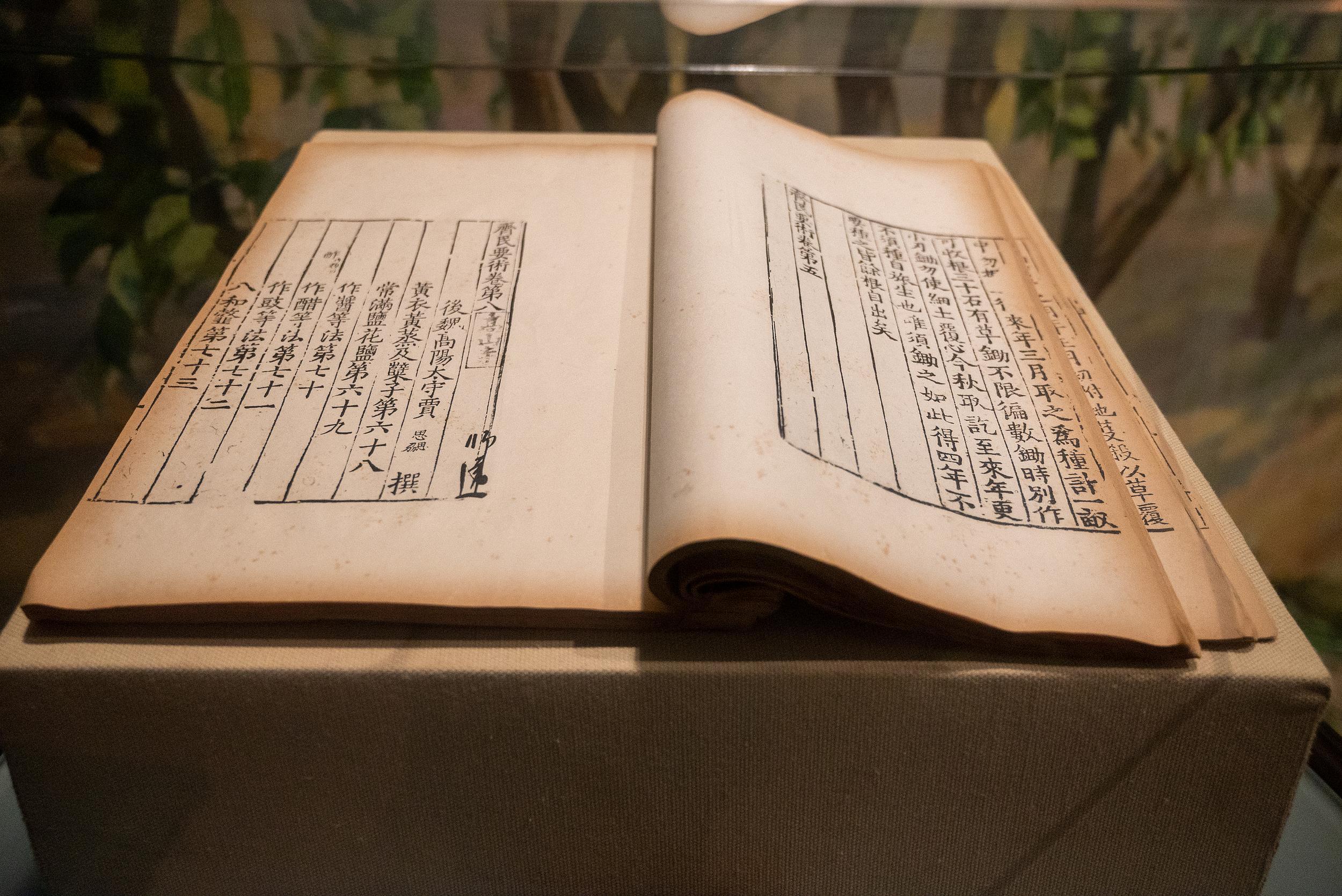
Qimin Yaoshu (Essential Techniques for the Welfare of the People) is the most complete ancient Chinese agricultural text, written by Jia Sixie during the Northern Wei Dynasty (533-544 AD). As one of the most important works in the history of world agriculture, it has exerted a lasting influence on agricultural practices.
Consisting of 10 volumes and 92 chapters, the book systematically summarizes the agricultural and livestock production experiences of working people in the middle and lower reaches of the Yellow River, prior to the sixth century. It also covers food processing and storage, the uses of wild plants, and strategies for mitigating famine. In addition, the book provides detailed information on the relationship between the seasons, climate and different soil and crop varieties.
The structure of each chapter is similar, consisting of an introduction, main text and cited references. The introduction provides an overview of the plants and animals covered in the chapter, detailing their origins and characteristics. Following this is the main text, which makes up the core of the book. Drawing on his interviews and personal experience, the author provides meticulous descriptions of the characteristics, production processes and technical information of various agricultural, forestry, livestock and fishery products. The main text is followed by cited references, which are excerpts from other documents that augment the technical knowledge presented in the main text.
Qimin Yaoshu emphasizes the importance of selecting superior species varieties and the interrelationship between organisms and the environment. Jia believed that seed quality played a crucial role in crop yield and quality. Using grains as an example, the book describes over 80 grain varieties and compares and contrasts them based on characteristics such as maturity period, plant height, yield, quality and resistance to adverse conditions. The book also explains how to maintain seed purity and prevent contamination, as well as the specific preparation required before sowing, to ensure optimal seed development and growth of healthy seedlings.
Qimin Yaoshu was introduced to Japan during the late Tang Dynasty (618-907 AD). Later, around the 19th century, it was introduced to Europe by French Jesuit missionaries in China. In his famous work On the Origin of Species, the British scholar Charles Darwin mentioned consulting the "Encyclopedia of Ancient China" and cited relevant examples from it as evidence for his theory of evolution.