
AI-powered 3D Virtual Tours
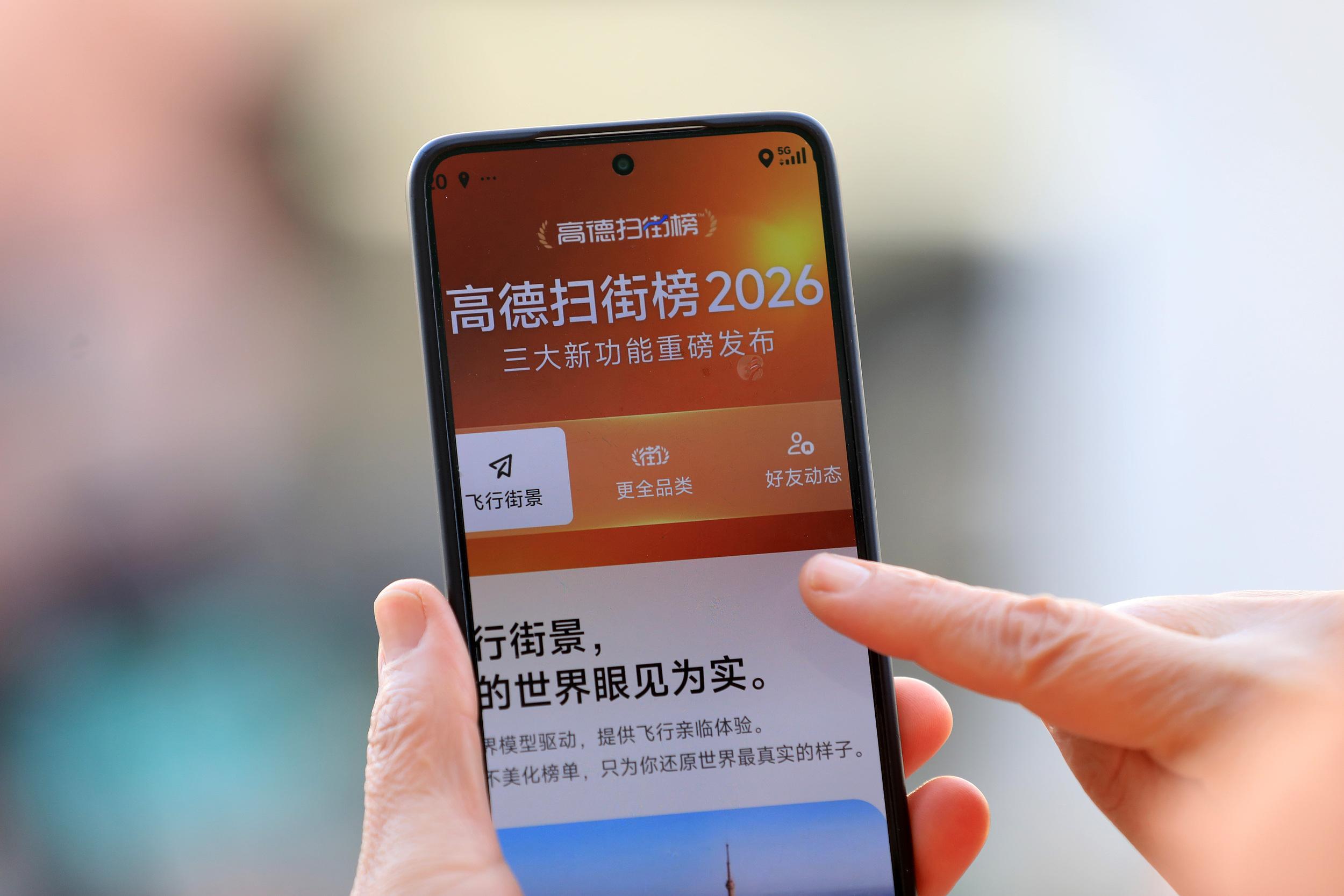
"'Fly Street View' is the world's first application of a world model in the inclusive lifestyle services sector, setting a global precedent," Guo Ning, CEO of Amap, told Science and Technology Daily recently. Amap's self-developed world model has achieved the highest overall score on the internationally recognized benchmark WorldScore, an impressive accolade.
"Fly Street View" relies on Amap's self-developed world model and utilizes "physical AI" to deliver an immersive, interactive online store-visiting experience. Industry insiders point out that this serves as a representative example of "physical AI" application.
So, what exactly is "Flying Street View?" According to Alibaba, of which Amap is a subsidiary, it is a new 3D store tour feature designed to help users make more informed choices when deciding where to eat and visit. At its core lies Amap's self-developed world model, which uses highly realistic digital reconstruction to enable continuous, dynamic, and near-lifelike navigation and exploration. With the feature users can virtually preview restaurants, tourist attractions and surrounding environments before visiting in person — taking in exterior and interior layouts, nearby scenery, parking conditions, and even private dining rooms, all in advance.
For businesses, "Flying Street View" significantly lowers the barrier to digital presentation, offering a more efficient and authentic way to showcase their businesses. "Traditional production methods are like handicraft workshops — difficult to scale," Sun said, "Our solution is AI-driven, industrialized production." In the past, creating a digital replica of a single store required professional equipment, specialized staff and several days of work. Now, merchants can simply record a short video and take a few photos with a smartphone, and a realistic virtual storefront can be generated automatically within hours.
Alongside the launch, Amap introduced a program pledging computing resources worth several hundred million RMB to offer 'Flying Street View' free of charge to one million merchants. According to Amap, more than 350,000 businesses signed up within just 48 hours of the program's launch.
For users, "Flying Street View" offers a new immersive and interactive way to explore locations online. As Guo put it, "With 'Flying Street View,' you're no longer imagining your destination —what you see is what you get."
Many users have shared that the feature allows them to take in a venue's full layout from above, preview window-side seating, and even check parking availability. But more than just enhancing discovery of new places, "Flying Street View" helps guide users to well-reviewed hidden gems tucked away in side streets, reducing the risk of disappointing choices. At the same time, visualized environments encourage merchants to pay closer attention to cleanliness and ambiance, gradually fostering a more trustworthy consumption ecosystem that benefits both sides.
Currently, "Flying Street View" has expanded beyond dining into the cultural tourism sector. Virtual street views of major attractions, including the Palace Museum, have gone live, allowing users to "tour" real-world sites from home and enriching interactive digital tourism experiences.