
Electricity Generated from Carbon Dioxide
By WANG Xiaoxia, CHEN Yu & WUYefan
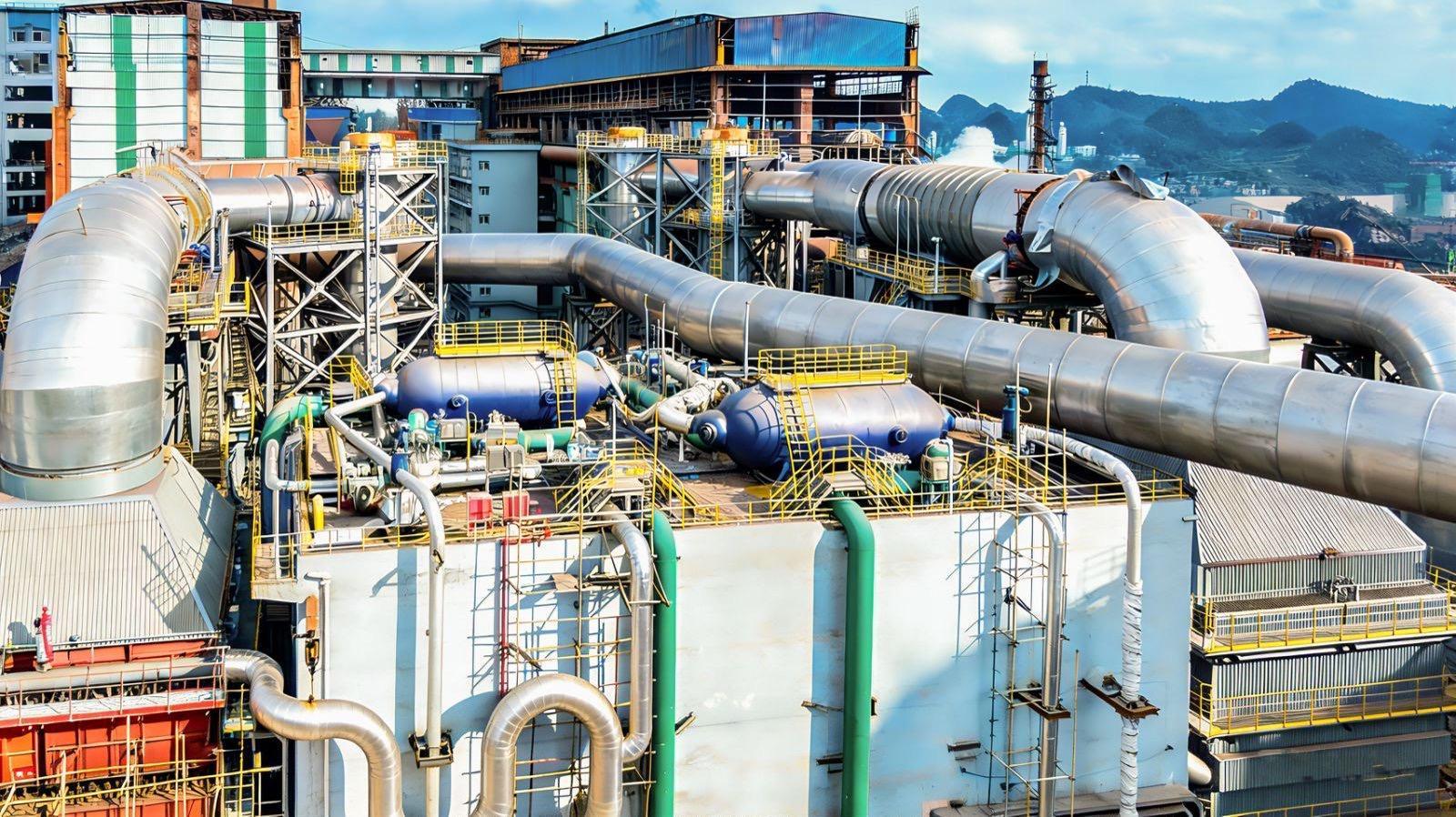
The world's first commercial supercritical carbon dioxide (sCO2) power generator, Chaotan One, has recently begun commercial operation in Liupanshui, Guizhou province. The generator was developed by the Nuclear Power Institute of China (NPIC) of the China National Nuclear Corporation (CNNC), and its partners.
Compared with conventional waste-heat steam power generation technologies, Chaotan One offers over 85 percent higher generation efficiency and more than 50 percent higher net power output. Behind these achievements lies the 17-year dedication of the R&D team, who have successively solved a series of technical problems in design, manufacturing and integrated application.
Micro-channels required
sCO2 is a fluid state of carbon dioxide where it is held at or above its critical temperature and critical pressure.
The power generation technology uses sCO2 as the working medium for energy transfer and thermal power conversion, replacing water vapor in traditional power generation to achieve the conversion from thermal energy to electrical energy.
Compared with water vapor, sCO2 has high density, low viscosity, and does not go through a gas-liquid transition. It can not only improve efficiency but also reduce the volume of equipment, Huang Yanping, CNNC chief scientist and the general designer of Chaotan One, told Science and Technology Daily.
Since the concept of sCO2 power generation was proposed in 1948, development of the generator has eluded R&D teams. The missing link was the essential stage of establishing a microchannel heat exchanger with finer channels and higher heat exchange efficiency, said Huang, who began the research on sCO2 power generation in 2009, and decided to start from this key problem.
However, using traditional photochemical etching methods, it is extremely difficult to precisely process hundreds of one-millimeter-diameter grooves on stainless steel thin plates, said Liu Ruilong, one of the R&D team members.
The samples provided by the manufacturer didn't meet required standards, so Liu and his colleague Fei Junjie visited the etching factory to cooperate with experienced technicians and create an innovative solution for the required manufacturing process.
Eventually, after a few weeks, hundreds of micro-channels were evenly and precisely carved on the plate.
Vacuum diffusion welding
Microchannel processing was only the first step. The plates need to be stacked with the grooves facing each other, so that the flow channels could be formed. However, even the most experienced welders found it difficult to stack hundreds of plates precisely.
Huang carried out extensive research and turned his attention to vacuum diffusion welding technology. "Stack the plates one by one like pages of a book, apply vacuum, high temperature and high pressure, and the metal atoms will diffuse and bond tightly together," he explained.
However, China has no experience in this field, and countries who do, have included the technology in the commercial control list, with strict restrictions on its export. Huang was therefore determined to develop the technology with his team.
Over a period of 829 days, the team underwent 27 rounds of technical optimization and adjustment, along with 218 different welding parameters tested, leading to scrapped test samples filling half of the warehouse.
It was not until the early morning of a cold winter day in 2021, that when the monitoring screen of the 49th process test suddenly showed a stable green curve, Liu repeatedly checked the flashing data and excitedly announced: "The welding was successful!"
No leakage
The next challenge was to prevent the leakage of sCO2 through the gaps between the compressor and turbine motor, so as to reduce the energy loss of the unit.
At that time, there were already some successful cases abroad. Huang consulted foreign experts, who told him not to build units with a capacity of over 100 kilowatts. When they heard that Huang was going to build a megawatt unit, they saw it as mission impossible.
But Huang didn't give up and led the team to carefully analyze the materials and structures of multiple sealing techniques, and they finally decided to apply the dry gas seals.
Although the dry gas sealing technology is stable, it cannot be directly adopted due to the high temperature and high pressure of the sCO2 unit, said R&D team member Chen Yaoxing.
The team went back to the drawing board, from static to dynamic, from low temperature to high temperature, and from low pressure to high pressure. In the laboratory, team members kept a close eye on the the experimental status on the monitoring screen.
Huang's team eventually achieved success in the dry gas sealing for megawatt-level ultra-carbon turbines, which is a world first. Subsequently, the sCO2 unit was verified in lab in 2019, the Chantan One project was inaugurated in 2023 and began commercial operation at the end of 2025.