

Future Industries Take Center Stage
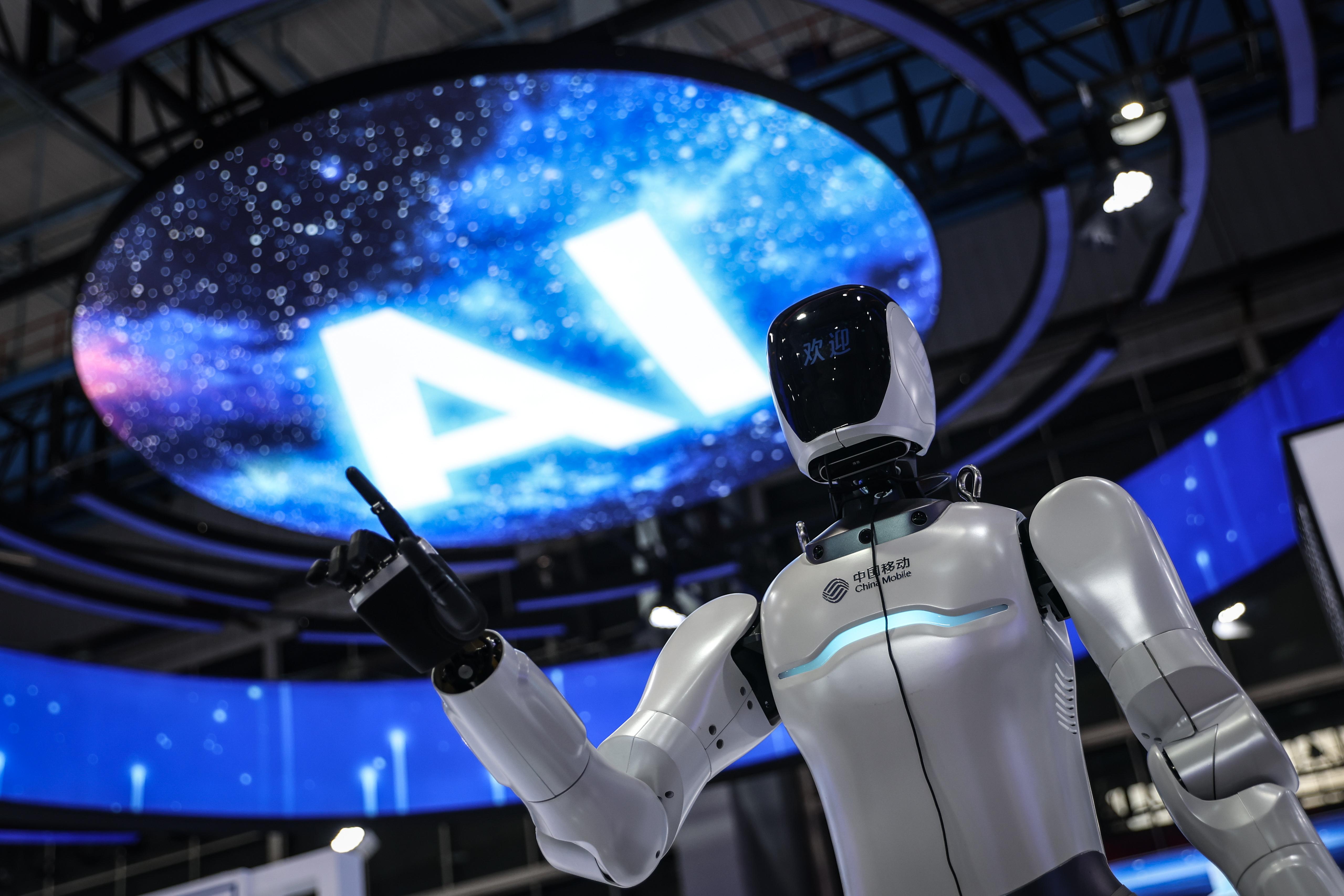
The spotlight at this year's Spring Festival Gala fell on a new kind of performer. As the world's most-watched television program unfolded, Chinese humanoid robots commanded the stage with a display of agility that captivated audiences worldwide. Videos of the event quickly circulated online, showing machines executing precise kung fu moves, synchronized dances, and elaborate gymnastics. This leap from tentative movement to athletic precision reflects a broader trend: the rapid maturation of China's future industries.
Official data released last week underscores this momentum. In 2025, approximately 1.13 million companies were established across eight emerging and nine future industries, a 9.9 percent increase from the previous year.
Behind these figures lies a strategic approach that international experts say blends long-term vision with immediate, real-world application.
The power of collaboration
Professor Giampaolo Buticchi, Interim Vice Provost for Research and Knowledge Exchange at the University of Nottingham Ningbo China, views the Chinese model as "compelling evidence of how sustained investment in education and innovation can accelerate technological progress."
"In recent years, remarkable advancements in areas such as digital services, renewable energy, and robotics have shown how dedicated support for talent cultivation and research collaboration can drive tangible outcomes," he added.
Buticchi also highlighted the ecosystem formed by close cooperation among universities, enterprises, and research institutions, where ideas move efficiently from the laboratory to practical use.
"These mechanisms, education, openness to entrepreneurship, and cross-sector collaboration, are essential in any country seeking to translate research into societal benefit," he remarked. "China's experience demonstrates how these elements can be effectively mobilized to foster enduring progress."
From technology push to demand pull
In frontier fields like quantum technology and brain-computer interfaces, specific strategies are accelerating success. Professor Francisco Faiola, an Italian researcher deeply involved in China's biomanufacturing sector, points to two distinctive approaches: "gradient cultivation" and "industry-driven problem definition."
"China's promise lies in not treating future industries as isolated experiments," Faiola explained. The nation employs "gradient cultivation," leveraging its comprehensive supply chain to extend mature industrial capabilities into frontier technologies.
For instance, the current boom in biomanufacturing builds directly upon the robust foundation of the traditional chemical industry.
More critically, Faiola described a shift from "technology push" to "demand pull." In this model, "industry poses the questions, science provides the answers." By allowing enterprises facing real bottlenecks to define research agendas, China bridges the gap between laboratory discovery and market application.
"This organized, demand-driven research ensures that outcomes possess translational potential from the outset," Faiola said, citing how medical needs directly guide advancements in stem cell technologies. "This alignment of strategic vision with practical execution offers a feasible roadmap from the present to the future."
From catch-up to frontier
This strategic evolution is visible in sectors like commercial spaceflight, synthetic biology, and next-generation AI. Dennis Simon, senior fellow at the U.S. foreign policy think tank Quincy Institute, says China's push into these fields reflects a "maturing innovation strategy—onethat is increasingly frontier-oriented rather than catch-up-focused."
China has "demonstrated an ability to scale complex engineering systems quickly." The iterative rocket testing resembles the "fast-fail, fast-learn" model pioneered elsewhere, but is "embedded in a state-coordinated system."
According to Simon, "China's advances regarding systems integration capability havebeen the key to Chinese progress," a situation he compares to high-speed rail. With this capability, he said China can turn long-term bets into real-world impact.
A global blueprint
These strategies extend far beyond the laboratory, reshaping the very fabric of daily life. The results are clearly visible in China's urban transformation. Professor Mohammed S. Obaidat, former president of the Society for Modeling and Simulation International, describes China as a "global pacesetter" in converging AI, high-fidelity simulation, and digital twin technology.
Obaidat observed that while traditional simulation was used for static predictions, "AI-enhanced simulation" in China has evolved into a living, responsive system.
Experts agree that China's approach holds significance beyond its borders. Faiola emphasized that the efficiency of China's innovation resource allocation accelerates the translation of science into practice. Similarly, Obaidat called China's experience highly scalable and transferable to other rapidly urbanizing regions like Jakarta and Lagos.
"A smart city isn't just one with sensors; it's one that learns from its citizens and distributes benefits equitably," he remarked, concluding that China is writing critical chapters of the future by turning "data into dignity, efficiency into equity, and simulation into sustainability."