

China's Smart Tech Builds a Shared Global Vision
China's innovation-oriented development is not merely a slogan—it is the engine driving the nation toward a future defined by sustainability, intelligence, and shared prosperity. From renewable energy farms to orbital satellites, China is building technologies for the shared future of humankind. The country stands at the forefront of technological innovation and breakthroughs and is creating a benchmark that inspires the world.
Greening the planet
China contributes a critical innovative role in renewable energy field and makes the world more green, clean, and sustainable. It now produces more solar, wind, and hydroelectric power than any other country. But quantity alone is not the answer. Breakthroughs in ultra-high-voltage transmission allows clean electricity generated in China’s western deserts to power coastal megacities with near-zero loss. Floating solar farms on former coal subsidence areas and tidal energy converters in the East China Sea, showcase an ecosystem of green innovation. By aggressively lowering the cost of photovoltaics and energy storage, China has made renewable adoption economically viable for developing nations across Africa and Southeast Asia—a tangible contribution to the global fight against climate change.
The electric revolution
China’s electric vehicle (EV) industry has moved beyond catch-up to leapfrogging. From battery chemistry to smart chassis, domestic manufacturers now define global EV standards. Solid-state batteries, ultra-fast charging (adding 400 km range in 15 minutes), and vehicle-to-grid technology are all in mass deployment. More importantly, China’s EV boom is inclusive: from affordable mini-EVs to luxury models, facilitating EVs for all. Through technology sharing and joint ventures, Chinese EV makers are helping other nations such as Thailand, Hungary, and Brazil build their own local supply chains—turning mobility decarbonization into a collective endeavor.
AI+ and humanoid robots
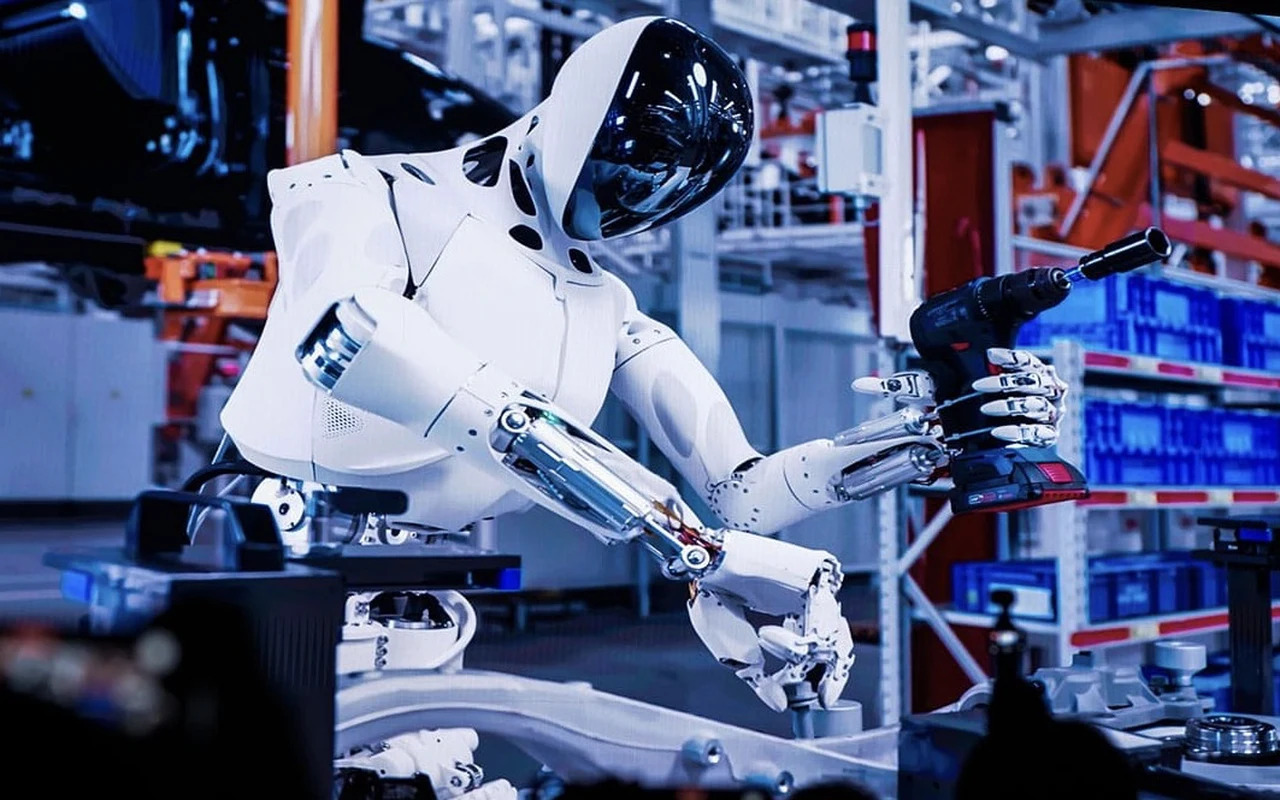
China is actively promoting its "AI+" initiative that integrates AI into every economic sector. In agriculture, AI predicts pest outbreaks; in healthcare, it reads medical images with specialist-level accuracy; and in manufacturing, it optimizes energy use in real time. Yet the most sought after frontier is humanoid robotics. Chinese companies have unveiled a wide range of general-purpose humanoids capable of learning tasks through observation—from assembling intricate electronics to assisting elderly patients. These robots are designed with open interfaces, allowing global developers to customize them for local languages, cultures, and needs. Rather than replacing humanity, they aim to augment human potential worldwide.
Navigating the globe
As one of four global navigation satellite systems, BeiDou provides positioning accuracy down to centimeters—free of charge to the world. Over 120 countries now use BeiDou services, from disaster warning in Nepal to precision farming in Pakistan and fleet management in Ethiopia. Unlike proprietary systems, BeiDou’s bilateral communication feature allows users in remote areas to send distress signals when cellular networks fail. It is a navigation tool, not a weapon, for use as a lifeline that can improve our shared future.
An open door
All these innovation-oriented developments are underpinned by China’s opening-up policy. Foreign enterprises now enjoy expanded access to high-tech sectors in China, including EV manufacturing and AI R&D. For example, Tesla’s Shanghai Gigafactory, the company’s most efficient globally, stands as proof that openness accelerates mutual progress. Meanwhile, the Belt and Road Initiative has evolved into a digital and green corridor, exporting solar standards, EV charging protocols, and BeiDou ground stations to partner nations. More than 70 Belt and Road Joint laboratories with partner countries, expand openness and global cooperation, conducting collaborative research in all cutting-edge fields such as integrated circuits, AI, and quantum information, to advance science and technology for our shared future.
In summary, China’s innovation-oriented development is not a zero-sum race. It is a collective building project and progress is visible and viable. By sharing its renewable grids, EV platforms, AI frameworks, humanoid robots, and BeiDou signals, China is constructing a technological foundation upon which all of humanity can stand taller and receive the benefits. China's continuous effort on innovation-oriented development is not only building the innovative technologies for our green, modern, safe, and shared future but also opening a door for global cooperation and jointly guiding the global economy in a better direction.
Dr. Md Altab Hossin is a foreign expert at the School of Innovation and Entrepreneurship, Chengdu University.