

From Curiosity to the Frontiers: ICBS Honors Four Women Scientists
Among the nine recipients of the ICBS Medal awarded at the 2026 International Congress of Basic Science (ICBS), four are women: Claire Voisin, Andrea J. Liu, Bao Zhenan, and Zhuang Xiaowei.
Shing-Tung Yau, chair of ICBS, highlighted this in his opening address, noting that "women researchers are contributing to every stage of scientific progress through their distinctive intellectual perspectives and sustained dedication." He hoped the scholarly journeys of these four laureates would inspire more women to pursue their dreams with courage and to embark on the path of science toward truth and the unknown.
While the quartet share the same prestigious honor, the paths that led them to the forefront of global science are as diverse as their fields of study. Their stories are shaped by childhood curiosity, deliberate choices and decades of unwavering commitment.
'Made of freedom, adventure, and hope'
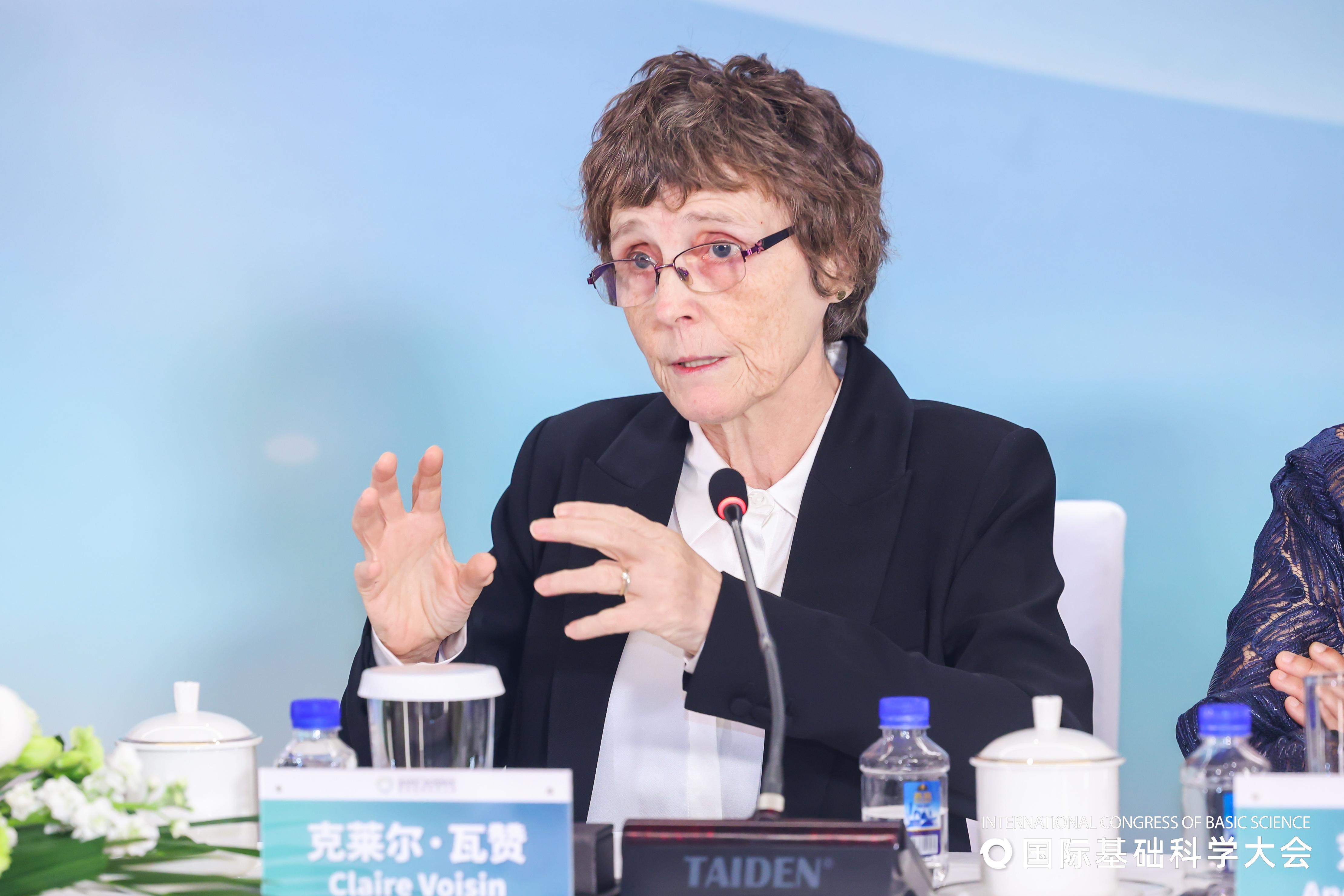
For Claire Voisin, mathematics was a sanctuary discovered amidst the joyful chaos of a large family. Born in France as the 10th of 12 children, she did not have a room of her own until high school graduation. Her intellectual curiosity was broad, including philosophy, painting and poetry. While at the prestigious École Normale Supérieure, she seriously considered switching to philosophy, a dilemma that lasted for years. Ultimately, a philosopher friend advised her to stay in mathematics. Looking back, Voisin admits she never had a single, defining moment of decision; her path was a natural, organic evolution.
She describes mathematical research as "a wonderful experience, made of freedom, adventure, and hope," though she does not shy away from acknowledging the failures and despair that researchers inevitably face. For her, the recognition is not only a great pleasure but also a welcome encouragement for the future. Her devotion to algebraic geometry stems from its "incredible wealth of concepts and a variety of viewpoints." She once remarked that its richness makes it "worth studying for one's whole life, and even one's second life." Underlying all her work is the conviction that "all the powerful theoretical tools we develop will sooner or later find an application."
‘The returns do come, and often from directions not originally intended'
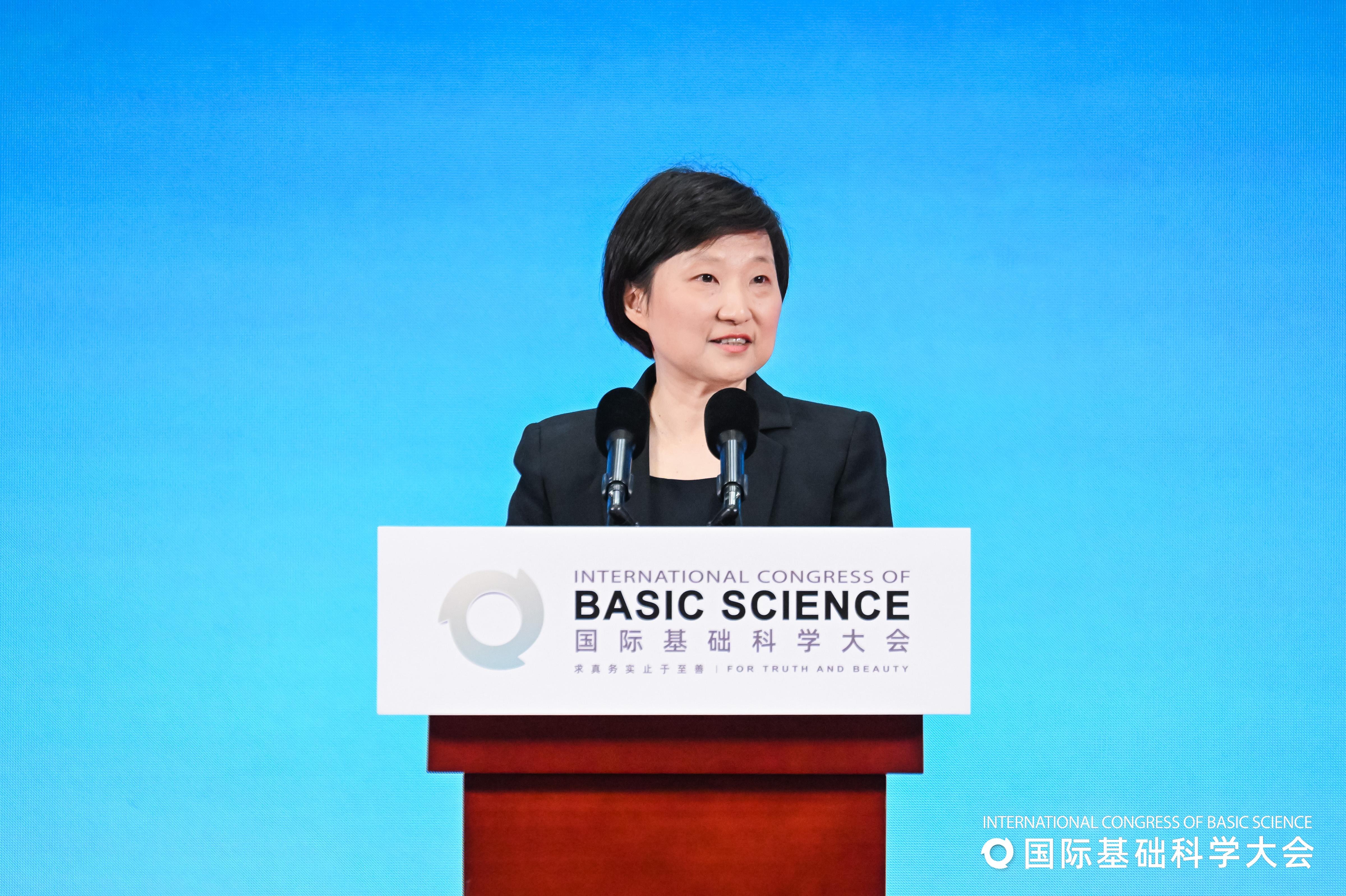
Zhuang Xiaowei's scientific journey began with an innate intuition for the physical world. Born in Jiangsu, east China, to a university professor couple, she was a quiet child who never attended kindergarten. Her extraordinary physical insight was apparent early on. At 15, she took the national college entrance exam and was admitted to the prestigious Special Class for the Gifted Young at the University of Science and Technology of China. There, she achieved perfect scores in all four core mechanics courses.
Her career has been driven by the curiosity that unites all scientists, "an understanding of how nature works, ranging from elementary particles to living systems and to the universe." She develops tools to unveil nature's mysteries, yet she is keenly aware that "exactly how our research will turn into a product that directly impacts our everyday lives is often not immediately clear."
In an era when "the world wants applications and returns at a mass pace," she reminds us that "history keeps teaching the same lesson. The returns do come, and often from directions not originally intended." Her own inventions, STORM, one of the earliest and most widely used super-resolution imaging methods, and MERFISH, a massively multiplexed single-molecule imaging method, stand as proof of this.
'The seeds of the technology of tomorrow'
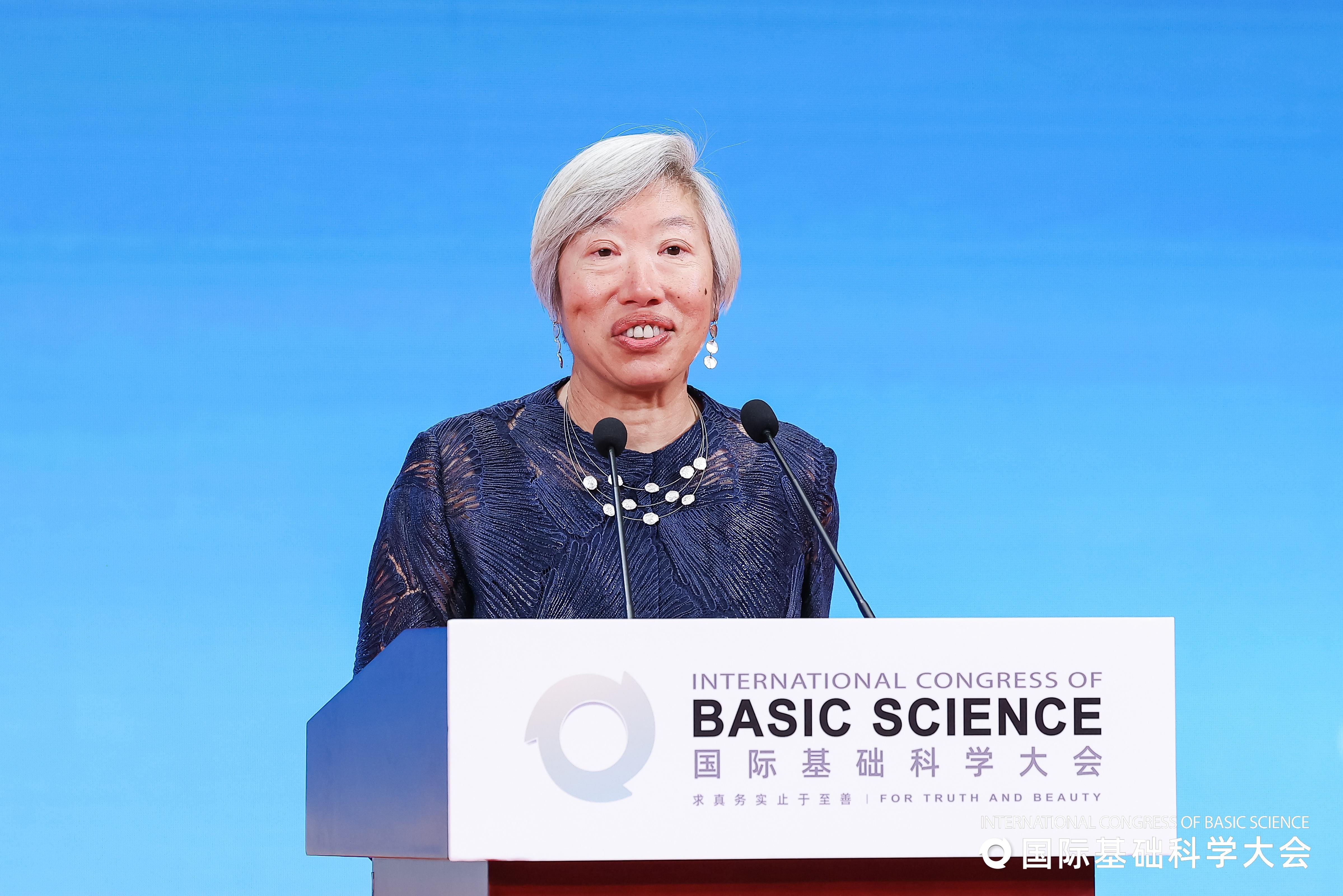
Andrea J. Liu's path to physics was not a straight line, but a choice made in the face of another powerful passion: history. Born in New York and raised in Iowa, the daughter of a condensed matter physicist, she initially found herself drawn to the human stories of history while an undergraduate at UC Berkeley, even planning to switch majors.
The turning point came when she encountered Maxwell's equations. The four simple, elegant formulas that unified electricity, magnetism, and light captivated her. The sheer beauty of their mathematical structure and the profound physics they contained won her over, securing her future in the physical world. She traces her love of physics back to her father, "with whom I wrote my first seven physics publications," while her interest in communicating science came from her mother, "who was a writer."
Receiving the Marie Curie Medal at ICBS holds special significance for Liu, who regards Curie as "a physics hero who exemplifies the values of ICBS." She points to Curie's research on radioactivity as a classic example of how fundamental discoveries lead to unexpected applications—"radiation therapy for cancer, which she also pioneered." In an age when "technology is so dominant in the public conversation and people even wonder whether AI is better at science than scientists," Liu says "the importance of basic science requires more emphasis than ever." She sees "the inspiring fundamental discoveries that people are making today" as "the seeds of the technology of tomorrow," and she considers it "part of our professional duty to stand up for science."
'Science begins with curiosity'
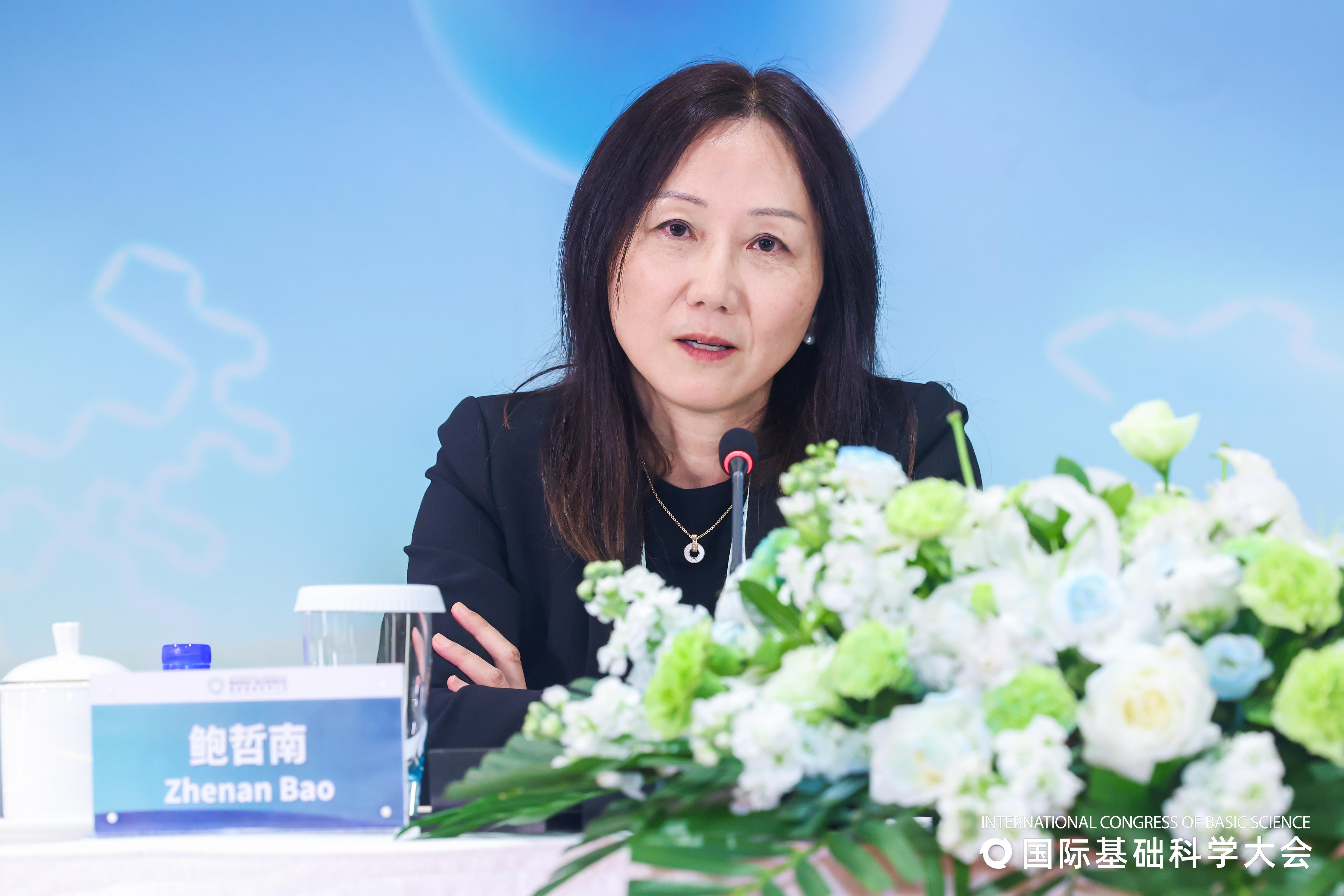
Bao Zhenan's scientific approach was shaped by a simple childhood experiment. At the age of three, her father asked her if a popsicle would sink or float if thrown into a lake. She guessed it would sink, but after trying it, she watched it float.
Born into a family of scientists, Bao was encouraged from a young age to be endlessly curious. At 17, she entered Nanjing University's Chemistry Department. Throughout her career, she has been driven by a simple question: "Can we create electronic materials and sensing systems that behave more like human skin?" By bringing together chemistry, materials science, electronics, and biology, her group has recreated skin's softness, stretchability, and self-healing properties in synthetic materials, moving electronics beyond the limitations of rigid silicon. Her innovations are now opening new possibilities in healthcare, robotics, prosthetics, and human-machine interfaces, including NeuroString, "a hair-thin sensing fiber that may transform how we monitor the brain, the heart, the gut, and many other organs over long periods of time."
For Bao, "science begins with curiosity" and "the excitement of discovering something that no one has known before," but she believes "the journey does not end there. It becomes even more meaningful when those discoveries are translated into technologies that improve people's lives." Beyond her own research, she envisions a world where nations work together toward the betterment of humanity.
This article is compiled based on speeches and materials from the 2026 ICBS.