
Turning Flaws into Assets: The Scientist Who Listens to the Pulse
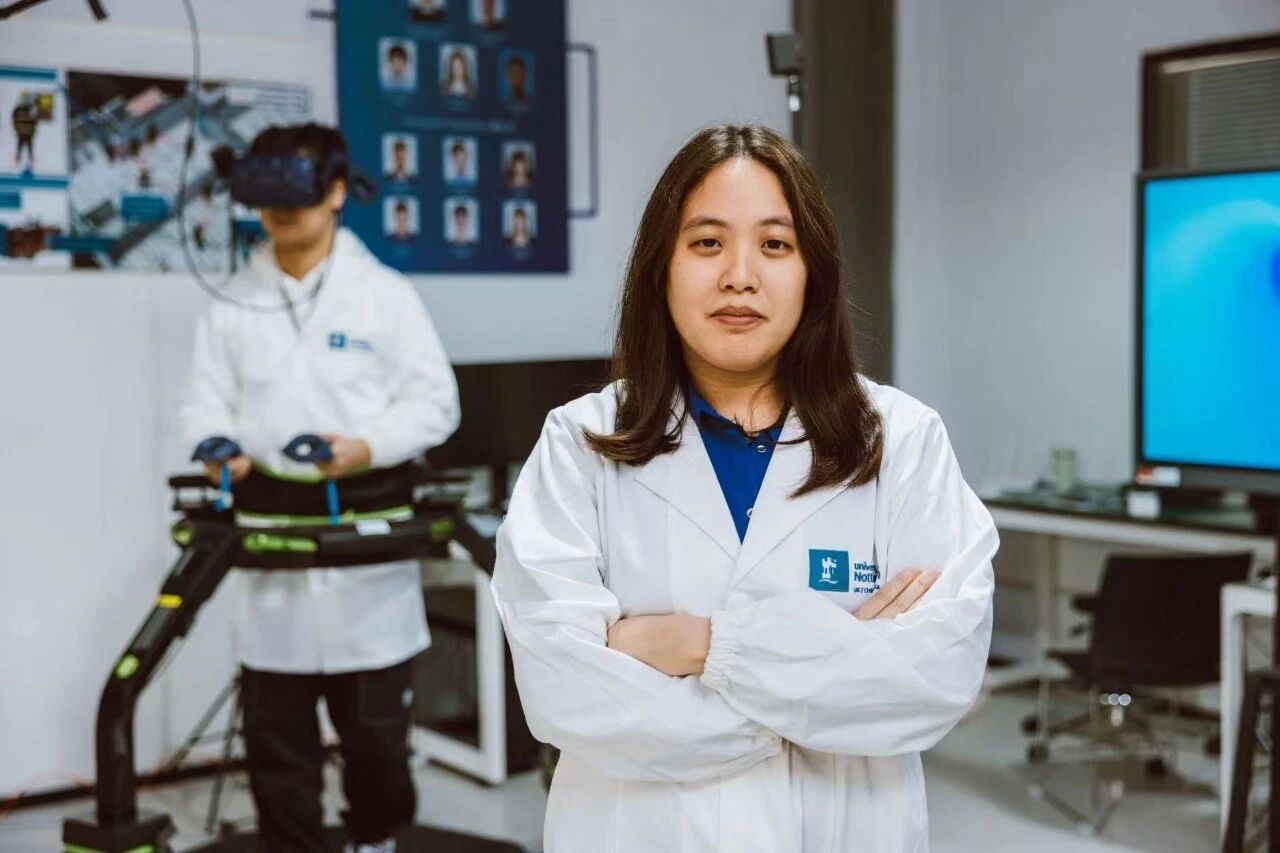
When Sze Shin Low began her research on flexible bioelectronic sensors, her motivation was straightforward: to improve patients' quality of life. Now an associate professor at the University of Nottingham Ningbo China (UNNC) and named among the World's Top 2% Scientists, she has developed a graphene-based wearable patch that captures the mechanical pulse waveform continuously outside hospital settings.
Her recent paper in Chemical Engineering Journal has drawn attention not only for its gradient-density architecture, but also for its candid discussion of the gap between laboratory prototypes and real-world medical devices.
In an interview, Low spoke about why the heart rate alone is insufficient for showing cardiac health, how an ordinary conversation inspired her sensor design, and what it takes to move a laboratory technology closer to something that could ultimately benefit patients.
Beyond the beat
"Heart rate tells us the tempo, but the waveform contains the melody, rhythm and variations," Low said.
Two individuals may both register 70 beats per minute, yet the timing, strength and shape of their pulse signals can be entirely different. The waveform reveals beat-to-beat intervals, rhythm regularity and the cardiovascular system's responses to exercise, stress, temperature and recovery. "Knowing only the tempo does not tell us whether the music is smooth, irregular or suddenly changing."
She emphasized that the sensor measures the mechanical pulse at the skin and is not intended to replace clinical tools such as electrocardiography (ECG) or professional cardiac assessment. Its real value lies in long-term monitoring outside hospitals, where tracking changes over time may help determine when further professional assessment is needed.
This vision of making healthcare more comfortable and convenient is what drew her to wearable bioelectronics. She asked herself whether healthcare could become less intrusive while still providing clinicians with the information they need. Flexible sensors, lightweight and conformable, offered an answer by allowing continuous monitoring without requiring patients to remain in hospital or be confined to bed.
From loudspeakers to a gradient design
The sensor's distinctive feature – three zones of different densities, densest at the center and progressively more porous outward – came from a conversation with her husband, who was explaining how loudspeaker drivers handle different frequency ranges because no single driver performs optimally across the entire spectrum.
That prompted Low to consider a similar division of labor for pressure sensors, with different regions specializing in different pressure levels. She first reviewed the literature to examine whether the concept had been explored and whether the underlying mechanics indicated that it could work. After simulations and experiments, the team grew confident the concept was feasible, and the final structure was developed through multiple rounds of optimization.
"Research ideas can come from anywhere," she reflected, "but transforming an interesting idea into a scientifically validated innovation requires careful literature review, critical thinking and rigorous experimentation."
She also found a way to manage a common limitation. Graphene's temperature sensitivity can introduce unwanted interference, so the team incorporated a separate serpentine temperature sensor to independently measure temperature and compensate for thermal drift.
This reflects her research philosophy: Instead of asking how to eliminate a problem, she asks whether the problem can help solve a bigger one. She encourages her students to stay curious when unexpected results emerge, noting that the most interesting discoveries often "begin with something that does not behave as originally expected."
Reliability over record-breaking
Despite promising results, the device remains a proof of concept. Low identified the single biggest gap as reliability in non-laboratory environments. A laboratory device has to work under selected conditions, but a usable product must work for different people over time under conditions that cannot be fully controlled.
Her team tested the device at rest, during cold stress and after high-intensity running, and performed 10,000 loading cycles to examine mechanical stability. However, these experiments were only necessary steps, not the final destination.
Low envisions the technology as initially serving patients recovering at home after surgery, older adults with cardiovascular risk factors, and people affected by stress, fatigue or intensive physical activity.
"The growing emphasis on translation has shifted the discussion from whether a sensor can simply produce a signal to whether it addresses a genuine clinical need, can be manufactured consistently and performs reliably in realistic settings," she said.
Since arriving in China in 2018 as a postdoctoral researcher at Zhejiang University, she has witnessed growing support for translating research into real-world impact. "What has impressed me most is the strong emphasis on translating research into real-world impact," she said. "For researchers working in wearable bioelectronics, this is especially valuable because developing a medical device requires close collaboration between materials scientists, engineers, clinicians and industry partners. China has built an ecosystem where these interdisciplinary collaborations are increasingly encouraged."
At the UNNC, she sees her role as building a bridge between sensing materials, electronic systems and healthcare applications, while also training the next generation of researchers to consider clinical needs, manufacturability and user experience from the outset of every project.
"If our work can make healthcare more accessible, more comfortable and more proactive while improving patients' quality of life," she concluded, "then I believe we have achieved the true purpose of scientific innovation."