
Chinese Encyclopedia Helps Europe's Sericulture Industry Weather Crisis
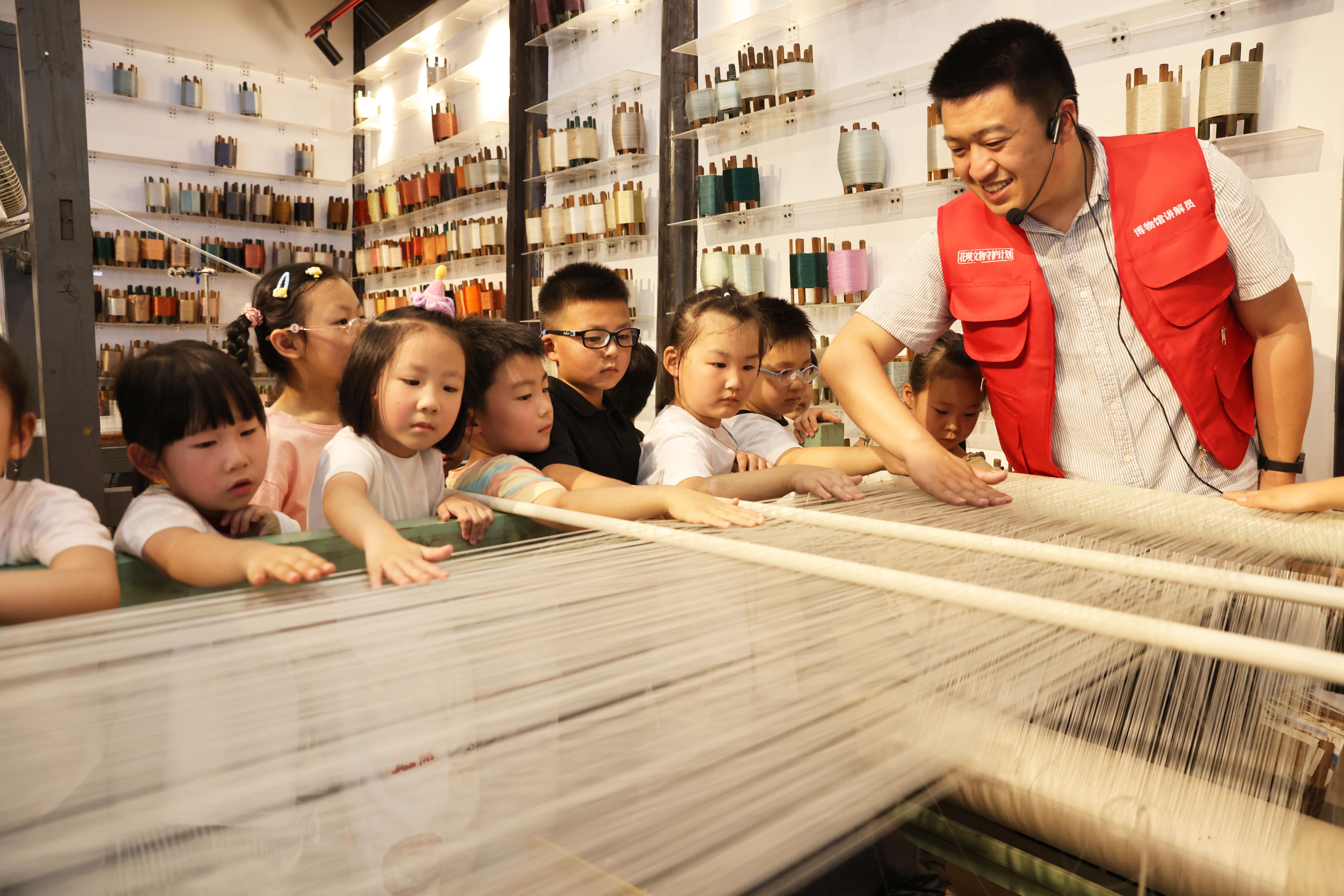
The ancient Silk Road not only facilitated the movement of goods, but also the dissemination of technology. Indigenous Chinese sericulture techniques traveled east to Korea and Japan, as well as west to Central and West Asia, eventually reaching Europe.
By the mid-19th century, Europe's sericulture industry was booming, with Italy and France producing 56,000 and 26,000 tonnes of cocoons per year, respectively. However, a crisis lurked beneath this prosperity. In the 1840s, silkworm populations in southern France began dying en masse. The larvae perished prematurely, and the survivors developed dark brown spots. Most were unable to spin silk or form cocoons.
This was pebrine, a disease that swept across Europe with devastating force. France's cocoon production plummeted from 26,000 tonnes in 1853 to just 400 tons in 1865. The French silk industry suffered losses of 100 million francs that year alone. Governments were at a loss, forcing silkworm farmers to travel as far as then Turkey, Iran and the Far East to purchase healthy silkworm eggs.
In 1865, the French Ministry of Agriculture commissioned microbiologist Louis Pasteur to identify the disease's root cause. Pasteur used a microscope to identify the causative microorganisms; however, an effective prevention and treatment method remained elusive. Fortunately, France was prepared. In 1837, the sinologist Stanislas Julien was assigned to study Chinese ancient texts to discover the traditional Chinese methods for managing sericulture and treating silkworm diseases.
He translated and compiled sections on sericulture from the Tiangong Kaiwu (The Exploitation of the Works of Nature), the famous 17th-century Chinese encyclopedia compiled by Chinese scientist and encyclopedist Song Yingxing, into a French volume titled Résumé des principaux traités chinois sur la culture des mûriers et l'éducation des vers à soie. In his preface, Julien noted that China had accumulated a wealth of comprehensive experience in sericulture and the prevention of silkworm diseases unmatched by any other nation.
The Tiangong Kaiwu provides detailed records of silkworm diseases and their symptoms. These findings aligned remarkably well with the pathogens Pasteur later identified. The text also offers complete prevention and control measures, such as isolating infected silkworms, disinfecting rearing equipment, selecting healthy eggs, and cleaning mulberry leaves.
By combining traditional Chinese experience with microbiological knowledge, Pasteur devised effective prevention and control methods. He used science to explain the "why," while the Tiangong Kaiwu provided silkworm farmers with guidance on the "what" and "how."
Pasteur's methods for controlling silkworm diseases, together with the practical knowledge preserved in the Tiangong Kaiwu, helped revive Europe's sericulture industry. Within a decade, Stanislas Julien's translation had been rendered into seven other languages, including English, German, Italian and Russian.
Charles Darwin drew on Julien's work in his 1868 book The Variation of Animals and Plants under Domestication, citing Julien as his authority for the antiquity of sericulture in China. British historian of science Joseph Needham called Song Yingxing "the Diderot of China" after French philosopher Denis Diderot, and regarded the Tiangong Kaiwu as an important record of Chinese technological knowledge in the 17th century.