
Tech Empowers Agriculture in Shandong
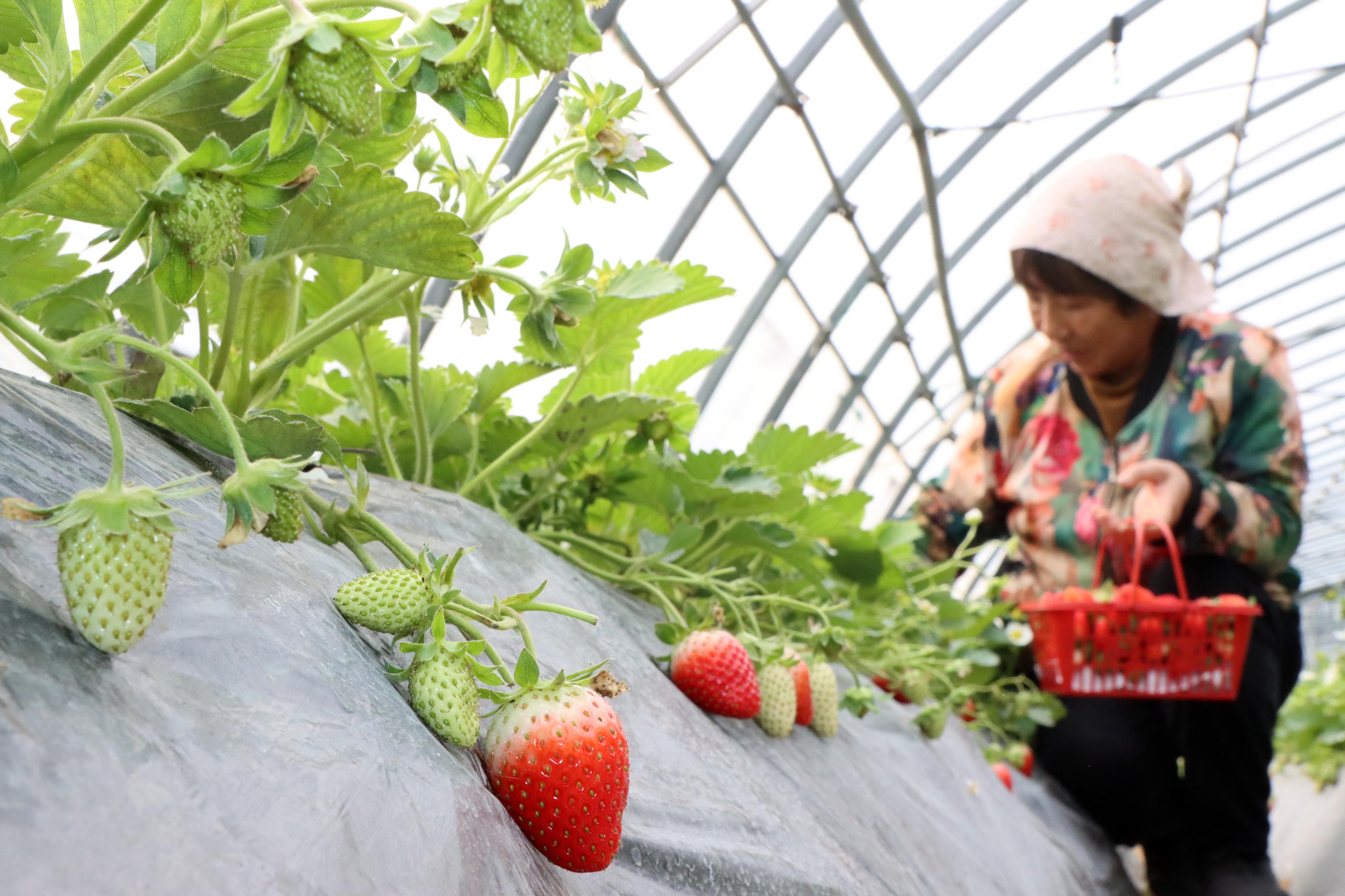
At the Agricultural High-tech Industrial Demonstration Area of the Yellow River Delta of Shandong province, the area of cultivated land has seen a net increase for four consecutive years, with a successive series of new saline tolerant crops being introduced. Saline-alkali land has been transformed into fertile soil, vividly demonstrating how technological innovation boosts agricultural output in the province.
High-yield, high-quality
In the breeding industry, it is almost impossible to breed a crop species that can guarantee high yield and high quality simultaneously, yet Cao Xinyou, director of Crop Research Institute, Shandong Academy of Agricultural Sciences, and his team managed to do just that.
To breed a new wheat species, selection of at least six generations is needed, said Cao, adding that they had to experiment with the best combination from thousands of hybrid combinations balancing multiple characters like yield, quality, disease resistance and lodging resistance.
The species Jimai 44, developed by Cao's team, was approved in 2018. Its highest yield per mu (one mu equals 666.7 square meters) has reached 808.6 kilograms to date, breaking the record for super high-gluten wheat across the country. Jimai 44 has been planted in 42.51 million mu of land.
The success of Jimai 44 was no accident in the laboratory, as the researchers focused on the actual needs and fit for production ideas. Having bred 15 new species of wheat, Cao said the key to breeding lies in the field, and agricultural researchers can achieve actual results only when they truly immerse themselves in grassroots work.
At the Industrial Demonstration Area, 46 innovation teams from across China have now converged to tackle key core technologies, aiming to breed varieties suitable for saline-alkaline land.
Tian Zhixi, a researcher at the Institute of Genetics and Developmental Biology, Chinese Academy of Sciences, has rooted himself in this saline-alkaline area. Challenges have been constant companions on his research journey. During the first year of trial planting, nearly none of the seedlings survived.
"What to do? If it fails, we try again!" said Tian. For four consecutive years, his team battled with field tests, experimentation, elimination and selection. After screening over 8,000 soybean samples, they ultimately identified 56 that had significant salt-tolerant germplasm, 18 that had outstanding potential, with two soybean varieties that practically performed particularly well.
In 2023, Tian's team demonstrated the cultivation of Keduo 35 on 600 mu of saline-alkali land in Dongying, Shandong. This saline tolerant soybean achieved an average yield exceeding 300 kilograms per mu — far surpassing China's national average of 132 kilograms and the U.S. average of 225 kilograms.
Last year, Keduo 35 was planted over 4,000 mu in Dongying, and holds the potential to provide high-quality seed sources for 200,000 mu of saline tolerant soybeans in the future.
Soaring value of smart agriculture
Today, pomegranate cultivation in Zaozhuang covers over 120,000 mu, and the adoption of modern technologies like smart greenhouses and integrated water-fertilizer systems has ushered pomegranate farming into a new smart era.
"In the past, pomegranate yields were low and techniques were rudimentary," said Liu Yuan, a villager from Liuyuan town in Zaozhuang.
By adopting insect-trapping sticky tape technology and water-saving irrigation techniques, Liu has boosted his annual pomegranate profits from 20,000 RMB to nearly 100,000 RMB.
Zaozhuang pooled scientific research resources to introduce facility agriculture into the pomegranate industry, and built a modern pomegranate deep-processing industrial park, achieving multiple value leaps along the industrial chain.
Advanced technologies like the Internet of Things, big data and AI have propelled local specialty produce in Shandong — such as Shouguang vegetables, Jinxiang garlic, Zhangqiu scallions, and Zhanhua winter jujubes — toward intelligent and precision production, expanding the value-added potential of the agricultural industry.