
'AI + Consumption' Has Vast Potential
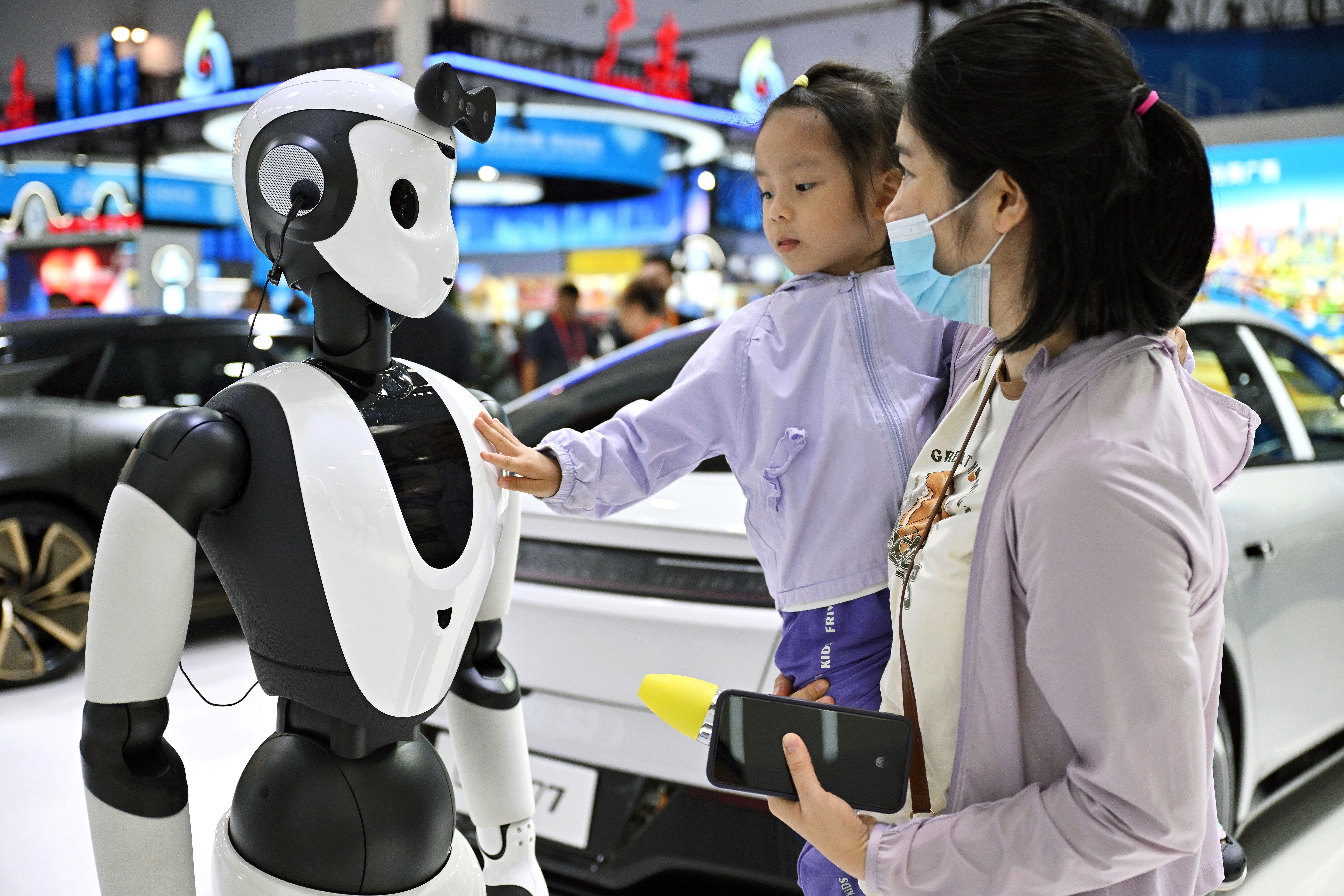
AI has become a powerful catalyst for China's consumer economy. As of the first half of 2025, generative AI products already had numbered 515 million users nationwide. Such a massive user base reflects a profound shift in how Chinese consumers now live, purchase, and engage with digital services.
Experts point to this massive user base as clear evidence of the immense potential for "AI + Consumption" in China, forecasting that AI will unlock remarkable new waves of consumer growth.
AI integrates into daily life
"Ultimately, all technology, including AI, must serve people," said Fang Yi, CEO of Merit Interactive Co, adding that, "AI + Consumption is one of the most effective paths for AI to move swiftly from the lab to the masses." AI brings smarter, more convenient living, while diverse consumer scenarios, in turn, stimulate innovation and expansion in AI applications.
"This immense user base sends two positive signals," Fang explained. "First, AI technology has achieved scaled, regular adoption. Second, China possesses a solid user foundation for both AI technological iterations and the expansion of consumer applications."
Today, AI is upgrading from an "assistant tool" to a more intuitive "consumption partner." Fang noted that while China's consumer product variety exceeds 230 million items, only 213 application scenarios for "digital technology empowering product variety, quality, and branding" have been widely promoted. This gap indicates that the boundaries of "AI + Consumption" are far from being reached, especially considering how AI can enhance our lives beyond current imagination.
Balancing innovation with trust
The very strength of AI — its reliance on analyzing user behavior, biometrics, and other sensitive data to make intelligent decisions — raises legitimate privacy concerns. Incidents such as reports of popular AI smart toys collecting and uploading private voice data and home environment information, highlight the risks of over-collection and potential data breaches.
"Users choose AI products ultimately for 'safer services and more efficient experiences,'" said Zhang Shaobo, a cybersecurity expert at Qi An Xin Technology Group. "Security and trustworthiness are the core competitiveness and non-negotiable bottom line for AI products. "AI + Consumption" should not come at the cost of user privacy."
Consumption patterns reshaped
China's new regulations on labeling AI-generated content (AIGC) officially came into effect on September 1, 2025. Zhang emphasized that regulatory frameworks are evolving to address these challenges. The regulations establish a governance architecture combining visible labels for users and technical traceability. Moving forward, all parties involved in designing and producing AI products must adhere to principles of "data minimization and full-process traceability."
The convergence of a vast, digitally engaged population, endlessly innovative application scenarios, and increasingly robust governance creates a unique ecosystem for "AI + consumption" in China. As AI transitions from a novelty to a natural part of daily life, it is poised to redefine consumer experiences — delivering growth driven not only by scale, but by quality, personalization, and trust.
The journey is just beginning, and the potential remains vast.