

Let Quantum Technology Better Serve Us
As 2025 gives way to 2026, a field once confined to laboratory benches and theoretical debates has surged to the forefront of global science and technology.
Quantum technology — long viewed as distant and abstract — is now riding the crest of the world's technological wave, propelled by decades of accumulated breakthroughs.
This momentum is reflected in the United Nations' designation of 2025 as the International Year of Quantum Science and Technology.
In China, the "Zuchongzhi 3.0" quantum computer, developed by the University of Science and Technology of China together with multiple research institutions, set a new world record by demonstrating quantum computational advantage in a superconducting system.
Across the Pacific, Google's "quantum echo" experiment achieved speeds up to 13,000 times faster than classical supercomputers for specific tasks, underscoring how rapidly quantum research is reshaping the global innovation landscape.
Quantum science is increasingly exerting its influence on the macroscopic world. Yet as this century-defining scientific revolution accelerates, a fundamental question persists: Why invest so much effort in exploring a realm that often appears detached from practical reality?
The answer lies in its potential. Many concepts in quantum mechanics completely overturn the logic and experience that we take for granted. For example, the switch of a quantum lamp can be both "on" and "off" simultaneously, settling into a definite state only when it is observed. This kind of "counterintuitive" phenomenon is a hidden cornerstone of the fortress of modern technology.
In fact, quantum mechanics has long been part of daily life. The semiconductors at the heart of smartphones depend on the quantum energy band theory, while the magnetic resonance imaging used in hospitals is based on the quantum spin of atomic nuclei.
What lies ahead is a deeper transformation. As quantum computing, quantum communication, and quantum sensing mature, our ability to process information and reshape the physical world may undergo a disruptive leap.
Among these advances, the most transformative is the liberation of computing power. Quantum bits enable exponential growth in computational capacity. This opens up new possibilities for tackling complex challenges that have long plagued the world — from designing life-saving drugs and optimizing carbon capture and storage solutions to building more robust financial models. Where traditional computing falls short, quantum computing offers a powerful new tool.
The quantum world also compels us to abandon rigid "black-and-white" thinking and accept uncertainty at the microscopic scale. This shift in mindset has given rise to vibrant technological breakthroughs.
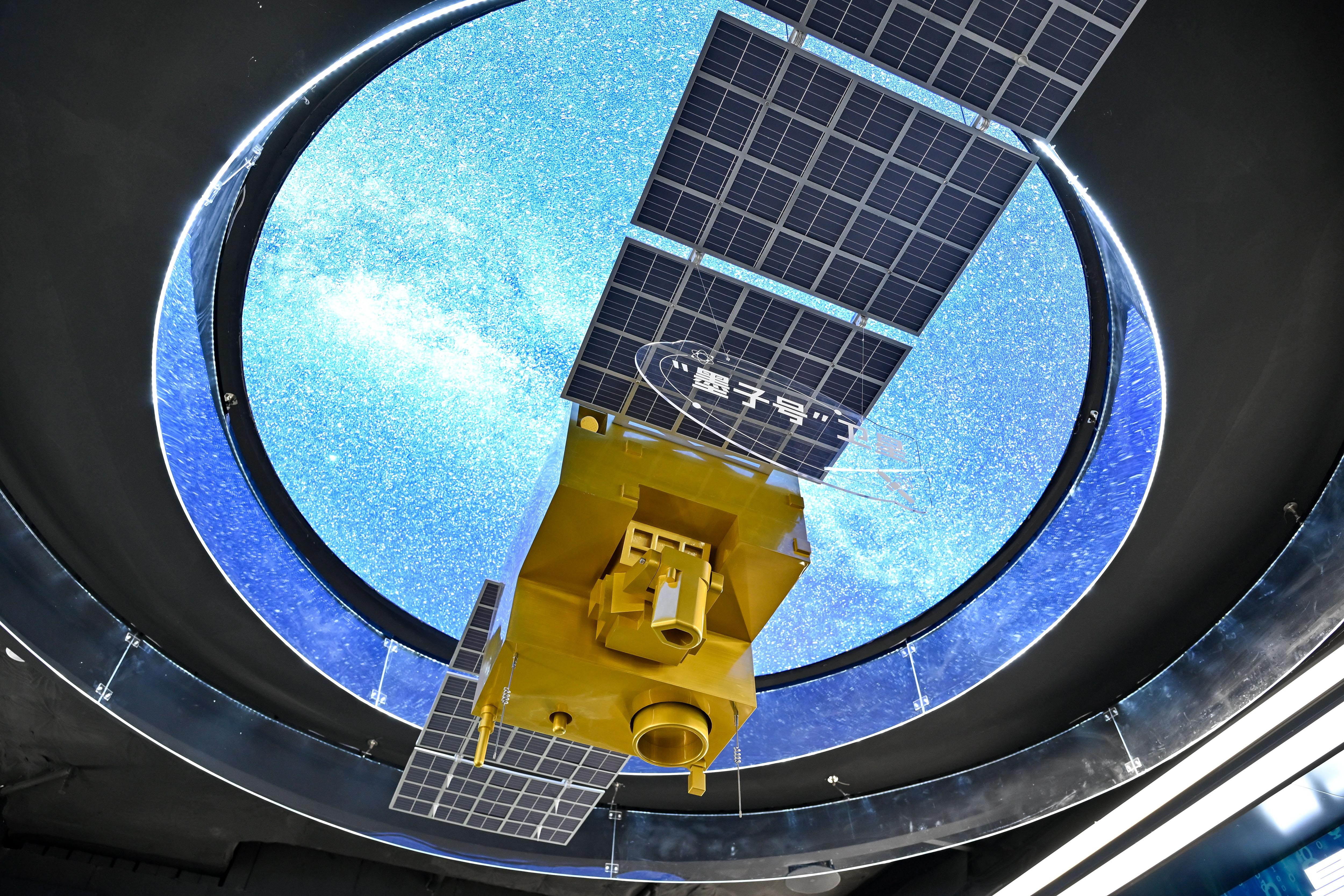
The design of new superconducting materials, for example, stems from a deep understanding of quantum electron behavior at low temperatures. China's Micius satellite translates quantum phenomena into communication security.
Recognizing its strategic value, many countries have elevated quantum research to the level of national policy. The U.S. has enacted the National Quantum Initiative Act, the European Union has launched its decade-long Quantum Technologies Flagship initiative, and countries including Japan, Canada, South Korea, and Australia have unveiled their own quantum roadmaps.
In China's Recommendations of the Central Committee of the Communist Party of China for Formulating the 15th Five-Year Plan for National Economic and Social Development, quantum technology is identified as a potential new driver of economic growth.
Quantum technology is no longer far away from our lives — it is rapidly coming within reach. In an increasingly interconnected world, continued openness and international cooperation will be essential. If guided wisely, quantum science may become a shared tool for addressing global challenges such as energy security and information safety, ultimately serving as a powerful engine for human progress.