

AR: A New Force in Global Bird Research
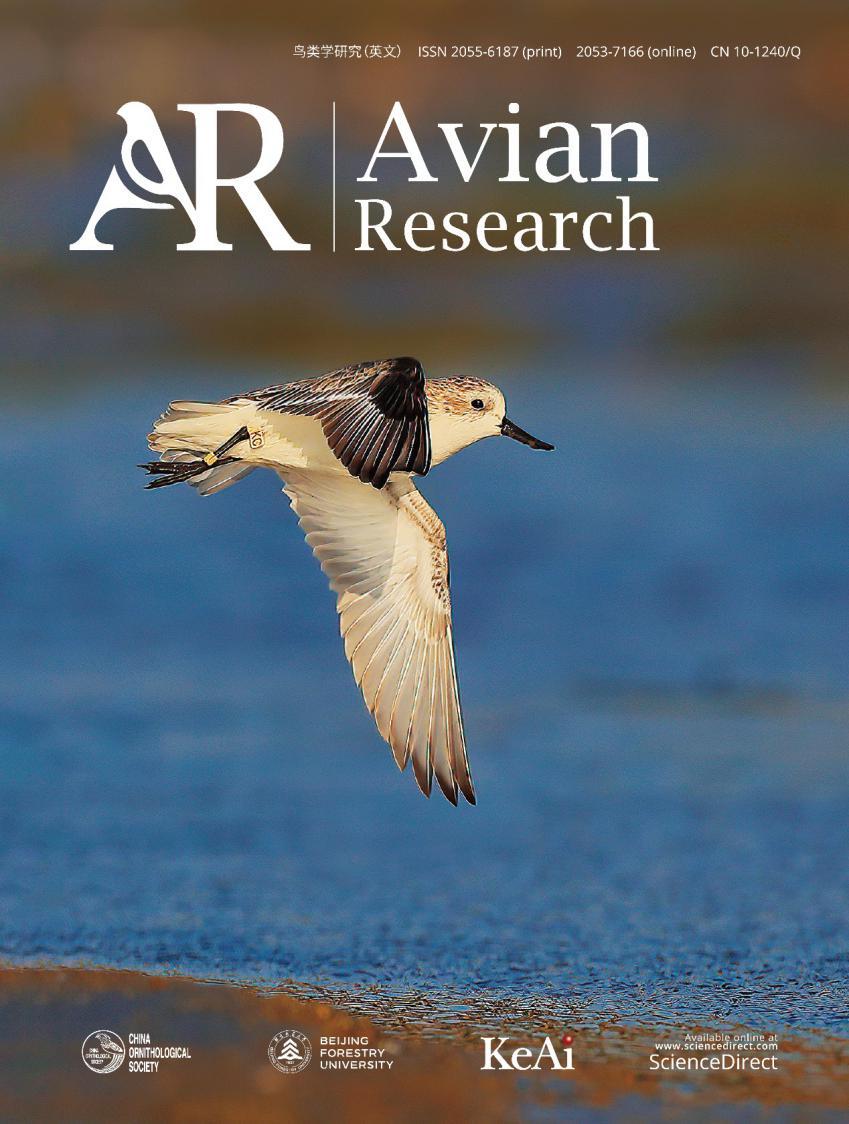
The Avian Research journal, which has already gained widespread influence in the global ornithological community, was founded just over a decade ago. Yet, within this short span of time, it has surpassed numerous century-old classics in multiple impact metrics, emerging as a new force in international ornithological research.
Breaking new ground
China has achieved remarkable accomplishments in ornithological research. However, despite being rich in avian biodiversity and frequent scientific breakthroughs, it long lacked a professional ornithology journal with international influence.
Then in 2010, Chinese Birds was launched, becoming the sole China-led academic platform among over 20 international ornithology journals at the time.
Jointly published by Beijing Forestry University (BFU) and the China Ornithological Society (COS), the journal followed the principle of being "grounded locally, with a global vision." It was committed to elevating the academic standards of ornithological research in China and contributing to avian conservation, breeding and ecological development.
In its early years, constrained by the regional connotations of its name, Chinese Birds often faced challenges in soliciting manuscripts, particularly in securing high-quality submissions. The editorial board, assessing the situation, decided to change the name to the more internationally oriented Avian Research.
The change of name in 2014 witnessed consequent improvement in the quality of submissions, and in 2016, AR was successfully indexed by major international databases.
Today, annual submissions have increased fivefold compared to the initial years, with the number of published articles tripling. The authors are from nearly 60 countries and regions worldwide, and various academic evaluation metrics continue to rise steadily, positioning AR among the top-tier journals in its field.
Focusing on key areas
Birds, a vital component of ecosystems and an indicator group for ecosystem health, are closely linked to national ecological security.
Aligning closely with the national strategies for ecological civilization and ecological security, AR focuses on key areas such as avian biodiversity conservation, migratory bird ecology, and the spread of avian diseases. By organizing high-quality submissions, it provides crucial scientific support for national decision-making in areas like the conservation of threatened bird species and the management of avian disease transmission.
AR places special emphasis on the status and conservation of threatened birds globally, particularly in China. Over the years, it has published numerous articles on endangered species such as the Crested Ibis (Nipponia nippon), Scaly-sided Merganser (Mergus squamatus), Siberian Crane (Leucogeranus leucogeranus), and Spoon-billed Sandpiper (Calidris pygmaea), covering aspects like population size, distribution, habitat conditions and genetic diversity. This has made it an important window into the conservation of China's endangered avian species.
Of the nine global migratory bird flyways, four traverse China, with the East Asian-Australasian Flyway being the most critical in terms of the number and diversity of migratory birds. China's conservation efforts along this flyway play an essential role in global migratory bird protection.
AR prioritizes publishing research on the conservation of migratory birds along this route, organizing special issues and feature collections. Many of its key research findings have garnered international attention.
For instance, Professor Cao Lei from the Research Center for Eco-Environmental Sciences, Chinese Academy of Sciences, was awarded the British Ornithologists' Union Godman-Salvin Medal for her innovative work in AR, becoming the first Asian recipient in the award's century-long history.
Synergy of hosts
AR's achievements are built upon the strong support of its hosts. The BFU provides solid backing in funding and policy. The COS serves as a core force in advancing ornithological research, science communication, and the conservation of endangered species in China. The research expertise of its members offers a steady and reliable stream of academic resources for AR.
The collaboration between the two hosts has driven AR's high-quality development, setting an example of university-society partnership in journal publishing.
After over a decade of dedicated effort, AR, like a young eagle, is soaring into a broader sky. We firmly believe that with the ongoing attention and support, it will become a shining "Chinese academic name card" in the fields of ornithology and zoology, amplifying China's voice on the international academic stage.
The author is LEI Fumin, the editor-in-chief of Avian Research.
Journal Review
Bird research and conservation are crucial for the healthy development of global ecosystems and the harmonious coexistence of humans and nature.
Publishing the latest findings in ornithology is particularly significant for advancing avian research and conservation.
Avian Research has long been committed to reporting original research, upholding the principles of excellence and innovation and making outstanding contributions to the development of ornithology worldwide.
The journal has an open-access model and has waived article processing charges for many years, widely benefiting readers and authors globally. It is especially popular among early and mid-career ornithologists.
We look forward to even greater achievements in its future endeavors.
—— Zhang Zhengwang, president of the World Pheasant Association and chair of the China Ornithological Society