

Ancient Bronze Set Warms Homes in Winter
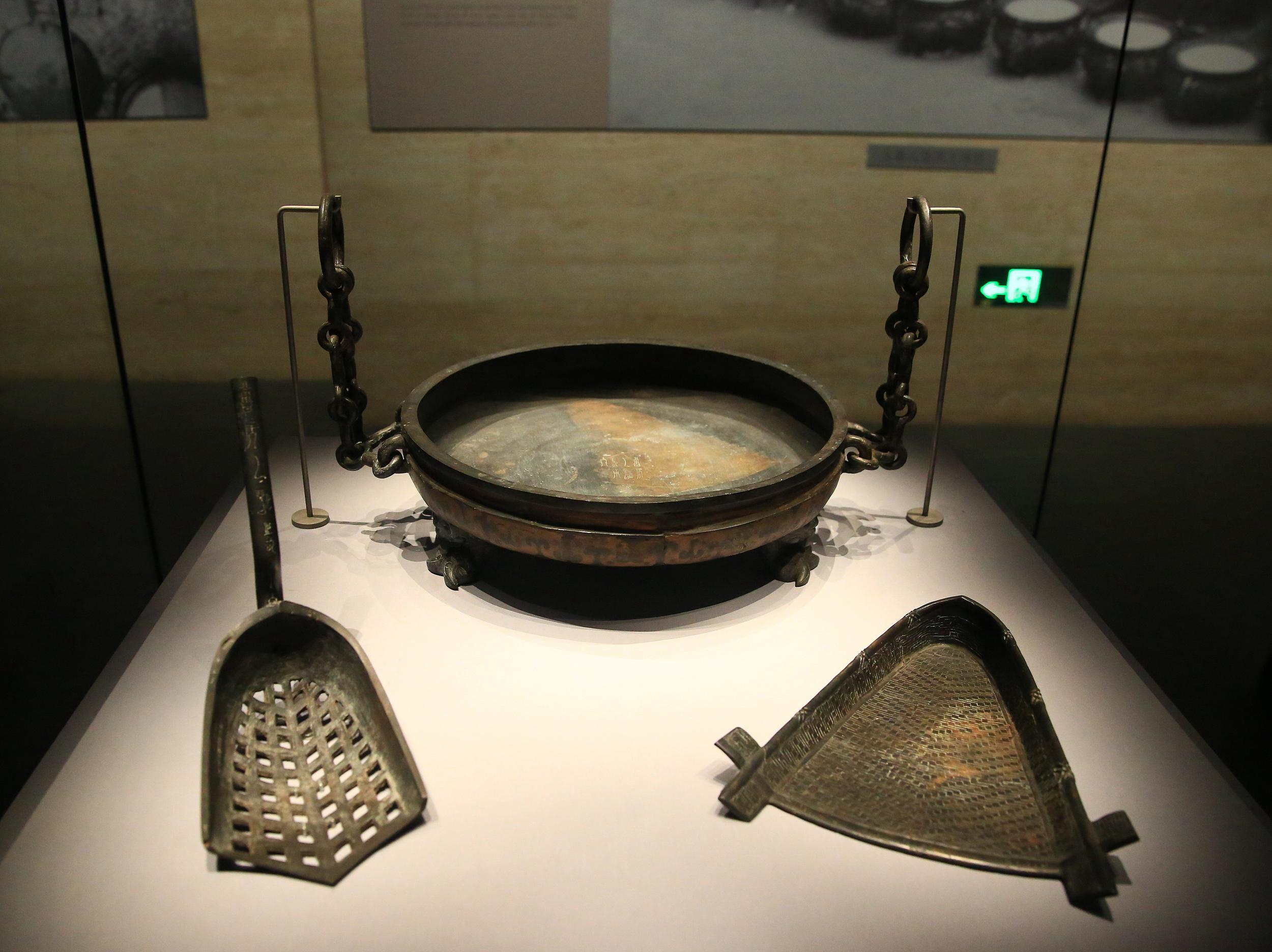
In modern life, people rely on heating or air conditioning to keep warm in the bitter cold of winter — but what did the ancients use?
During the Warring States period, people actually had a "three-piece set" for winter heating: a bronze charcoal brazier, a bronze shovel and a bronze sieve.
The bronze charcoal brazier is quite different from modern stoves. With its shallow, flat-bottomed design, it resembles a "bronze frying pan" at first glance. The bottom is fitted with three short, animal-shaped legs, which support the main body of the brazier and keep it a safe distance from the ground to prevent the floor from being scorched.
The neck and belly of the brazier are adorned with exquisite red copper patterns, while symmetrical double-ring handles balance both sides, each fitted with a carrying chain. These allow the brazier to be easily lifted and moved, providing "mobile heating."
But how exactly were these "three pieces" used?
Bronze charcoal brazier: The "heating core" of the trio, used for burning charcoal to provide heat.
Bronze shovel: A "charcoal ash collection tool," used to clean up the ash produced by the brazier and also to hold charcoal for further use, keeping the area clean and tidy.
Bronze sieve: A "charcoal selection device," its body is covered with holes to sift out broken charcoal and impurities, ensuring the best charcoal burns more fully for better heating.
Experts believe that the logic behind this heating combination is similar to that of the wine vessels used by Shang Dynasty nobles. It takes into consideration the practical function of daily heating, while also demonstrating the owner's identity and status through the specifications of the complete set.