

Technology Quietly Improving Lives in China
In the days leading up to the Chinese New Year, as trains and highways fill with travelers heading home, technology is a quiet integral part of daily operations such as essential services to keep the work going without human presence. Today's working systems are built to solve problems and keep these services running. This is how China's sci-tech innovation story is being written with steady, practical steps.
Winter watermelons in the Taklamakan
In Shule, a county in Xinjiang in northwest China, winter temperatures often drop to minus 10 degrees Celsius. Yet in a local agriculture demonstration park, watermelon seedlings are thriving in greenhouses. By February, the first harvest will be ready, something unthinkable a few years ago.
The secret lies in self-heating greenhouses developed by Weifang Guopai Watermelon Agricultural Technology Co., Ltd., a company from Shandong province in the east that came to Shule in 2021 through a local investment drive. The structures use multi-layer composite insulation that absorbs solar heat during the day and releases it at night, requiring no extra heating.
Inside one greenhouse, technician Buhaliqi Sidike checks a water fertilizer integration system. She presses a button and nutrient-rich water flows directly to each plant's roots through drip lines. "It saves water, reduces labor, and gives every melon the same sweetness," she said.
After graduating from college, Buhaliqi joined an agricultural park. Within three years, she became skilled in climate control, plant grafting, pollination techniques, and automated greenhouse systems. She now oversees dozens of greenhouses.
To ensure consistent quality, the park uses a grafting machine. Workers place melon scions and pumpkin rootstocks into the device, and it fuses them with precision, eliminating the uneven results of manual grafting.
The melons sell for over 100 RMB each, several times the price of regular varieties, thanks to their thin rinds and uniform sweetness. The operation now provides stable jobs for more than 400 people and seasonal work for over 1,000 more.
A local seed breeding company plans to move into the park to develop new watermelon varieties suited to Kashgar's intense sunlight and arid soil, aiming to build a full seed industry chain.
For Buhaliqi, the work is personal. "Growing melons is a sweet business," she said. "I want our fruit to reach markets around the world."
Crossing the Yangtze at full speed
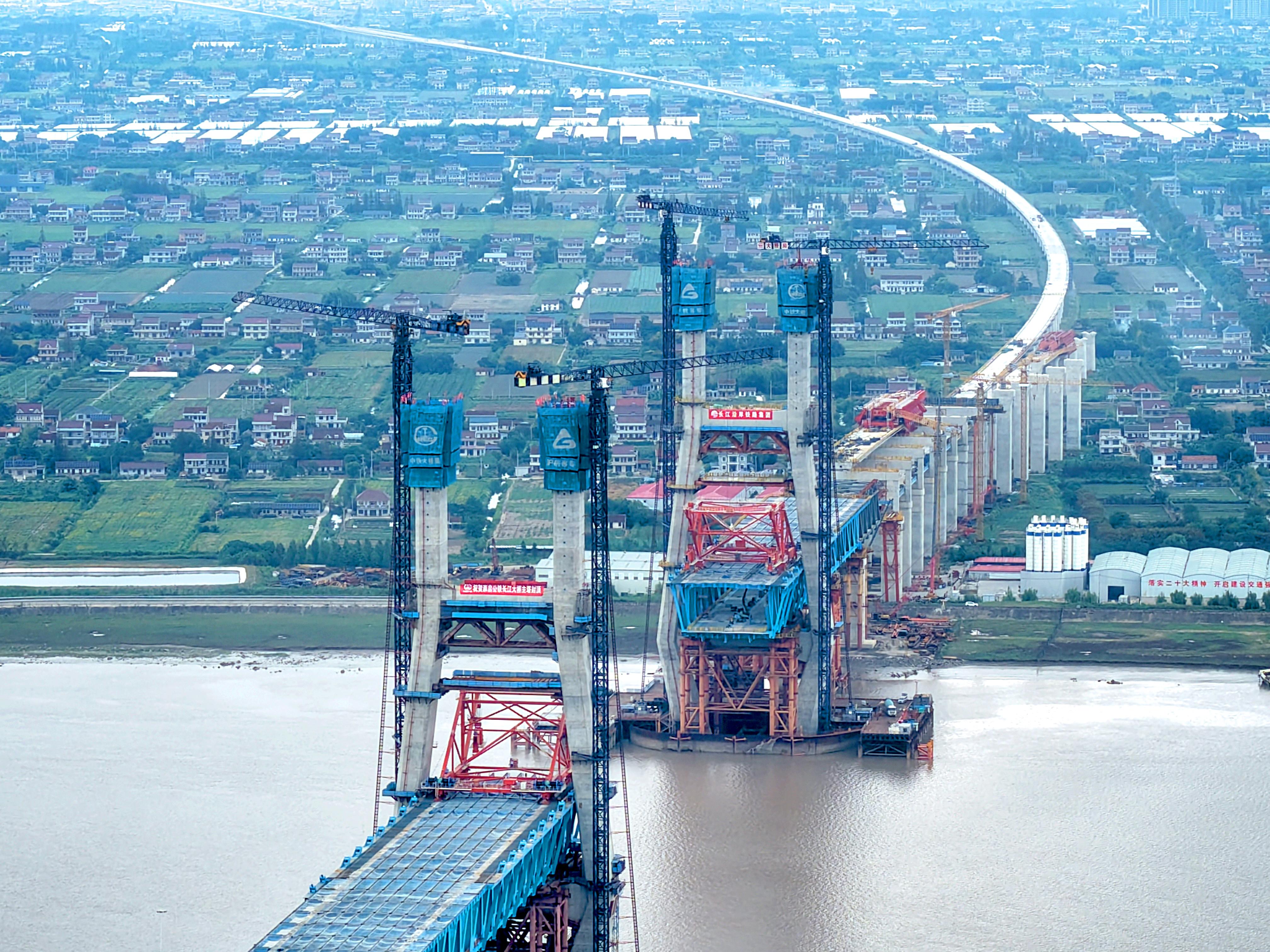
More than 3,000 kilometers east, near where the Yangtze River meets the sea, two major projects are nearing completion: the Chongqi Highway Railway Yangtze River Bridge and the Chongtai Yangtze River Tunnel.
Together, they form the critical link of the Shanghai-Chongqing-Chengdu high-speed rail line. For the first time in China, trains will cross the Yangtze at 350 kilometers per hour without slowing down.
The bridge spans 4.09 kilometers, with a main span of 400 meters, the longest of its kind for ballastless track for high-speed rail. It carries a six-lane highway on top and, below, tracks for both 350 km/h high-speed trains and the 250 km/h intercity rail.
Building it was not easy. The riverbed here is soft silt. To anchor the piers, the teams drilled piles 142 meters deep, with alignment tolerance under 0.5 per mille. Steel trusses were then pushed into place using synchronized jacks, millimeter by millimeter.
Underneath the river, the challenge was even greater. The Chongtai Yangtze River Tunnel is 14.25 kilometers long, making it the world's longest high-speed rail tunnel built with single-direction excavation. At its deepest point, it lies 89 meters below the surface, under water pressure of 0.9 megapascals.
Here, the Linghang, the world's largest diameter tunnel boring machine for high-speed rail, is carving its final stretch. Engineers describe its operation as "someone watches, no one steers." An automated system handles real-time geologic sensing, path adjustment, and safety controls.
To withstand extreme pressure, the team developed a new grouting material that forms a stabilizing layer around each concrete segment. They also added a sixth sealing ring to the shield tail, the first time in China, creating a strong waterproof barrier.
Every 500 meters, five color LED strips light the tunnel. When finished, this route will shorten travel time between Shanghai, Nantong, and Chongqing, making daily commutes and family visits easier for millions.
A mountain dam powers a green future
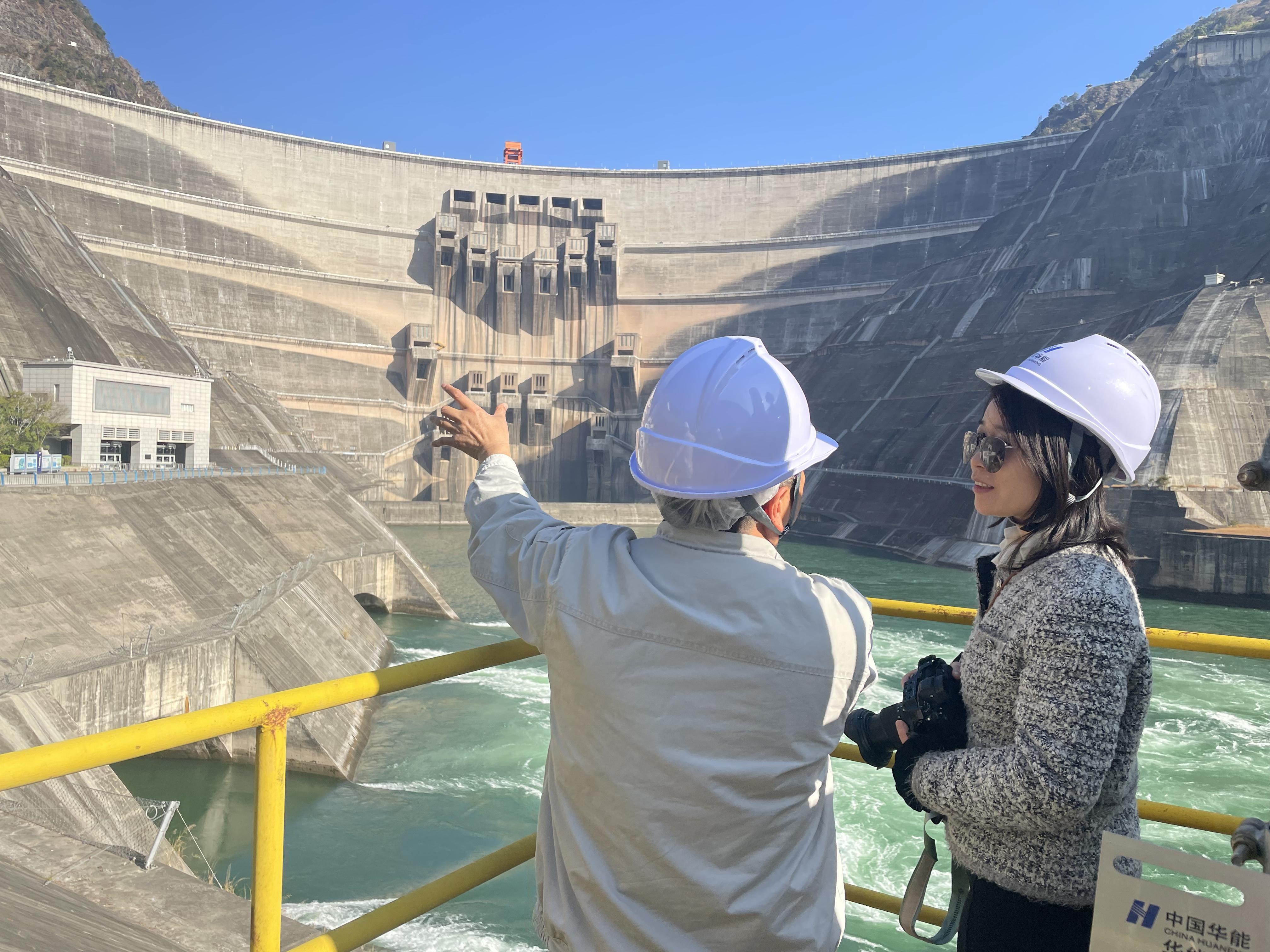
Far southwest, in the steep valleys of Yunnan province, another transformation is underway at the Xiaowan Hydropower Station on the Lancang River.
Soaring 300 meters, it is the world's first concrete double curvature arch dam of this height. Completed in 2009 after a decade of construction, it generates an average of 19 billion kilowatt hours of clean electricity each year.
During construction, engineers faced near-vertical cliffs, fast currents, and unstable rocks. To stabilize the slopes, they installed 17,000 anchor cables into the canyon walls. Many contain sensors, so any movement in the dam is instantly known to technicians.
Today, the station is being reinvented through digital intelligence. Eighty-eight underground caverns and a powerhouse as deep as a 30-story building once made inspections slow and difficult. Now, drones equipped with AI, high-resolution cameras, and 3D lasers scan the entire dam structure under four hours, a task impossible for humans on their own.
Last September, Xiaowan became China's first hydropower station with fully domestically produced control systems for all four core functions: computer monitoring, relay protection, turbine governors, and excitation systems. Each of its six units has a capacity of 700,000 kilowatts.
"This year, for the first time, we can run the central control room with no staff on site during holidays," said Ma Chunli, head of operations. "Smart systems handle everything."
Xiaowan's transformation does not stop at automation. On hillsides near the reservoir, rows of blue solar panels shimmer in the sun. Beneath them, lemon trees grow in the shade, heavy with fruit.
Zhang Xiaodong, who leads the station's new energy division, explained the idea: "Solar power is clean but intermittent. Our dam acts like a giant battery and it can start and stop quickly to smooth out solar fluctuations and keep the grid stable."
His team works nonstop, even during Spring Festival. Their vehicles log nearly 300 kilometers a day. Some colleagues have worked over 350 days this year.
Soon, six new solar farms will connect to Xiaowan, adding 490,000 kilowatts of clean power. Combined with the dam, the total clean energy capacity will reach 5.435 million kilowatts.
"The shift from hydropower alone to a hybrid water solar system is a complete renewal," Zhang said. "And when our power reaches families far away, that's why we stay."
These stories don't announce themselves. They simply make things work more reliably, more efficiently, more sustainably for people far beyond the sites where they begin.