

Watertight Bulkhead Technology: Centuries Ahead of its Time
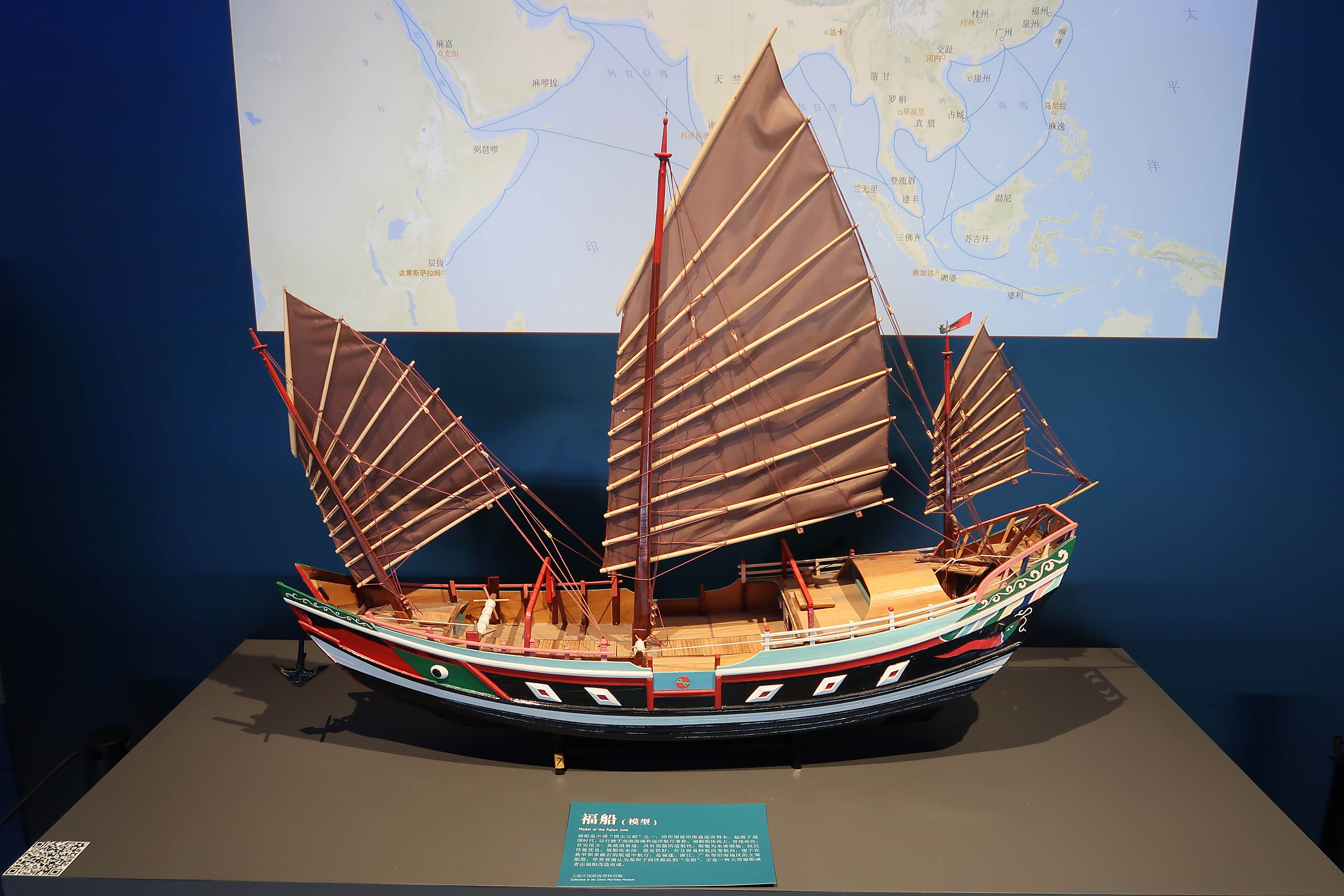
A Fuchuan boat is exhibited in Shanghai. (PHOTO:VCG)
By BI Weizi
The watertight bulkhead technology of Chinese junks was inscribed both on the Representative List of the Intangible Cultural Heritage of Humanity and the List of Intangible Cultural Heritage in Need of Urgent Safeguarding by UNESCO in 2010.
Originating from Fujian province in southern China, the watertight bulkhead technology allows the construction of vessels with watertight compartments. If one or two cabins are accidentally damaged during the voyage, the other cabins will not be flooded and the ship will remain afloat. These sailing ships are mainly made of camphor, pine or fir woods, and assembled by using traditional carpenter's tools. They were built through applying the key techniques of joining planks together with mortise and tenon joints, and caulking the joints between planks with ramie, lime and tung oil.
Since Tang Dynasty (618-907), wooden ship manufacturing has adopted watertight bulkhead technology. And from the 18th century onwards, it has been gradually adopted by other countries across the world. A wooden ship dating back to Tang Dynasty was first discovered in Rugao, Jiangsu province in 1973, with nine compartments on board. Both sides of the ship and bulkheads were nailed together using the "herringbone stitch" method. The board gap is filled with a mixture of lime and tung oil in order to increase the watertightness of the cabin.
The invention of the watertight-bulkhead technology is a tremendous contribution of global significance and revolutionized the safety of ocean navigation.