

Think Tank Development Report Showcases China's Accomplishments
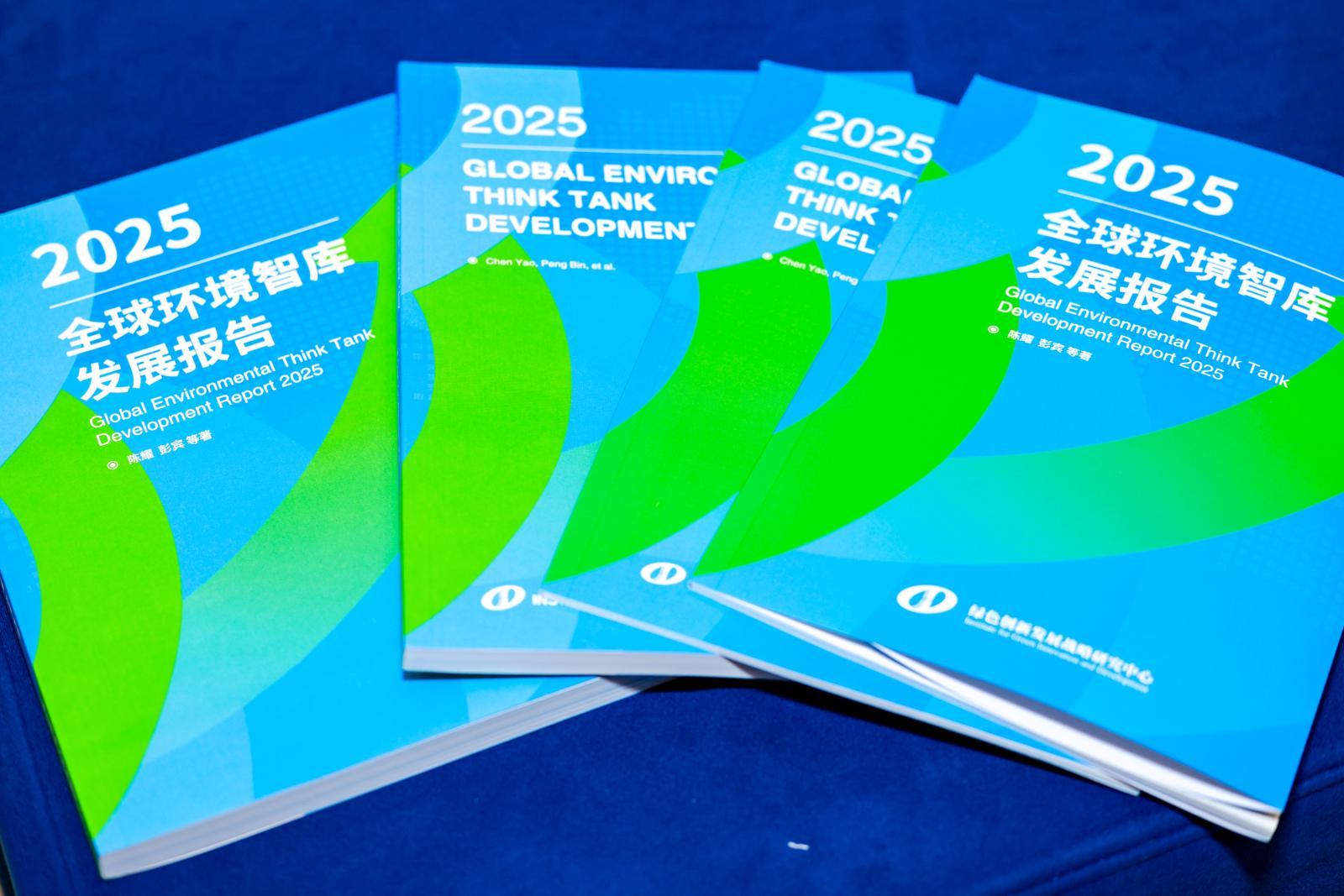
Eight Chinese think tanks are among the top environmental think tanks worldwide, six top in the field of environmental pollution control, and another six ace in the field of biodiversity and ecosystems.
These are among the findings of the Global Environmental Think Tank Development Report 2025 released in Beijing on December 5 by the Institute for Green Innovation and Development, a science and technology think tank jointly established by Zhejiang University of Technology and the Chinese Society for Environmental Sciences.
The report, which evaluates 896 environmental think tanks from 97 countries, also ranks four Chinese think tanks as the top ones in the field of climate change while four more Chinese think tanks are the best in the field of sustainable development. Three Chinese think tanks ace in the field of clean energy transition.
The report analyzes and evaluates 506 specialized and 390 comprehensive environmental think tanks. The Asia-Pacific region has the highest number of environmental think tanks with 282, followed by Europe (255), and North America (176). Latin America and the Caribbean (LAC) have 125, while Africa has the fewest – 58, with most of them concentrated in countries such as South Africa, Kenya, and Nigeria.
At the country level, the U.S. has the largest number, with China ranking second. Other countries with a significant number of environmental think tanks include Germany, the UK, France, Brazil, Canada, Japan, India, and Italy.
In the Asia-Pacific, East Asia stands out as the most rapidly developing and dynamic sub-region, accounting for 55 percent of the region's total. Europe and North America are the world's most advanced regions in this field. The European Union and its member states possess extensive networks of elite scholars, demonstrating strong research capabilities. Non-EU European countries such as the UK and Switzerland also host numerous high-quality environmental think tanks.
The U.S. is home to a substantial number of influential, well-established traditional think tanks, many of which prioritize environmental issues as a key research area. In LAC, countries like Brazil, Mexico, and Chile have a relatively high concentration of environmental think tanks.
Compared to other developing regions, think tanks in this area emerged earlier, with some established as early as the 1940s and 1950s.
The report evaluates the think tanks on four dimensions, namely institutional profile, research output, policy engagement, and public influence. It also evaluates their performance separately in five specific fields: environmental pollution control, biodiversity and ecosystems, climate change, sustainable development, and clean energy transition.
According to the comprehensive evaluation, the U.S. has the highest number of top environmental think tanks, followed by Germany, with China ranking third, and India and the UK following closely. The top 10 environmental think tanks are all from Europe and the U.S.
As per field-specific evaluation, in environmental pollution control, the U.S. has the most top think tanks, followed by China, India, Germany, and the UK. In biodiversity and ecosystems, the U.S. leads as well, followed by Germany, with China ranking third, followed by India and the UK.
In climate change, the U.S. has the most top think tanks, followed by Germany, China, the UK, and India; in sustainable development, the top five countries are the U.S., Germany, the UK, China, and India. In clean energy transition, the top five are the U.S., UK, Germany, China, and Japan.
The report showcases to the world China's achievements in building environmental think tanks, said Erik Solheim, co-chair of Europe Asia Center and former under secretary-general of the UN and executive director of the UNEP. He also said the report's comparative analysis of think tanks in developing and developed countries was particularly valuable.