

2025 IEEF Calls for Shared Energy Future
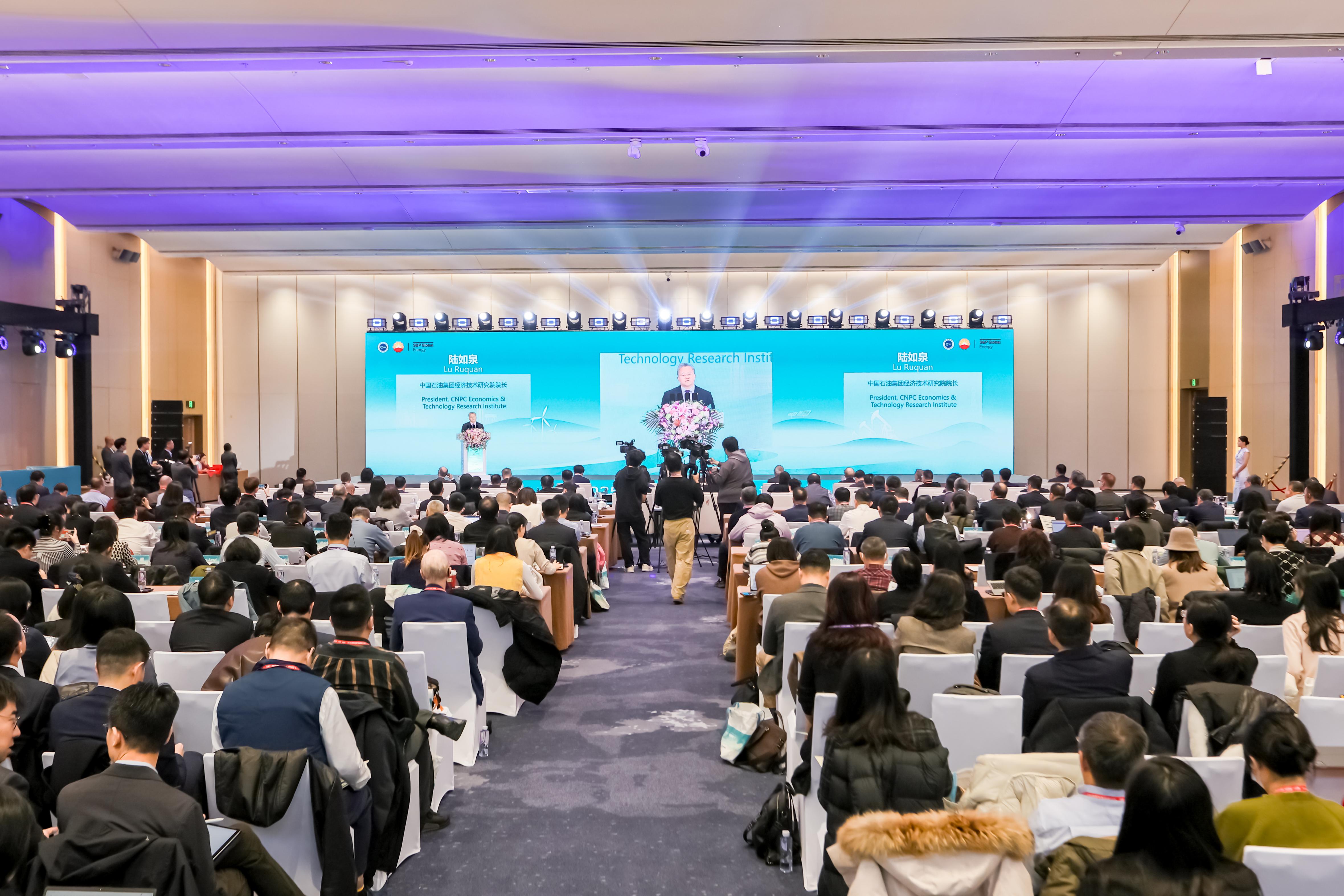
As the global energy landscape reshapes amid geopolitical and climate shocks, the 2025 International Energy Executive Forum held in Beijing on December 11 and 12, discussed joining forces to shape a fair, secure, and intelligent new global energy ecosystem.
Zhang Daowei, vice president of China National Petroleum Corporation (CNPC), underscored the need to jointly establish a just energy order, safeguard energy security through resilient supply chains, and accelerate open innovation to drive intelligent transformation.
Centered on the three key aspects of “fairness, security, and intelligent solutions” in global energy development, the forum covered multidimensional topics such as energy markets, geopolitics, digital and intelligent technologies, and brand & ESG, providing insights into the trends of the global energy industry and China’s path toward building a new energy system.
Delegates agreed the transition demands an “all-fuels, all-tech” path that couples security with access. China, already diversifying supply and logging tech gains, is cementing its role as an anchor of the new, fairer and smarter energy order.
Daniel Yergin, vice chairman of S&P Global, highlighted China’s pivotal role in the global energy transition. He said China is at the forefront of the march toward carbon neutrality, “moving at a rapid rate,the most rapid rate of any country.” In China, clean energy technologies like electric vehicles, wind, and nuclear power are not only advancing quickly but are also “very cost competitive.”
Yergin emphasized China’s consistent focus on energy security, observing: “Energy security has never been forgotten in China,” and that Chinese state oil companies regard it as “part of their basic mission.”
Calling for greater global understanding, he stressed that the energy transition “is unfolding at different rates in different countries because of different priorities and different situations.” He recalled what a representative from a developing economy said at an international forum: “You have to listen to our voice too.” This, he said, underscores the need for inclusive dialogue as the world navigates a shared energy future.
Charles Michel, former president of the European Council, called for stronger cooperation between China and the European Union on climate action and energy transition. He said energy transition and climate change will be among the most important areas for collaboration between the two sides in the coming decades.
While acknowledging that the EU and China do not share the same history, traditions, or political systems and therefore hold different views on many issues, he stressed the need to manage those differences responsibly, with mutual respect and clarity. “We must be able to disagree on certain issues while still finding common ground on others, particularly when it comes to global challenges like climate change and the energy transition,” he said.
Michel noted that both the EU and China are key architects of global climate policy, and added, “If we work together, we can shape the global transition in a safer and more balanced way. On climate, we either win together or lose together.”
Andrea Stegher, president of the International Gas Union, emphasized China’s important role in global gas cooperation. “China has played and continues to play a great role in the global energy arena,” he said.
Carlos Pascual, senior vice president for Geopolitics & International Affairs at S&P Global Energy, said China began its energy security transition early, recognizing vulnerabilities in oil and gas transit routes. It responded with a strategic push into renewables, critical minerals and electric vehicles.
Today, he said “China leads global investment in clean energy technologies. For the first time last year, spending on clean energy surpassed upstream fossil fuel investment worldwide, and China was the principal driver, both in scale and in delivering the lowest costs.”
Ai Ping, vice president of China Association for International Understanding, highlighted China’s role in fostering inclusive energy cooperation. He cited joint projects with Central Asia on gas pipelines, an 11-year U.S.-China clean energy research partnership, and eco-integrated solar farms in Uzbekistan that have boosted local vegetation from five percent to 35 percent.
“These efforts reflect how mutual respect and civilizational dialogue turn energy collaboration into shared prosperity,” he said.
Qian Xingkun, executive director of CNPC Economics & Technology Research Institute (CNPC ETRI), said the forum will continue to uphold the principle of “pragmatic cooperation and open sharing”, working alongside global partners to contribute intellectual insights toward building a more just, secure, and intelligent new global energy ecosystem, and jointly creating a brighter future for the development of human energy.
At the forum, CNPC ETRI released three reports: World and China Energy Outlook 2060 (2025 Edition), Report on the Development Achievements of China’s Oil and Gas Industry During the 14th Five-Year Plan Period, and Global Energy Governance Report.
Since its inception in 2013, the IEEF has grown into a flagship annual gathering that links China with the world and accelerates cross-sector convergence. Co-hosted by CNPC ETRI and S&P Global, and supported by Beijing Capital Group of Exhibitions and Events, this year’s forum convened some 400 delegates from Chinese ministries, executives from international and domestic energy companies, heads of multilateral organizations, financiers and leading scholars.