

AI Explores More Possibilities in Space
With the explosion of AI, the demand for computing power has grown exponentially. However, ground data centers, being constrained by energy consumption and heat dissipation, are facing increasingly severe development bottlenecks.
Sending AI and computing power into space, and building data centers in space are seen as the ultimate solution to the global computing power supply problem. In 2025, the curtain on space computing power construction was lifted, and the vision of sending data centers "into space" was gradually achieved through the concerted efforts of all parties in the industry.
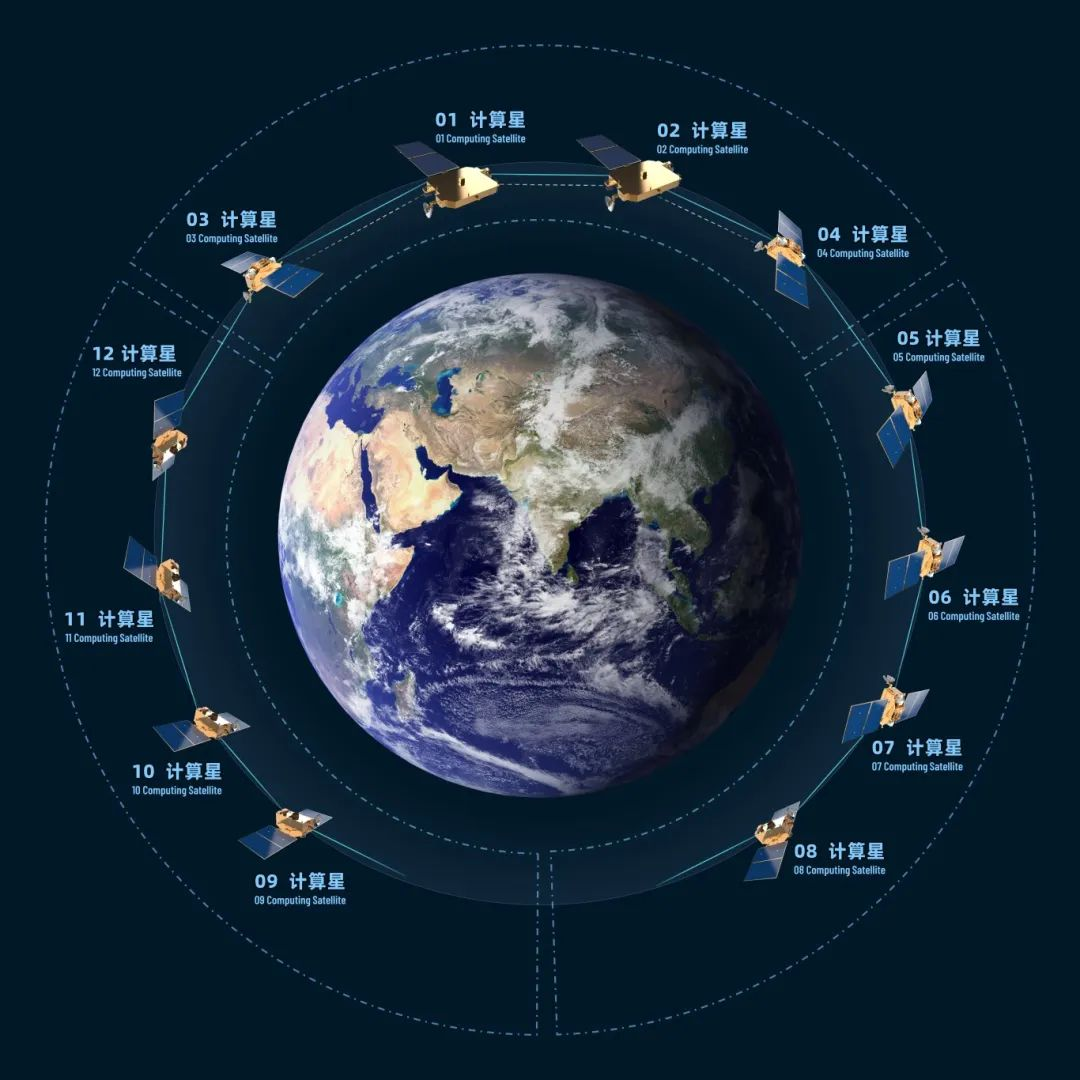
In May 2025, the Three-Body Computing Constellation led by China's Zhejiang Laboratory was successfully launched and entered into orbit. The 12 in-orbit computing satellites are all equipped with on-board intelligent computing systems and inter-satellite communication systems. They are able to carry out in-orbit computing and interconnection of satellites throughout the orbit cycle, and finally establish an integrated space-ground computing network.
In July, geospatial company GEOVIS and supercomputer maker Sugon signed a cooperation agreement to jointly develop high-end space computing chips and modules to support the computing services in space and reduce the delay caused by the transmission of satellite data to the ground.
In November, the Zero-Carbon Space Computing Center independently developed by Chengdu-based Adaspace Technology Co., Ltd., was recognized as one of the top 10 outstanding achievements at the 2025 World Internet Conference.
Globally, tech giants including Google, SpaceX and NVIDIA have all entered the space computing field and are making advances.
The rise of space computing power is not only a technological revolution but also the opening of a trillion-dollar market.
As a cutting-edge field in global technological competition, an important development direction of commercial aerospace, and an important example of new quality productive force, the application prospects of space computing are extremely broad.
With advantages such as global coverage, high timeliness, and green and low-carbon features, it can effectively serve multiple fields including the digital economy, low-altitude economy and emergency relief.
At present, China has incorporated the development of the aerospace information industry, the promotion of satellite Internet and the construction of an integrated space-ground information network into multiple national strategies, such as Digital China, which has a long-term goal of establishing a comprehensive digital development system by 2035.