
No Shortage of Food for Taikonauts
In 2025, an unexpected delay to the Shenzhou-20 mission gave the public their first close-up of China's space station's logistical support capabilities. As the taikonauts' scheduled return time was extended, concerns arose. Was there enough food? Was there enough water? Could their basic needs be met?
However, Wu Dawei, deputy chief designer of the astronaut system at the China Astronaut Research and Training Center, quickly dispelled these doubts with the following response: "The space station's food and living supplies are more plentiful than you can imagine."
This wasn't just some ad hoc response, but rather the result of careful planning and preparation. Even the laboratory mice in orbit was included in the allocation of supplies, they got the taikonauts' soy milk. The mice eventually returned to Earth healthy, proving the success of the experiment and reflecting the space station's flexible and efficient resource management.
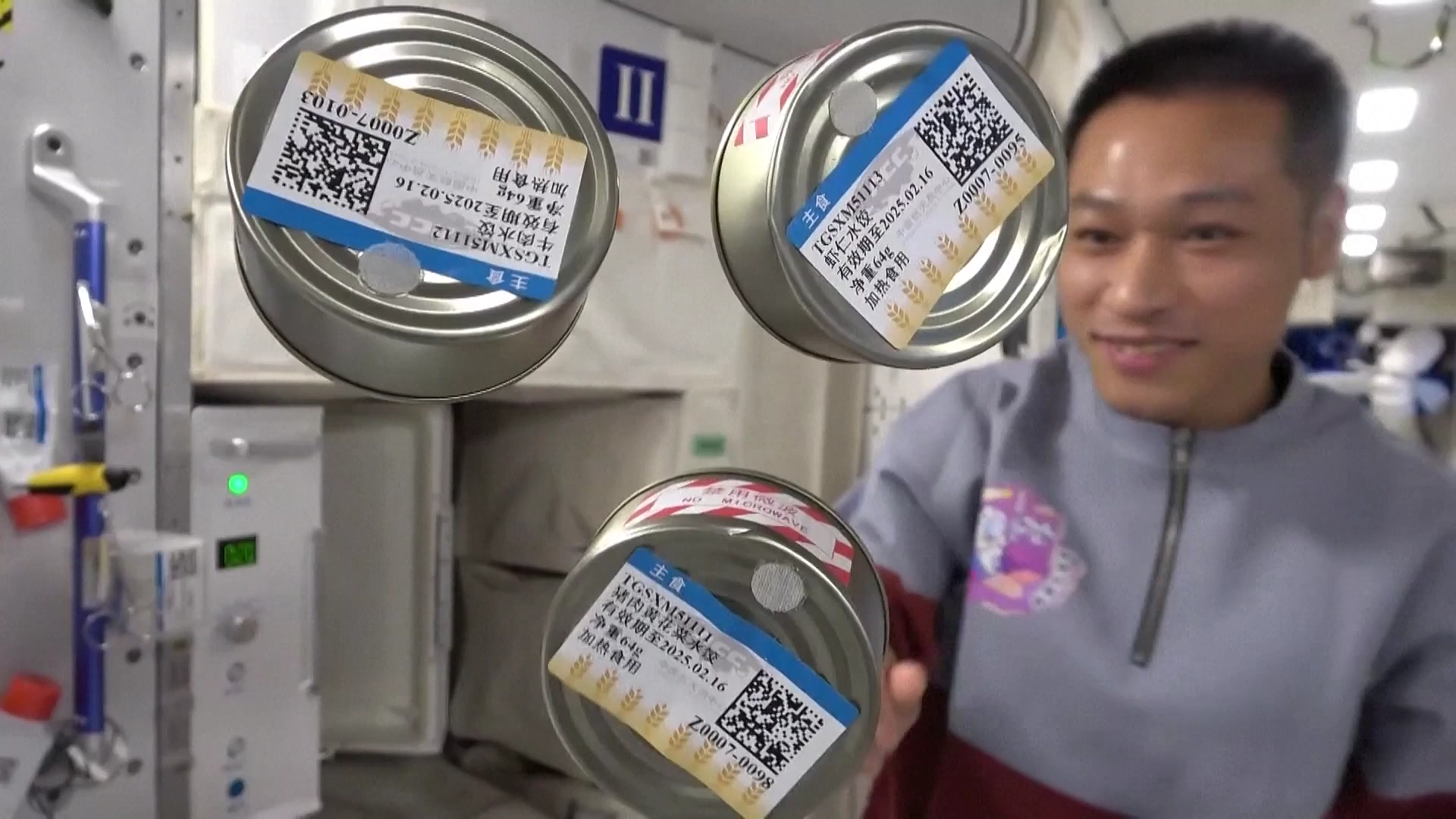
Contrary to popular belief, space food on the Chinese space station is no longer limited to processed food in toothpaste-like tubes or compressed biscuits. Today, the taikonauts' menu exceeds 190 items. Every food item is scientifically categorised and stored. Most are processed using high-temperature sterilisation in soft cans or freeze-drying technology, which allows them to be stored at room temperature for over a year.
These foods are stored in cargo bags in the space station. Fresh fruit and vegetables, such as apples, tomatoes and lettuce, are regularly supplied by the Tianzhou cargo spacecraft and stored in specially designed refrigerators at a temperature of 2-4 °C. Developed by a Chinese company, this refrigerator is lightweight, energy-efficient and impact-resistant, and can be remotely monitored to ensure the freshness of the ingredients.
But why go to such great lengths to ensure good quality food? It's because the effects of the space environment on the body far exceed what people imagine.
In weightlessness, for example, the rise of bodily fluids can lead to a decrease in taste and smell of over 30 percent, which can make astronauts prone to a loss of appetite. Therefore, the menu includes strongly flavoured foods such as Sichuan cuisine, chilli sauce and rich soups to stimulate appetite. The nutritional design is also extremely precise: high protein to prevent muscle atrophy, high calcium and vitamin D to combat approximately one percent monthly bone calcium loss, low sodium and high potassium to protect the cardiovascular system and dietary fibre to alleviate slowed intestinal motility. Every meal is the result of scientific calculations.
The reason the Chinese space station's material reserves are "more plentiful than you can imagine" lies in its highly systematic support system. Every link has undergone repeated verification, from the regular resupply of the Tianzhou spacecraft and the intelligent management of on-orbit supplies to long-term food preservation technology and emergency allocation mechanisms. Even the soy milk consumed by the mice is part of this coordinated operation.