
When Needles Built an Indestructible Bridge
When he was a third-year medical student, Mrigendranath Gantait saw one of his professors perform a "miracle."
"A patient had come to the (Calcutta) Medical College with gangrene in his leg and the doctors said they would have to amputate the leg, there was no other option."
But then a senior professor, Dr. Bejoy Kumar Basu, stepped in. The veteran doctor had been teaching some of his students a medical technique that he had learned abroad. It required finding pressure points in a patient's body and inserting fine, long needles there.
The patient clutched at this ray of hope, the treatment was done, and the gangrene was cured.
The method was acupuncture and Dr. Basu its pioneer in India, having learned it in China.
"History talks about ping-pong diplomacy between China and the U.S. (where the ice in the bilateral relationship was broken by friendly matches between Chinese and U.S. table tennis players). This was acupuncture diplomacy between India and China," Dr. Gantait, now 75 and a veteran acupuncturist himself, told Science and Technology Daily.
The introduction of acupuncture in India from China established a historical bond between the two neighboring nations that has withstood the ups and downs in their relationship. Its roots go back to 1938 when Japan's invasion of China had reached a frenzy and Chinese leaders asked India for medical assistance.
The Indian Medical Mission, consisting of five doctors, went to China to treat the war-injured. Two of them left unique legacies of amity: Dr Dwarkanath Kotnis, who died in China, and Dr Basu, who bequeathed all his assets to the government of his home state to promote acupuncture after his death.
"He learned acupuncture when he was in China," Dr. Gantait said. "At that time, there were no books in English available on acupuncture. He took painstaking notes by hand and taught us from his notebook. He also brought some acupuncture needles with him as none were available in India. He would lend them to us by turn and we would practice and treat patients with them."
The medical mission subsequently inspired the India-China Joint Medical Mission, a recurring initiative which sends young doctors from both countries to serve in rural areas, consolidating people-to-people ties with medical services.
The seventh joint mission was held this June when 11 Indian doctors and 11 Chinese doctors from the Affiliated Hospital of Guizhou Medical University went to Shibing, a county in Guizhou province in southwest China. They gave free medical consultations to the community, who are mostly from the Miao and Dong ethnic groups.
Dr. Kotnis, who died in China in 1942 when he was just 32, has memorials both in his hometown in India and in north China. More than silent memorials, they are a continuation of medical services.
In Hebei in north China, a medical school, the Shijiazhuang Ke Dihua Medical Science Secondary Specialized School, is named after him, using his Chinese name Ke Dihua, which younger generations in China still recognize.
A journalist and a think tank member both told Science and Technology Daily that their school textbooks taught about the selfless spirit of Ke Dihua, resonating with a nation that commemorates Lei Feng, the young Chinese soldier exemplifying self-sacrifice in the service of others.
In India, the Dr. Kotnis Memorial Committee runs health camps, offering free check-ups, vaccinations, and medicines, as well as an Acupuncture Treatment Center.
On the occasion of Dr. Kotnis's 83rd death anniversary earlier this month, Kong Xianhua, the Chinese consul-general in Mumbai, India, wrote Kotnis's spirit of internationalism and dedication "is still running in the blood of both Chinese and Indian people to make us emotionally closer…. Once the seeds of friendship are sown in their hearts, the young people will continue to carry on the spirit of Dr. Kotnis for generations."
The Chinese government has announced it would sponsor a school in Dr. Kotnis's hometown in India, which would be renamed the Dr. Kotnis Friendship School. The Chinese consulate general and Chinese companies have sponsored renovations, sports facilities and a drinking water system in the school.
Dr. Basu's residence in Kolkata, India, is today the B.K. Basu Memorial Acupuncture Research and Training Institute, that also houses a small museum on Basu and his work.
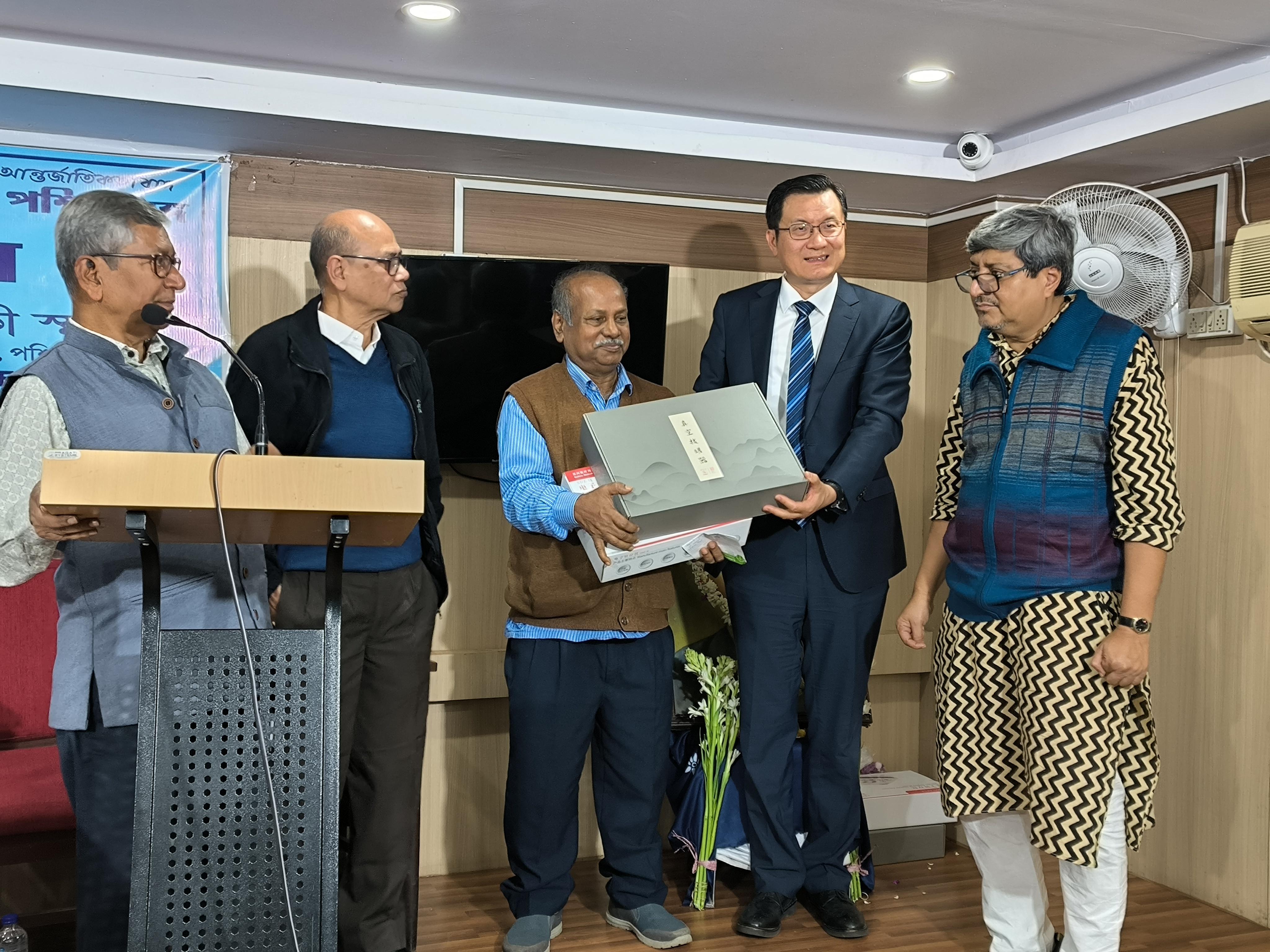
Dr. Gantait, who is also president of the Acupuncture Association of India, said the Chinese consul general in Kolkata, Xu Wei, donated acupuncture equipment and needles on Dr. Kotnis's 83rd death anniversary.
"When we go to rural areas and treat villagers with acupuncture, they want to know from where this practice originated,"he said." On being told China, they have a positive feeling about China. Acupuncture acts as a bridge between the people of two nations, creating a feeling of friendship."