

New Tech Products Sway Foreign Tourists
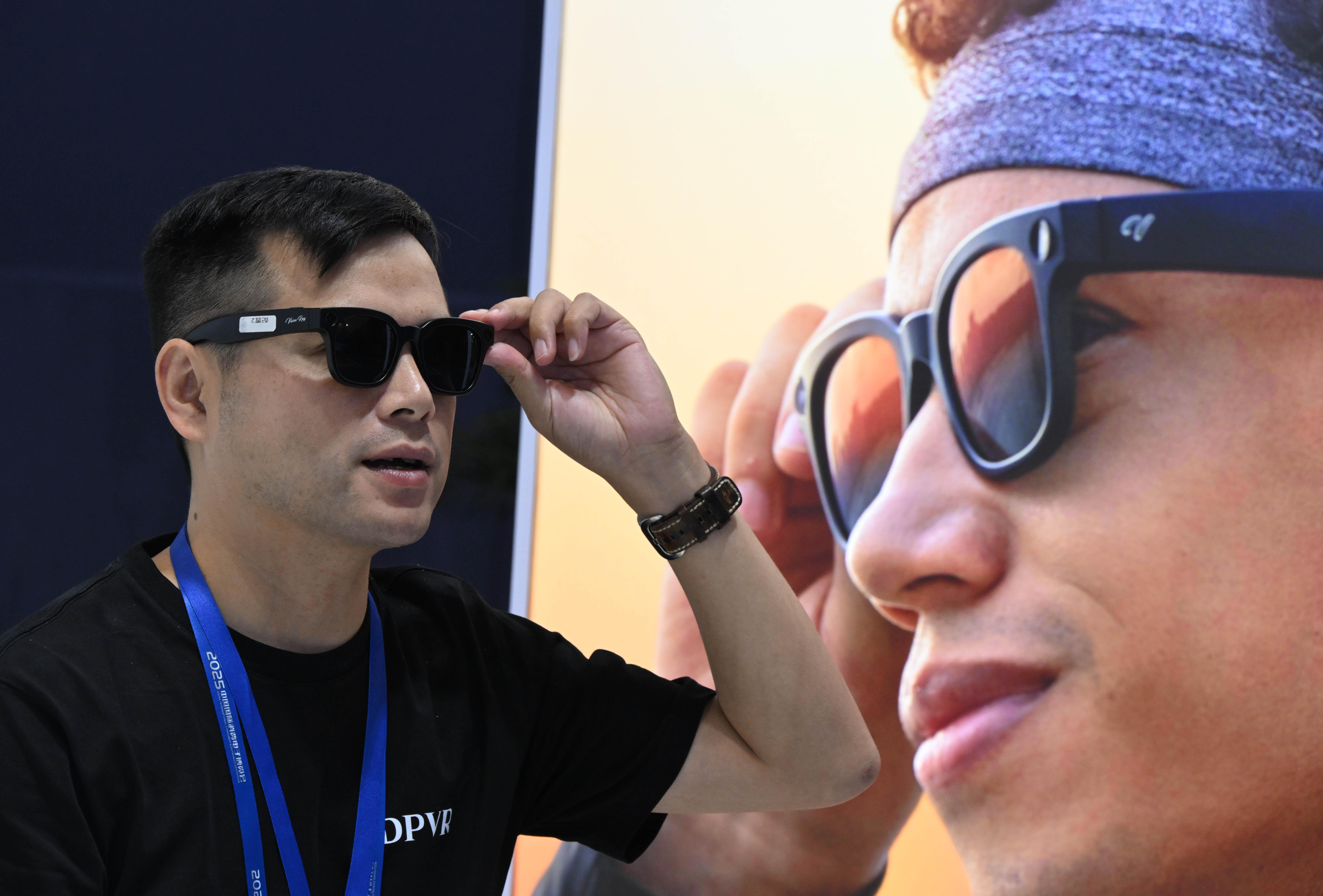
AI glasses, robotic pets, and foldable smartphones — these innovative Chinese tech products have become increasingly popular purchases with foreign tourists in China.
In a 3D printing store in Shenzhen, a foreign tourist scanned a QR code, chose an item in a model file and then started his own creation process. The tourist said there is no need to have any tech expertise as customers can download an item from MakerWorld, a website for 3D models. "This experience is excellent," he said.
Cao Zhongxiong, assistant president of the China Development Institute and director of the Digital Strategy and Economic Research Center, said amid the transformation of instant retail and the realignment of people, goods and venues, China's tech product market has become a large platform for foreign tourists to have immersive experiences and a new gateway to understand Chinese lifestyle.
An AI hi-tech experience store in Shanghai has also attracted many foreign tourists. The in-store products extend from smart wearables to fitness, and 90 percent of them were intelligently made in China.
This store was the second destination for Anna, a 25-year-old Spaniard, and her boyfriend. She said she wanted to buy an AI interactive doll's house to tell her stories about Chengyu, Chinese proverbs normally with four or eight characters, and help her learn more about Chinese culture.
Tech product counters in Sanlitun, Beijing are also welcoming a large group of foreign tourists. A team of Egyptian tourists tried out home appliances like garment steamers, rice cookers and hair dryers, and marveled at the ingeniously thoughtful human-centered design and the powerful functionality backed by cutting-edge technology.
Tech products have evolved to a highly persuasive new medium, and the use and circulation of these products form the most natural global dialogue between Chinese culture and the spirit of modern innovation, said Sun Yu, researcher at Beijing Open Economy Research Institute, University of International Business and Economics. He regards the purchase of Chinese tech products by foreign tourists as their recognition and choice of the lifestyle and innovative culture embodied in these products.
Tourists share their experiences of purchasing Chinese tech products and showcase the product's key features on social media platforms, which triggers curiosity and discussion, according to Zhang Menghan, vice director and professor of School of Communication, Soochow University. She added that such sharing enhances product awareness and brand influence.
From another perspective, extending the personal experience of tourists to topics discussed by a larger group not only makes tech products a link between China and other parts of the world, but also efficiently delivers the innovation and pragmatism of "Made in China."
"Made in China" is no longer simply about product selling, but reconstructs and leads global lifestyles, according to Cao. China is no longer only the "world's factory," but leads a new type of trendy global consumption against the backdrop of high tech manufacturing. "Made in China" is now building a new image around the world, and global tourists have cast their vote with their wallets.