

U.S. Probe on China's Chips Exposes Double Standard
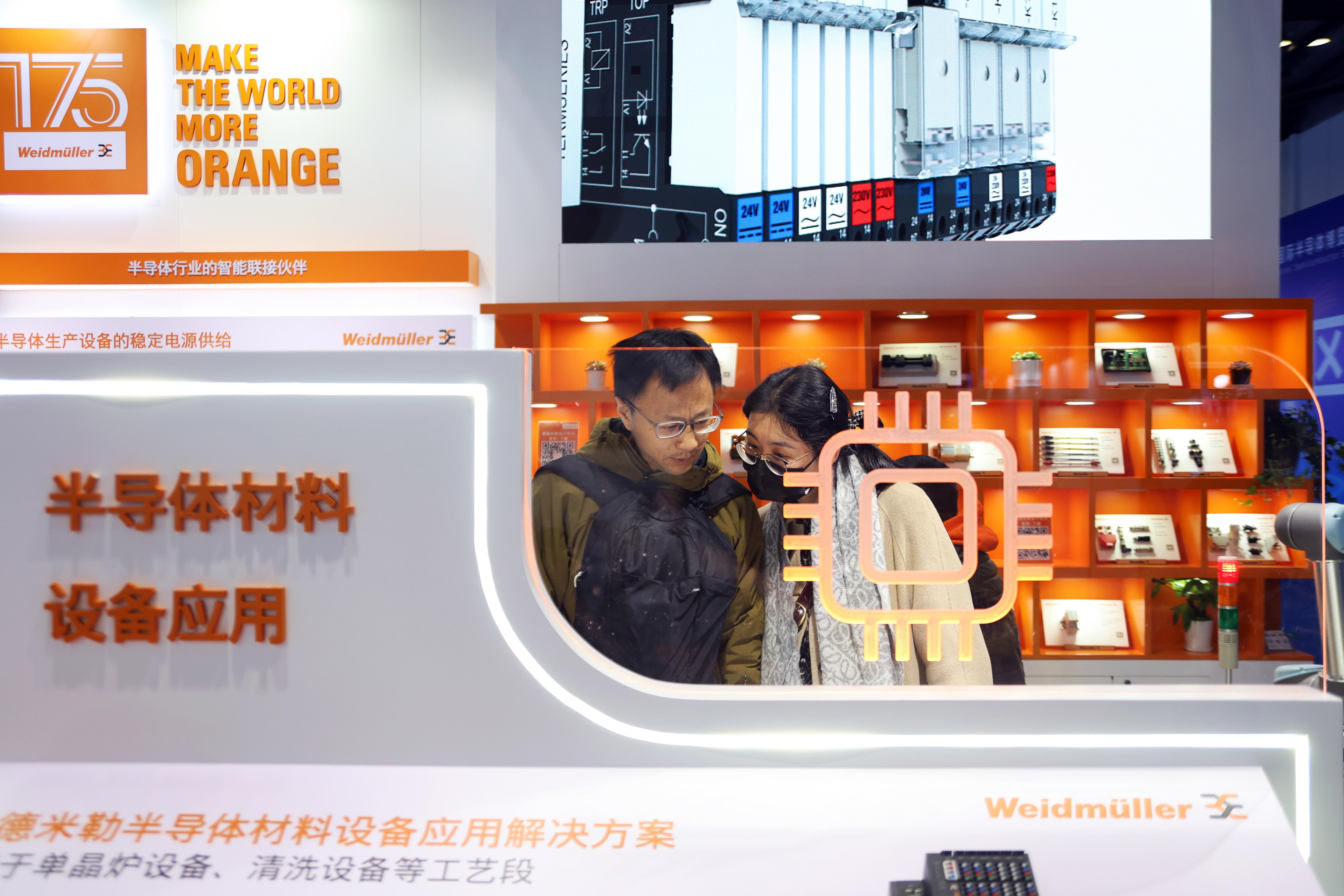
The Office of the U.S. Trade Representative (USTR) has released the findings of an investigation targeting China's semiconductor industry, which allege that China's efforts to strengthen its position in the sector are "unreasonable" and impose burdens or restrictions on U.S. commerce.
The USTR also announced that from June 2027, additional tariffs will be levied on semiconductor products imported from China, with specific rates to be disclosed at least one month in advance.
The investigation was carried out under Section 301 of the U.S. Trade Act, which gives the USTR authority to take unilateral action against foreign trade practices it finds unfair. Section 301 has been frequently used against China.
At the core of Washington's accusation is the claim that China relies on industrial planning, subsidies, and other so-called "market-distorting policies" to promote semiconductor development.
This charge, however, is a textbook case of projection. In reality, the U.S. is the most aggressive practitioner of "market-distorting policies" in the global semiconductor industry and not in a position to criticize others.
In August 2022, then U.S. President Joe Biden signed the CHIPS and Science Act, authorizing 52.7 billion USD in direct subsidies for the U.S. semiconductor industry. The legislation also provides a 25 percent investment tax credit for chip manufacturing facilities and related equipment, while imposing strict restrictions on recipients, including a ban on significant expansion of advanced chip production in China for a decade.
Following Donald Trump's return to office, the U.S. government repeatedly threatened to impose tariffs on imported semiconductor chips, using trade pressure to compel global chipmakers to build manufacturing plants in the U.S.
In this sense, the U.S. semiconductor policy has merely shifted from carrots to sticks. The Biden administration favored financial incentives, while the Trump administration leans on coercive measures.
Yet despite their different approaches, the objective remains the same: bolstering U.S. semiconductor capabilities through state intervention and securing a competitive edge through policies that depart sharply from free-market principles.
The USTR's assertion that China seeks semiconductor dominance in order to increase U.S. dependence and vulnerability is even less convincing. China's semiconductor industry remains primarily focused on meeting domestic demand rather than exporting aggressively to foreign markets, let alone engineering U.S. reliance on Chinese supply.
China's chip production capacity is concentrated largely on mature-process nodes of 28 nanometers and above. According to a memorandum released in 2024 by the French Institute of International Relations, approximately 80 percent of China's mature-process chips are sold within the domestic market.
The report also notes that China places greater emphasis on investment in technological research and development than on unchecked capacity expansion.
As domestic demand for mature-process chips has grown at roughly the same pace as production capacity, the likelihood of Chinese chips flooding Western markets remains low.
A similar conclusion was reached in April 2024 by the U.S.-based Center for Strategic and International Studies, which found that even by 2030, the bulk of China's semiconductor output will be absorbed by strong domestic demand.
Ironically, it is the U.S. — not China — that has openly weaponized semiconductors. Leveraging its technological dominance in advanced chips, Washington has imposed sweeping export controls aimed at slowing China's progress in semiconductors, artificial intelligence, and related industries.
In June 2025, the Federation of American Scientists published an analysis stating that the goal of restricting China's exports is to "reduce China's access to global markets and starve their industrial machine."
The article argued that tariffs represent the most direct approach for curbing China's semiconductor exports and can be implemented under a variety of forms and justifications.
Thus, while export controls are used to impede China's advanced chip development, tariffs are now being prepared to undermine China's mature-process manufacturing capacity. Taken together, these measures suggest an attempt to construct a comprehensive containment strategy aimed at constraining China's semiconductor industry across the board.
Yet experience has already shown that sustained pressure and containment will not halt China's technological progress. Tariffs on Chinese chips will not stall the development of China's semiconductor sector. Instead, they are more likely to exacerbate global supply chain disruptions and impose higher costs on U.S. industries and consumers alike.