
China Sets Date for AI-Industry Integration
China aims to establish a guaranteed supply of key core AI technologies by 2027, while maintaining the scale and empowerment of its AI industry so that it remains among the world's leaders, according to a government action plan released in January. The plan was jointly issued by eight departments, including the Ministry of Industry and Information Technology, the Cyberspace Administration of China, and the National Development and Reform Commission.
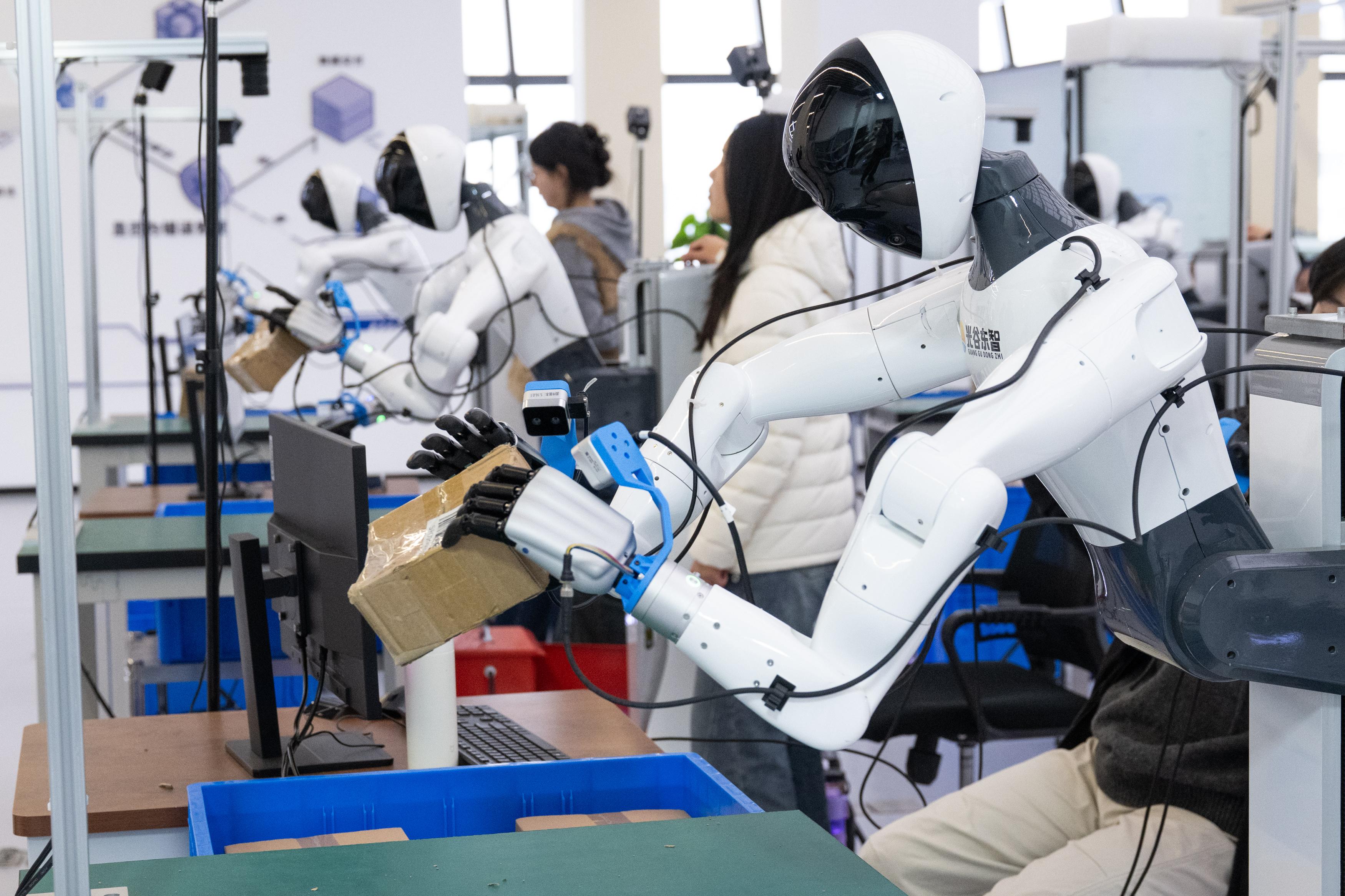
The action plan prioritizes the deep integration of AI with the manufacturing sector. It calls for the deployment of three to five general-purpose large AI models in manufacturing, alongside the development of specialized, industry-wide models with broad coverage. By 2027, China aims to roll out 1,000 high-level industrial intelligent agents, build 100 high-quality industrial datasets, and promote 500 representative application scenarios.
The plan also targets developing two to three market leading enterprises with global influence, as well as a group of "specialized, refined, distinctive and innovative" small and medium-sized enterprises. In parallel, 1,000 benchmark enterprises will be selected, and a globally leading open-source and open AI ecosystem will be established, with overall AI security governance capabilities significantly reinforced.
Strengthening the supply of AI computing power is a key focus of the plan, alongside the development of high-level industry-specific models. The plan emphasizes accelerating AI-enabled transformation across the full industrial value chain.
Efforts will be made to raise AI application levels among key enterprises, expand adoption in priority regions, advance intelligent upgrading in major sectors, and promote the iteration of intelligent equipment and smart terminals. New business models centered on intelligent agents will be established, while standards development, open-source collaboration, talent cultivation and security safeguards will be further strengthened.
International cooperation also plays a prominent role in the plan. Chinese enterprises are encouraged to tailor AI products and application solutions to the specific needs of different countries and regions. To drive this, an "overseas version" of the AI-empowered new industrialization initiative will be promoted, with industry organizations and professional institutions providing support services for companies expanding abroad, including assistance with technical validation and compliance certification.
The plan also seeks to attract foreign investment into the AI sector and encourages foreign-invested enterprises to participate in the development and production of generative AI technologies.
In addition, China will work to establish international cooperation platforms and actively participate in AI-related discussions within multilateral frameworks, including BRICS, the Shanghai Cooperation Organization, China-ASEAN cooperation mechanisms, the G20 and APEC.